How Long Does an Echocardiogram Take?
A standard echocardiogram usually takes well under an hour. A stress echo or a transoesophageal echo takes longer and needs more preparation. Here is what to expect from each.
How long does an echocardiogram take? The NHS says a standard echocardiogram, the kind done by moving a probe over your chest, takes around 30 to 40 minutes. The British Heart Foundation gives a wider range of 15 minutes to an hour, depending on your circumstances. Other types of echo take longer, and some need you to prepare beforehand.
This guide covers what an echocardiogram is, how long each type takes, what happens, how an echo differs from an ECG, and what to know about a private echocardiogram. FindScan is a directory, not a clinic: you can compare clinics that offer an echocardiogram and send an enquiry.
What an echocardiogram is
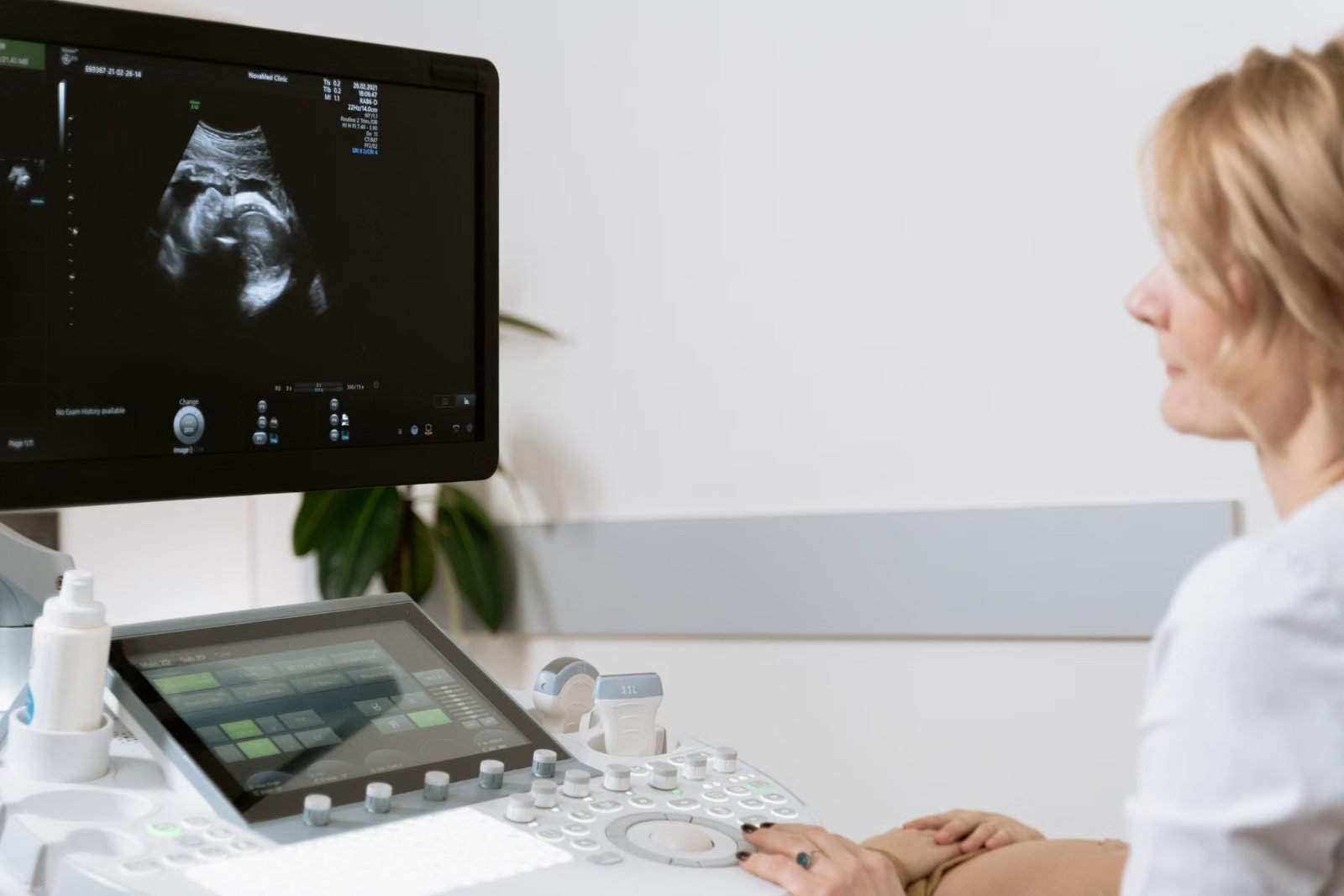
The NHS describes an echocardiogram as a scan of your heart that is done to see how well your heart is working. It is a heart ultrasound: the British Heart Foundation explains that it uses sound waves to build up a picture of your heart, in a similar way to an ultrasound scan in pregnancy.
The NHS says an echo may be used to check for heart conditions or monitor an existing one, such as heart failure, heart valve disease or congenital heart disease. The British Heart Foundation says it shows the heart's valves and the blood flow through the main blood vessels, which helps show how well the heart is pumping.
How long does an echocardiogram take? Timings by type
There are several types of echocardiogram. Typical timings from NHS and British Heart Foundation sources are:
- Transthoracic echocardiogram (TTE). The standard echo, done through the chest wall: around 30 to 40 minutes according to the NHS.
- Transoesophageal echocardiogram (TOE). A thin tube with a small ultrasound device is passed into your mouth and down your throat to get more detailed pictures. The British Heart Foundation says it takes about 30 minutes, usually with sedation.
- Stress echocardiogram. The heart is scanned before and after your heart rate is raised, with exercise or a medicine. The Royal Free London NHS Foundation Trust tells patients its stress echo takes about 45 to 60 minutes from start to finish.
Allow extra time for checking in and, after a TOE or stress echo, resting before you leave. The clinic will tell you how long to allow.
What happens during a standard echo
The British Heart Foundation describes a standard echo like this. You change into a hospital gown and lie on a couch. Small sticky electrodes are placed on your chest to monitor your heart rate. The person doing the scan puts gel on your chest and moves a probe over it. The probe sends out sound waves that echo off the structures of your heart, and you may hear swishing noises during the scan.
The British Heart Foundation says a standard echo has no risks or side effects. The NHS says you can usually eat and drink as normal beforehand.
Preparing for a TOE or stress echo
The more involved types of echo come with extra instructions:
- TOE. The NHS says you may need to stop eating and drinking beforehand. Your throat is numbed with a spray and you may be offered a sedative, after which you cannot drive for 24 hours. Your throat may be sore for 1 to 2 days.
- Stress echo. The Royal Free asks patients to avoid caffeine for 24 hours and tells some to stop certain heart rate medicines 48 hours before. After dobutamine, it advises not driving for the rest of the day.
- Contrast. If a contrast agent is used, the NHS says you may wait up to 30 minutes afterwards to be monitored.
Follow your clinic's instructions, and do not stop any medicine unless you have been told to.
Echocardiogram or ECG: what is the difference?
The two tests are often confused. The NHS describes an ECG (electrocardiogram) as a test that records the electrical activity of your heart, including the rate and rhythm, using sticky patches on your arms, legs and chest. A resting ECG takes a few minutes.
An echocardiogram is a heart scan that produces pictures of the heart's structure. The British Heart Foundation makes the same distinction: an echo uses ultrasound to show structure, while an ECG records electrical activity. Your doctor may ask for one, the other or both.
Can I self refer for an echocardiogram?
An echocardiogram uses ultrasound, not ionising radiation, so the IR(ME)R regulations that govern X-ray and CT do not apply. Many private clinics accept self-referral after their own screening, but each clinic sets its own policy. Ask the clinic how it handles referral when you send your enquiry, particularly for a TOE or stress echo, which involve sedation or medicines.
Each private echo is reported by an appropriately qualified clinician, and the clinic will tell you how long its report takes. If you have heart symptoms or a known heart condition, your GP is usually the best place to start; see our guide to seeing a GP before a scan.
Echocardiogram cost: what affects a private price
If you are looking into echocardiogram cost for a private scan, prices vary by clinic. The main factors are:
- the type of echo: a standard transthoracic echo, a stress echo or a TOE
- whether contrast or sedation is needed
- whether a consultation with a doctor is included
- whether the written report is included, and how results are explained to you
- the region and the clinic
FindScan does not quote typical prices. It shows each clinic's own listed price, so you can check what is included and that it is the heart scan you need. Our guide to how long scan results take may also help.
When to get urgent help
Do not wait for a scan if you have chest pain that could be serious. The NHS says to call 999 if you get sudden pain or discomfort in your chest that does not go away, pain that spreads to your arms, neck, jaw, stomach or back, or chest pain with sweating, feeling sick, light-headedness or shortness of breath.
The NHS says to see a GP if you have chest pain that comes and goes, or chest pain that goes away quickly but you are still worried. When you are ready, compare echocardiogram clinics near you and send an enquiry.
Common questions
How long does an echocardiogram take?
The NHS says a standard transthoracic echo takes around 30 to 40 minutes, and the British Heart Foundation says 15 minutes to an hour. A TOE takes about 30 minutes and a stress echo about 45 to 60 minutes, plus time to prepare and recover.
Is an echocardiogram painful?
A standard echo uses gel and a probe moved over your chest, and the British Heart Foundation says it has no risks or side effects. A TOE involves a numbing spray and often sedation, and your throat may be sore for 1 to 2 days.
Can I self refer for a private echocardiogram?
Echocardiography uses ultrasound, so IR(ME)R does not apply. Many clinics accept self-referral after their own screening, but each clinic sets its own policy. If you have symptoms, see your GP first.
Is an echo the same as an ECG?
No. An ECG records the electrical activity of your heart. An echocardiogram is an ultrasound scan that shows the heart's structure and how well it pumps.
Can I eat before an echocardiogram?
The NHS says you can usually eat and drink as normal before a standard echo, but you may need to stop beforehand for a TOE. Follow the clinic's instructions.
References
- Echocardiogram. NHS. Accessed 7 October 2026.
- Echocardiogram. British Heart Foundation. Accessed 7 October 2026.
- Having a stress echocardiogram (echo). Royal Free London NHS Foundation Trust. Accessed 7 October 2026.
- Electrocardiogram (ECG). NHS. Accessed 7 October 2026.
- Chest pain. NHS. Accessed 7 October 2026.
This article is general information, not medical advice, and it does not replace an assessment by a clinician. If you have symptoms that worry you, speak to your GP or call 111. In an emergency, call 999.