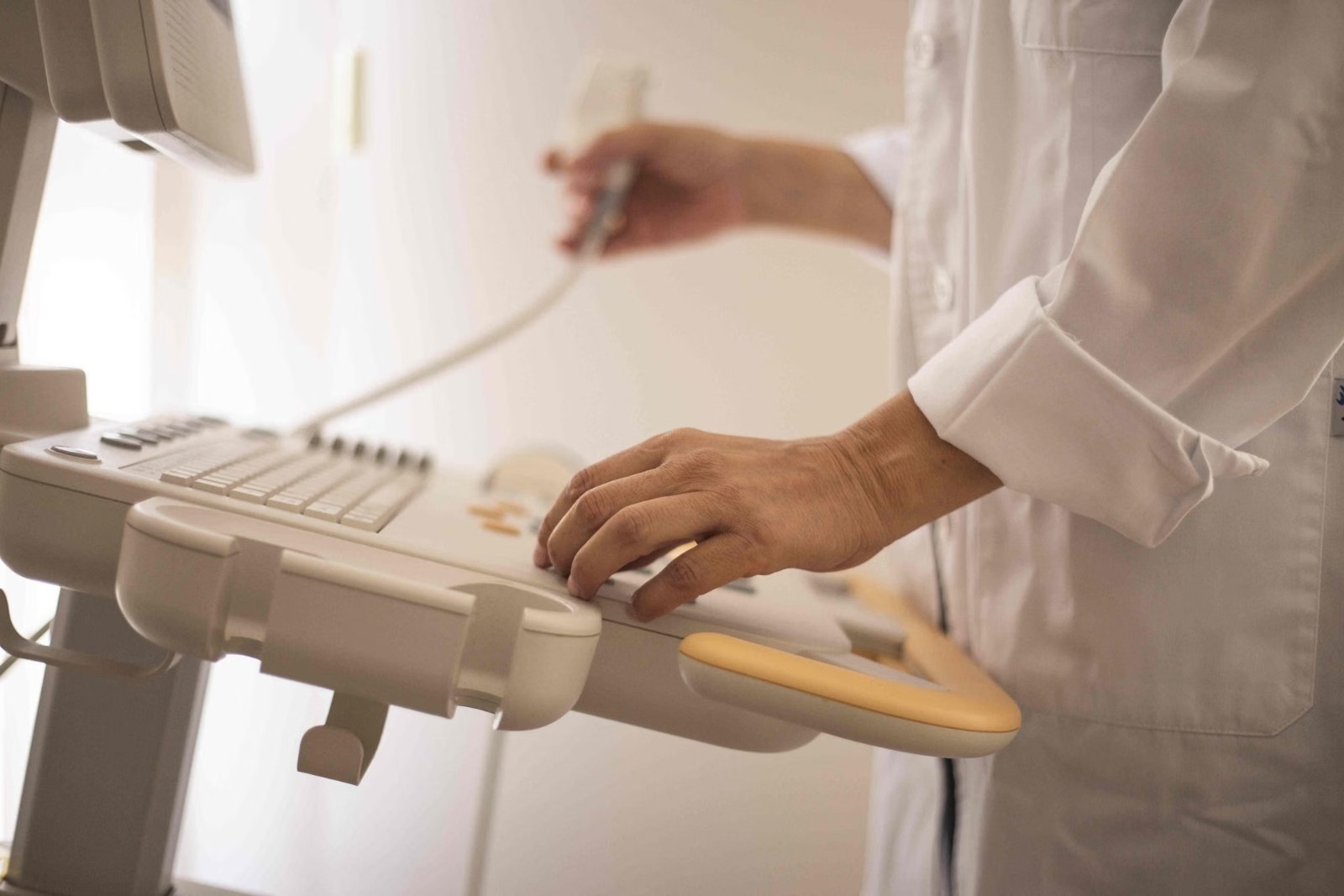
Private echocardiogram (heart scan)
An echocardiogram is an ultrasound scan of the heart. FindScan helps you compare private clinics that offer it and send an enquiry to the one you choose.
Search echocardiogram providers near youAn echocardiogram is an ultrasound scan of the heart. FindScan helps you compare private clinics that offer it and send an enquiry to the one you choose.
Search echocardiogram providers near youAn echocardiogram, often called an echo, is a scan that shows how well your heart is working. It uses sound waves (ultrasound) to create an image of your heart, similar to an ultrasound scan used in pregnancy, and does not use radiation.
For timings of each type of echo, see how long an echocardiogram takes. Your doctor may also consider a cardiac MRI scan when more detail of the heart is needed.
FindScan is a comparison service, not a healthcare provider. We do not carry out scans or give medical advice. We list private clinics that offer echocardiograms and pass your enquiry to the clinic you choose.
An echo gives a clinician ultrasound images of your heart. The British Heart Foundation (BHF) explains that it can be used to measure the ejection fraction (how much blood the heart pumps out with each beat), to look at how the valves are working and how large the heart is, and to judge how severe a leaking valve is.
The NHS says ultrasound scans do not use any radiation, unlike X-rays or CT scans. That means an echo is not covered by the rules on medical exposure to ionising radiation.
The NHS describes three main types:
Most private enquiries are for a transthoracic echo. Ask the clinic which types it offers.
The NHS says an echocardiogram may be done to check whether your symptoms could be caused by a heart condition, or to check how well your heart is working if you have a heart problem or have had one in the past. Common reasons include:
An ECG (electrocardiogram) and an echocardiogram are often confused. The NHS describes an ECG as a test that records the electrical activity of your heart, including the rate and rhythm. An echocardiogram is an ultrasound scan that shows the structure of the heart and how well it pumps.
A resting ECG takes a few minutes. The NHS also describes a portable ECG worn for 24 to 48 hours (up to 7 days) and an exercise ECG. A clinician may ask for one test, the other, or both, depending on your symptoms.
An echocardiogram is not an emergency test. The NHS says to call 999 if you have:
The NHS says not to drive yourself to A&E. If you have symptoms that are not an emergency but worry you, such as breathlessness or swollen ankles, see a GP. Do not wait for a private scan. See our guide to seeing a GP before a scan.
An echocardiogram uses ultrasound, not ionising radiation, so the Ionising Radiation (Medical Exposure) Regulations 2017 (IR(ME)R) do not apply to it. Even so, many clinics want a referral from a GP or cardiologist for an echo. Each clinic sets its own policy, so do not assume you can refer yourself. Ask the clinic when you send an enquiry.
The NHS says you may be able to eat and drink as usual on the day. For a TOE you may be asked to stop eating and drinking beforehand, and if you have a sedative someone will need to collect you, because you should not drive for 24 hours.
For a transthoracic echo you remove clothing from the waist up and may be given a gown. You lie on a couch, usually on your left side, sticky patches are placed on your chest to check your heart rate, and the sonographer applies gel and moves the ultrasound probe over your chest. The NHS says the scan takes around 30 to 40 minutes.
Some scans use a small amount of contrast liquid injected to make the images clearer. The NHS says you may be asked to wait for 30 minutes afterwards as a precaution. You can ask for a chaperone, who could be someone you know, a nurse or a trained member of staff. See how to prepare for your scan.
Your scan is reported by an appropriately qualified clinician. The clinic will tell you how long its report takes and who receives it. The NHS says that a doctor may sometimes talk to you about the results on the day, but you will usually be given another appointment to discuss them in detail. Plan to go through yours with a GP or cardiologist who can explain what it means for you. See scan results.
Each clinic sets its own price, and prices vary. Factors include the type of echo (a transthoracic scan, a stress echo or a TOE), whether contrast is used, whether a consultation with a cardiologist is included, what the report covers, and where the clinic is. Each clinic confirms its price when you enquire. Check what is included before you send an enquiry.
Use FindScan search to see clinics near you that offer echocardiograms. Compare locations and clinic details, then send an enquiry to the clinic you choose. We pass your details to that clinic, and the clinic contacts you to discuss your request, its referral policy and availability. For other ultrasound scans, see our private ultrasound page.
No. The NHS describes an ECG as a test that records the electrical activity of the heart, including its rate and rhythm. An echocardiogram is an ultrasound scan that shows the heart's structure and how well it is pumping.
No. It uses ultrasound. The NHS says ultrasound scans do not use any radiation, unlike X-rays or CT scans.
The NHS says a standard echocardiogram takes around 30 to 40 minutes. The BHF says a full transthoracic scan takes about 40 to 45 minutes and a focused scan about 20 to 25 minutes.
IR(ME)R does not apply because an echo does not use ionising radiation, but many clinics want a referral from a GP or cardiologist. Each clinic sets its own policy, so ask when you send an enquiry.
The NHS says it is not painful, but people can find it uncomfortable. The back of your throat is numbed with an anaesthetic spray and you can ask for a sedative. If you have a sedative, you should not drive for 24 hours.
No. Call 999 if you have chest pain that feels tight or squeezing, or that spreads to your arms, neck or jaw, or if you have severe difficulty breathing. Do not drive yourself to A&E.
Yes. The NHS describes an echocardiogram as a scan of your heart, done to see how well your heart is working. It uses sound waves (ultrasound) to create an image of the heart and is usually carried out by a sonographer. Your doctor may be able to discuss the results on the same day, or you may have a follow-up appointment. If you have not heard after a few weeks, contact the doctor who referred you.
Source: NHS: Echocardiogram
Heart scan is an everyday term for several different tests. The NHS lists an echocardiogram, MRI scans, CT scans and a myocardial perfusion scan among the tests used to diagnose heart problems, alongside an ECG and blood tests. An echocardiogram uses sound waves (ultrasound) to create an image of your heart, while other tests use different technology. Which test is right depends on the question your doctor is trying to answer.
Source: NHS: Coronary heart disease: diagnosis; NHS: Echocardiogram
Search by postcode to see clinics near you that offer this scan. Send an enquiry to the clinic you choose and they will contact you to confirm whether a referral is needed, the final price and an appointment.
FindScan is a comparison service, not a healthcare provider, and nothing here is medical advice. Speak to a GP or another clinician about your symptoms.