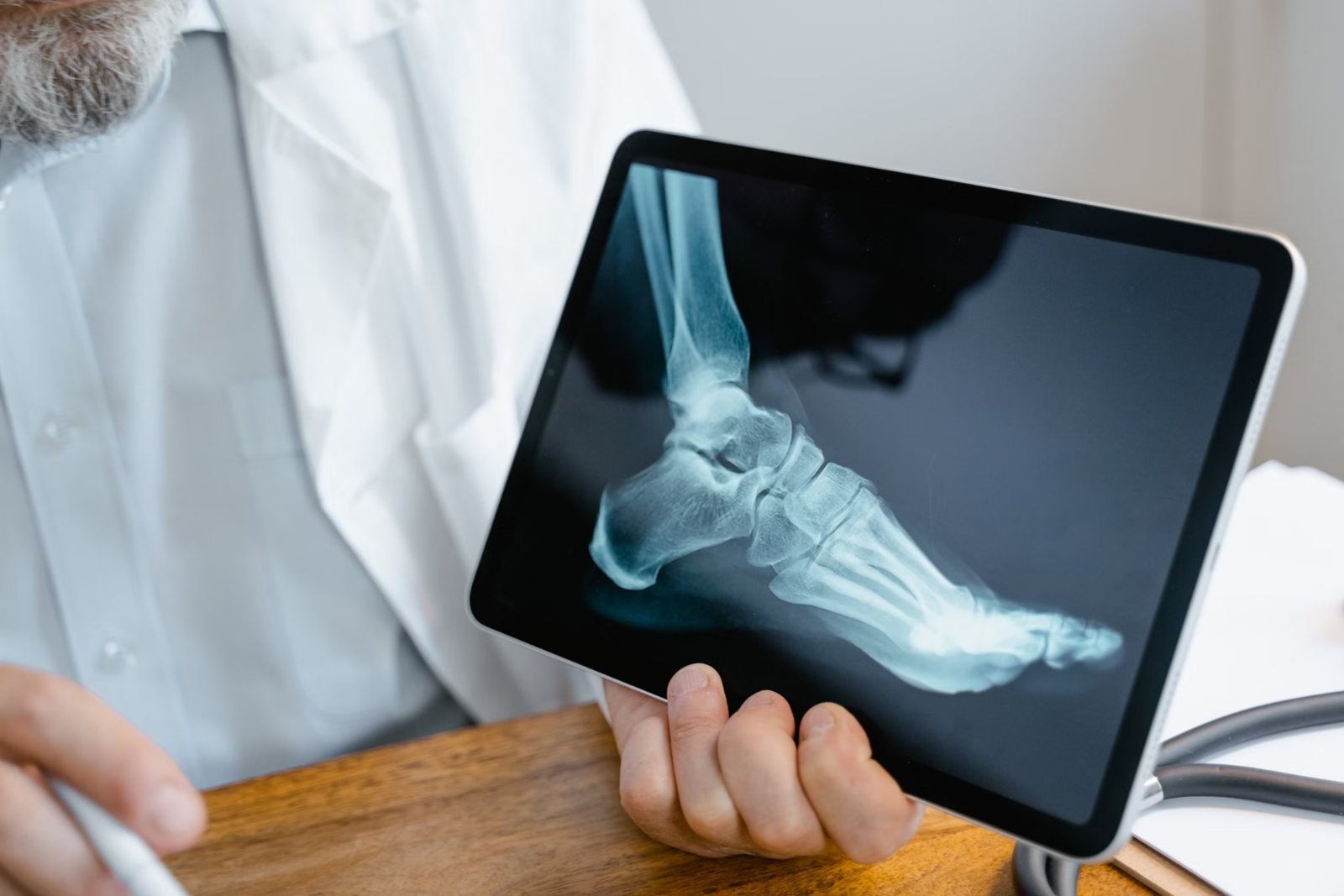
Private X-ray
An X-ray takes pictures of the inside of your body using a small amount of radiation. FindScan helps you compare private clinics that offer X-rays and send an enquiry to the one you choose.
Search X-ray providers near youAn X-ray takes pictures of the inside of your body using a small amount of radiation. FindScan helps you compare private clinics that offer X-rays and send an enquiry to the one you choose.
Search X-ray providers near youAn X-ray is a quick test. The NHS says having the X-ray itself should only take a few minutes. It is often used to look at bones and joints, and at the chest.
If you are looking for a private X ray, every X-ray needs a referrer and must be justified under IR(ME)R 2017; many private clinics arrange this through their own doctor. For the most common one, see what a chest X-ray can show.
Because X-rays use ionising radiation, every X-ray must be requested by a referrer and justified under UK law. This page explains what an X-ray shows, what it cannot show well, radiation dose, the referral rules, when you should not wait for a private X-ray, and what affects the price.
FindScan is a comparison service, not a healthcare provider. We do not carry out scans or give medical advice. We list private clinics that offer X-rays and pass your enquiry to the clinic you choose.
The NHS describes an X-ray as a test that takes pictures of the inside of your body using a small amount of radiation. It says X-rays can be used to look at bones, teeth, lungs and the digestive system.
Blackpool Teaching Hospitals NHS Foundation Trust explains how the picture is formed. Soft tissues in the body, such as blood, skin, fat and muscle, let most of the X-rays pass through and appear dark grey. Bone, which is more dense, lets few X-rays pass through and appears white. This contrast is why X-rays show bones so clearly.
The NHS says X-rays may be used to check your bones for a fracture after an accident, to find out if symptoms could be caused by a condition such as an infection or a blockage in the digestive system, and to help doctors see inside your body during a procedure. Common private X-ray requests include:
Only the clinician assessing you can say whether an X-ray is the right test, and which views are needed.
Because soft tissues let most X-rays pass through, a plain X-ray gives limited detail of structures such as ligaments, tendons, muscles and cartilage. If the clinician is looking at these, they may suggest a different test, such as MRI or ultrasound. See our private MRI and private ultrasound pages, and our guide to ultrasound vs MRI.
The UK Health Security Agency (UKHSA) publishes typical effective doses for common examinations, and gives the UK average natural background radiation as 2.1 mSv per year. Its typical doses for some common X-rays are:
The NHS says X-rays are usually very safe and serious complications are rare, but that if you have lots of X-rays there is a very small risk that the radiation could cause cancer. This is one reason each X-ray must be justified. See our guide to X-ray radiation safety.
The NHS asks you to tell the healthcare professional if you are pregnant or might be pregnant. Blackpool Teaching Hospitals NHS Foundation Trust says the risk of most diagnostic X-rays to an unborn baby is small, but your doctor may consider another imaging test in its place. Under IR(ME)R, staff must ask anyone of childbearing potential whether they are pregnant or breastfeeding, where relevant, before the X-ray. Tell the clinic when you enquire.
Every X-ray must be requested by a referrer and justified. X-rays use ionising radiation, so they are covered by the Ionising Radiation (Medical Exposure) Regulations 2017 (IR(ME)R). Regulation 11 says a person must not carry out an exposure unless it has been justified by the practitioner as showing a sufficient net benefit and has been authorised, and the practitioner must take account of information supplied by the referrer.
A referral may come from your GP, a consultant or another healthcare professional who is entitled to act as a referrer. Private clinics often arrange this through their own clinician or a clinical review of your request, but the X-ray still needs a referrer and justification, and a clinic can decline if it is not justified. Our guide X-ray without a referral in the UK explains more.
If you think you have broken a bone or have a new injury, get urgent NHS care rather than waiting for a private appointment. The NHS says urgent treatment centres can help with sprains and strains, suspected broken bones and injuries, and that you can often get tests like an X-ray there. NHS 111 online can direct you to the right service.
For long-standing joint pain with no recent injury, see a GP or physiotherapist first. They can examine you and decide whether an X-ray is needed. See seeing a GP before a scan.
The NHS says you may be asked not to wear anything with metal in it, such as jewellery, clothes with zips or poppers, bras or hair clips, and you may be asked to change into a gown, depending on the part of your body. The NHS also says some X-rays involve an injection of a dye called contrast medium or barium, and that you may be asked not to eat or drink for several hours beforehand. The clinic will tell you if any of this applies to your X-ray. Tell the clinic about any medicines you take and any allergies. See how to prepare for your scan.
The X-ray machine is lined up with the part of your body being checked, and staff step behind a screen. The NHS says you are asked to keep very still for a few seconds while 1 or more X-rays are taken.
Your images are reported by an appropriately qualified clinician. The clinic will tell you how long its report takes and who receives it. Plan to discuss the results with your GP or the clinician who referred you, who can explain what they mean alongside an examination. See scan results.
Each clinic sets its own price, and prices vary. The main factors are the part of the body, how many areas or views are needed, whether one or both sides are X-rayed, whether a referral or consultation is included, whether the report is included, and where the clinic is. Each clinic confirms its price when you enquire.
Check what is included before you send an enquiry. See our guide to private X-ray cost in the UK.
Use FindScan search to see clinics near you that offer X-rays. Compare locations and clinic details, then send an enquiry to the clinic you choose. We pass your details to that clinic, and the clinic contacts you to discuss your request, how it handles referral and justification, and availability.
Every X-ray must be requested by a referrer and justified under IR(ME)R, because X-rays use ionising radiation. Some private clinics arrange this through their own clinician or a clinical review, but the X-ray still needs a referrer and justification, and the clinic can decline if it is not justified.
No, get urgent NHS care. The NHS says urgent treatment centres can help with suspected broken bones and can often do X-rays. Use NHS 111 if you are not sure where to go, and go to A&E or call 999 if a limb is numb, at an odd angle or a bone is sticking out of the skin.
UKHSA gives typical effective doses of less than 0.01 mSv for limbs and joints (except hip), 0.02 mSv for a single chest X-ray and 0.3 mSv for a hip X-ray. It gives the UK average natural background radiation as 2.1 mSv per year.
Plain X-rays show bone clearly, but soft tissues let most X-rays pass through, so ligaments and tendons are not seen in detail. The clinician assessing you may suggest a different test, such as MRI or ultrasound, if those are the concern.
Not always. For osteoarthritis, the NHS says a GP will ask about your symptoms and examine your joints, and that further tests such as X-rays are not usually necessary, but may be used to rule out other causes.
Tell the clinic if you are or might be pregnant. NHS trust guidance says the risk of most diagnostic X-rays to an unborn baby is small, but your doctor may consider another imaging test instead.
Search by postcode to see clinics near you that offer this scan. Send an enquiry to the clinic you choose and they will contact you to confirm whether a referral is needed, the final price and an appointment.
FindScan is a comparison service, not a healthcare provider, and nothing here is medical advice. Speak to a GP or another clinician about your symptoms.