Why Are MRI Scans So Expensive?
An MRI price pays for far more than the time you spend in the scanner. Here is what sits behind it, and why two clinics can charge quite different amounts for what looks like the same scan.
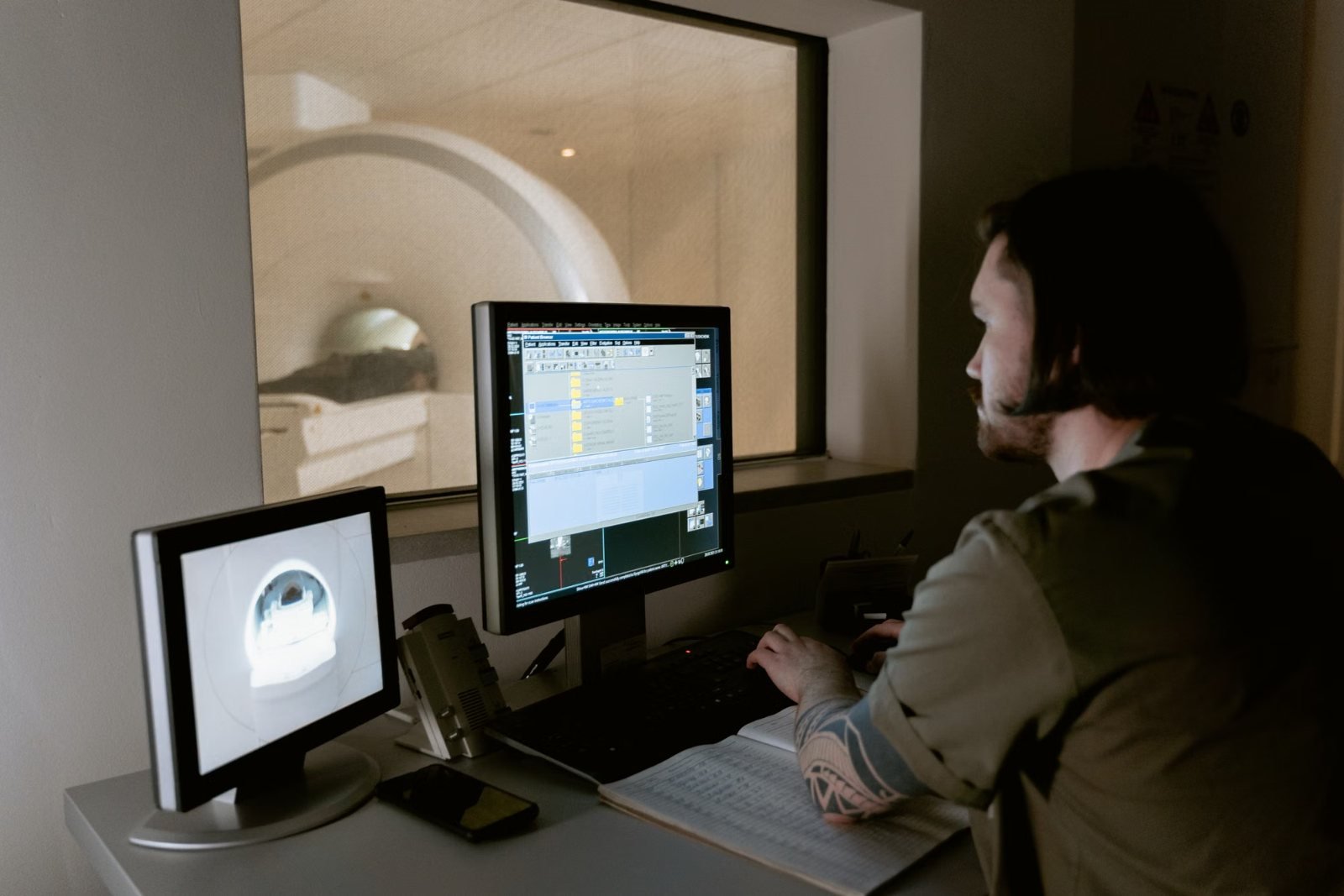
Private MRI costs more than many other scans, and the price for the same body part changes from one clinic to the next. An MRI scan relies on specialist equipment that is never fully switched off, on a team of trained staff, and on a clinician reading the images afterwards.
This guide explains in plain terms what goes into the cost of an MRI scan, why prices vary, and the other routes to a scan, including the NHS and private health insurance. We do not quote figures here, because each clinic sets its own prices and they change over time. For current prices, see our guide to private MRI scan costs in the UK or the clinic listings on FindScan.
The scanner and the room it sits in
According to safety guidance from the Medicines and Healthcare products Regulatory Agency (MHRA), most MRI scanners used clinically in the UK are cylindrical, closed-bore systems built around a superconducting magnet. These are large, specialist machines, and buying one is only the start.
The room has to be planned around the magnet as well. The MHRA explains that the magnetic field around a scanner depends on its field strength, the design of the magnet and the shielding used, and that each installation can differ because of nearby structures such as lifts and support beams. Servicing and eventual replacement add to the cost, which is spread across the scans a clinic carries out.
Helium, cooling and power
Superconducting MRI magnets are kept extremely cold using liquefied gases such as helium, the MHRA guidance explains. It also points out that in these scanners the magnetic field is always present, which means the magnet is always switched on.
Keeping the magnet cold, maintaining the venting arrangements the guidance describes for releasing helium safely, and the electricity needed to run and cool the equipment are ongoing costs. A clinic carries them whether or not anyone is being scanned, which is one reason MRI tends to cost more than an X-ray or an ultrasound.
Trained staff and safety checks
Because the magnet is so strong, everyone is screened for metal implants and devices before going into the scanner room. The MHRA recommends that MRI units appoint an MR Responsible Person to manage safety day to day and an MR Safety Expert to give scientific advice, and it sets out a training framework for the radiographers and other staff who work there.
On the day, the NHS describes a radiographer running the scan from another room while being able to hear and speak to you. Our guide to MRI safety and metal implants explains the checks.
Reading and reporting the images
An MRI scan produces many images, and they are only useful once they have been read. Each scan is reported by an appropriately qualified clinician, who writes a report for you or for the person who referred you. That reporting is part of what you pay for. The clinic will tell you how long its report takes, and our guide to how long scan results take covers what to ask.
What changes the price of your scan
Within any one clinic, a few things tend to change the price.
- The number of areas. Each extra area usually means more time in the scanner and more images to report. The NHS says an MRI scan usually takes between 15 minutes and 1 hour, but can take longer.
- Contrast. The NHS says some people are given an injection of contrast medium (dye) to help show more detail. That adds the contrast itself, the staff time to give it and extra checks beforehand.
- The type of scanner. Closed, wide-bore, open and upright scanners are different equipment with different running costs. Our guide to open vs closed MRI explains the trade-offs.
- Location. Premises and staffing costs differ across the country, so prices for the same scan vary by region.
- What is included. Some listed prices include the report, a copy of the images or a follow-up consultation, while others list these separately.
Why prices vary between clinics
Every clinic has its own mix of equipment, premises, staff and reporting arrangements, so each sets its own prices. A lower listed price is not automatically a worse scan, and a higher one is not automatically a better one.
The fairest comparison is like for like: the same body area, whether contrast is included, the type of scanner and what you receive afterwards. FindScan shows each clinic's own listed price, as the clinic sets it, without mark-up. You can compare MRI clinics near you and send an enquiry to the one you choose.
Other routes: the NHS and insurance
On the NHS, an MRI is arranged by your GP or hospital team when they decide you need one. The NHS guide to waiting times says the maximum waiting time for non-urgent, consultant-led treatment is 18 weeks from referral, and that you may have tests and scans during that time. It also says you have the legal right to ask to be seen by a different provider if you are likely to wait longer than the maximum. Our guide to NHS MRI waiting times vs private compares the two routes.
Private medical insurance may cover an MRI, but policies differ in what they include and whether a GP referral or pre-authorisation is needed first, so check with your insurer before arranging anything. See does private health insurance cover an MRI? and self-pay vs insurance.
Before you pay for a scan
MRI does not use ionising radiation, so the Ionising Radiation (Medical Exposure) Regulations do not apply. Many private clinics accept self-referral, usually after their own safety screening, but each clinic sets its own policy. Our guide to private MRI without a GP referral explains more.
A scan is not always the right first step. The NHS says lower back pain, for example, usually improves within a few weeks, and suggests seeing a GP if it does not, or getting help such as physiotherapy, which in many areas you can access without a GP referral. Our guide to seeing a GP before a scan explains why. If you have sudden or severe symptoms, call 111, or 999 in an emergency, rather than waiting for a private scan.
Common questions
Why does an MRI cost more than an X-ray or ultrasound?
An MRI scanner is a larger and more specialist machine. Its superconducting magnet is kept cold with liquid helium and is always switched on, the room needs careful planning and shielding, and the unit needs trained staff and safety roles. Scans also take longer and produce many images to report.
Why do MRI prices vary so much between clinics?
Each clinic sets its own prices based on its equipment, premises, staff, reporting arrangements and what it includes in the price. The body area, contrast, type of scanner and region all make a difference. FindScan shows each clinic's own listed price so you can compare like with like.
Does contrast make an MRI scan cost more?
It can. A contrast injection adds the dye itself, extra staff time and extra safety checks. Not every scan needs contrast; that depends on the question being asked. Check whether a clinic's listed price includes it.
Is a more expensive MRI a better scan?
Not necessarily. Price reflects many things, including location and what is included. What matters is whether the scanner and the scan suit the body area and the question, and that the images are reported by an appropriately qualified clinician.
Is an MRI free on the NHS?
NHS scans are free at the point of use when an NHS clinician decides you need one. Waiting times vary, and the NHS guide to waiting times explains your rights, including the 18 week maximum for non-urgent, consultant-led treatment.
References
- MRI scan. NHS. Accessed 6 October 2026.
- Magnetic resonance imaging equipment in clinical use: safety guidelines. MHRA (gov.uk). Accessed 6 October 2026.
- Guide to NHS waiting times in England. NHS. Accessed 6 October 2026.
- Back pain. NHS. Accessed 6 October 2026.
This article is general information, not medical advice, and it does not replace an assessment by a clinician. If you have symptoms that worry you, speak to your GP or call 111. In an emergency, call 999.