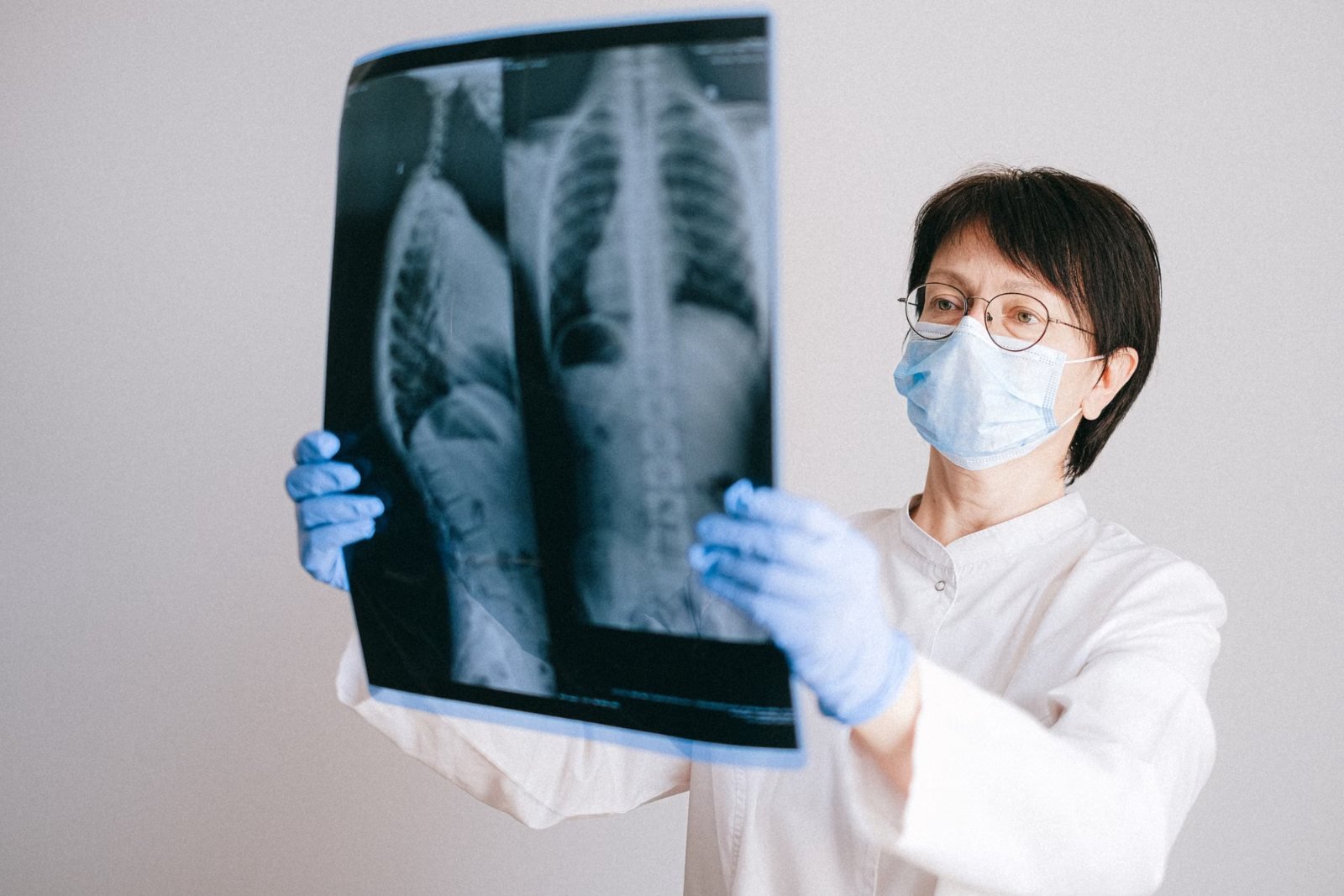
Can a CT Scan Detect Lung Cancer?
A CT scan for lung cancer gives doctors a detailed picture of the lungs and chest. It can show an abnormal area clearly, but finding out exactly what that area is usually takes further tests.
CT of the lungs, also known as computed tomography of the lung, is one of the main tests used when lung cancer is suspected. The NHS says CT is usually the next test after a chest X-ray, and a low dose CT is the test used in NHS lung cancer screening.
This guide explains where CT fits among the NHS tests, why a scan alone does not usually diagnose cancer, how lung screening works, what happens with small nodules, and the radiation dose.
Where a CT scan for lung cancer fits in
The NHS says a chest X-ray is usually the first test used to diagnose lung cancer, and that most lung tumours appear on X-rays as a white-grey mass. But it adds that X-rays cannot give a definitive diagnosis, because they often cannot tell the difference between cancer and other conditions such as a lung abscess. See what a chest X-ray can show.
If an X-ray suggests lung cancer, the NHS says you will be referred to a chest specialist for more tests, and a CT scan is usually next. The NHS explains that CT uses X-rays and a computer to create detailed pictures, that you may have an injection of contrast dye, and that the scan is painless and takes 10 to 30 minutes. See our guide to CT chest scans.
Does a CT scan diagnose cancer?
A CT scan can show that something abnormal is there, and where. Later tests aim to take a sample of cells to examine.
If a CT scan shows you have cancer, the NHS says you may have a PET-CT scan. This uses an injection of radioactive material to show where cancer cells are active, and helps doctors plan treatment. To take a sample, the NHS describes:
- Bronchoscopy: a thin tube with a camera is passed through the mouth or nose to see inside the airways and remove a small sample of cells.
- Endobronchial ultrasound (EBUS): bronchoscopy combined with ultrasound to sample lymph nodes in the centre of the chest.
- Surgical and needle biopsies: including a percutaneous needle biopsy, where a needle is passed through the skin with a scan to guide it.
CT shows where to look; the sample shows what an area is.
How accurate is a CT scan for cancer?
There is no single figure, partly because CT also finds things that are not cancer. The British Thoracic Society's guideline on pulmonary nodules, which are small spots in the lung, notes that in screened populations the majority of nodules are small and benign.
Cancer Research UK sets out the limits of lung screening: false positives, where a scan suggests a problem that is not cancer and leads to more tests; false negatives, where a cancer is missed; and overdiagnosis, where a cancer is found that would never have caused harm. A clear scan is not a reason to ignore new or changing symptoms.
Low dose CT lung screening in the NHS
The NHS calls the first step of lung screening a lung health check. You may be invited if you are aged 55 to 74, a current or former smoker, registered with a GP and live where the service runs.
A health professional asks about your breathing, lifestyle, and family and medical history. You might then need no further action, be referred to your GP, or be invited for a CT scan of your lungs, which the NHS says takes a few minutes and does not hurt.
Cancer Research UK describes the screening test as a low dose CT scan of the lungs. It says screening is available in some parts of England, while Northern Ireland, Scotland and Wales are still looking at how to roll it out. When the government announced the national roll-out in June 2023, it said people at higher risk would be offered scans every 2 years, with the aim of reaching everyone eligible by March 2030. Screening is by NHS invitation; a private chest CT is a separate route.
What happens if a CT shows a lung nodule
The British Thoracic Society's 2015 guideline on pulmonary nodules, published in Thorax, recommends no follow-up for nodules under 5 mm across or under 80 mm³ in volume. Nodules between 5 and 8 mm are monitored with CT. For nodules 8 mm or larger it recommends prediction models, such as the Brock model, to estimate the chance of cancer.
For nodules being watched, it describes repeat CT at around 3 months and 1 year to check for growth, and solid nodules that stay stable can usually be discharged after a year.
Radiation dose and the referral rules
CT uses X-rays, so it involves ionising radiation. The UK Health Security Agency (UKHSA) gives a typical effective dose of 8 mSv for a chest CT, about 3.6 years of natural background radiation (the UK average is 2.1 mSv a year). Its table gives no separate figure for low dose screening scans.
CT is therefore covered by the Ionising Radiation (Medical Exposure) Regulations 2017 (IR(ME)R). Under regulation 11, an exposure must not be carried out unless it has been justified by a practitioner as showing a sufficient net benefit and authorised, taking account of information supplied by the referrer. Every CT needs a referrer and must be justified. Many private clinics arrange this through their own doctor.
Lung symptoms: when to get urgent help
The NHS lists the main symptoms of lung cancer as a cough that is not going away, shortness of breath, coughing up blood, and chest or shoulder pain, among others. It advises seeing a GP if you have had a cough for longer than 3 weeks, and says having symptoms does not definitely mean you have lung cancer, but it is important to get checked.
Ask for an urgent GP appointment or get help from NHS 111 if you have coughed up blood. Call 999 or go to A&E if you are struggling to breathe, or have pain in your chest or upper back.
Looking into a private chest CT
A private chest CT is reported by an appropriately qualified clinician, and the clinic will tell you how long its report takes. Prices vary by clinic, region, body area, whether contrast is used and what is included, and FindScan shows each clinic's own listed price. See our chest CT scan page, or compare clinics near you and send an enquiry.
Common questions
Can a CT scan for lung cancer confirm the diagnosis?
A CT scan can show an abnormal area in detail. Tests such as bronchoscopy or a needle biopsy then take a sample of cells so doctors can find out what it is.
Who is invited for low dose CT lung screening?
The NHS invites people aged 55 to 74 who are current or former smokers, registered with a GP and living where the service runs.
What does a small nodule on a CT scan mean?
The British Thoracic Society notes that most nodules found in screened people are small and benign. Its guideline recommends no follow-up for nodules under 5 mm.
How much radiation is in a chest CT?
UKHSA gives a typical dose of 8 mSv for a chest CT, about 3.6 years of UK background radiation.
Do I need a referral for a private chest CT?
Yes. Under IR(ME)R 2017 every CT needs a referrer and must be justified. Many private clinics arrange this through their own doctor.
References
- Lung cancer: tests and next steps. NHS. Accessed 7 October 2026.
- Lung cancer: symptoms. NHS. Accessed 7 October 2026.
- Lung cancer screening. NHS. Accessed 7 October 2026.
- Lung cancer screening. Cancer Research UK. Accessed 7 October 2026.
- New lung cancer screening roll out to detect cancer sooner (26 June 2023). GOV.UK (Department of Health and Social Care). Accessed 7 October 2026.
- BTS Guidelines for the Investigation and Management of Pulmonary Nodules (Thorax, 2015). British Thoracic Society. Accessed 7 October 2026.
- Patient dose information: guidance. UK Health Security Agency (gov.uk). Accessed 7 October 2026.
- The Ionising Radiation (Medical Exposure) Regulations 2017, regulation 11. legislation.gov.uk. Accessed 7 October 2026.
This article is general information, not medical advice, and it does not replace an assessment by a clinician. If you have symptoms that worry you, speak to your GP or call 111. In an emergency, call 999.