What Can an Ultrasound Detect?
Ultrasound is quick, uses no radiation and can look at many parts of the body. Here is what it is commonly used for, area by area, and where its limits are.
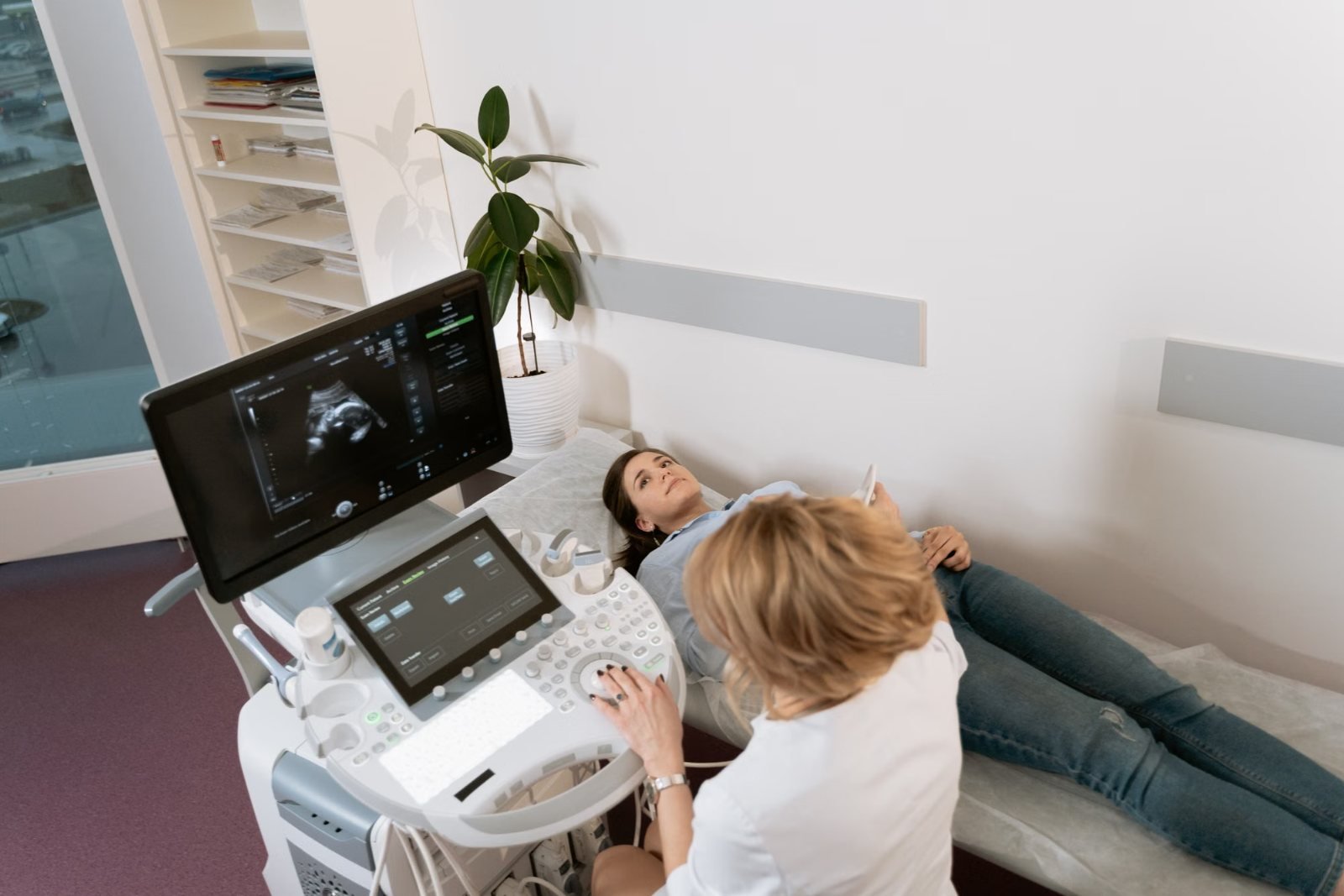
An ultrasound scan uses high-frequency sound waves to create pictures of the inside of the body. The NHS says ultrasound scans do not use any radiation, unlike X-rays or CT scans, and are used to investigate symptoms such as pain or a lump, to monitor conditions such as thyroid problems, and to help guide procedures such as joint injections.
Because the pictures are produced in real time, ultrasound can also show how some parts of the body are working, such as blood flowing through a vein. This guide goes through the main body areas ultrasound is used for, then explains what it cannot see well.
Abdomen: liver, gallbladder, pancreas and kidneys
Cancer Research UK lists the liver, pancreas, gallbladder and urinary system among the organs an abdominal ultrasound can look at. Gallstones are a common reason for an abdominal scan: the NHS says you may have an ultrasound scan if you have symptoms of gallstones.
Our guide to abdominal ultrasound explains what the scan involves. The NHS advises calling 999 or going to A&E if you have sudden, severe tummy pain, and getting help from NHS 111 if you have tummy pain lasting longer than 30 minutes that could be caused by gallstones.
Pelvis: womb, ovaries, bladder and prostate
Pelvic ultrasound can be done over the lower tummy or as an internal scan. For fibroids, the NHS says an ultrasound scan can show if you have fibroids, how many there are, where they are and how big they are. Cancer Research UK lists the ovaries, womb and prostate among the areas internal ultrasound can examine. Our guide to vascular and pelvic ultrasound covers this in more detail.
Neck: thyroid and other glands
The NHS lists monitoring thyroid problems among the uses of ultrasound. It also says you will usually need tests to find out what is causing a goitre, a lump or swelling at the front of the neck caused by a swollen thyroid, and an ultrasound scan is one of them. An NHS trust ultrasound department describes using ultrasound to assess some glands such as the thyroid and parathyroid. Cancer Research UK also lists the head and neck among the areas scanned.
Blood vessels
Ultrasound can show blood flowing through veins and arteries. The NHS says that if a doctor thinks you have a DVT (deep vein thrombosis), you should be referred to hospital within 24 hours for an ultrasound scan, which checks whether blood is flowing normally through the vein.
Suspected DVT needs urgent NHS assessment rather than a private appointment. The NHS advises getting an urgent GP appointment or help from NHS 111 if you think you have a DVT, and calling 999 or going to A&E if you have symptoms such as pain and swelling and also feel short of breath or have chest pain.
Muscles, tendons and joints
An NHS trust ultrasound department describes using ultrasound to assess soft tissues such as muscles, and the NHS mentions ultrasound being used to help guide joint injections.
For most muscle and joint pain, a scan is not the first step. See a GP or physiotherapist first; if they think imaging would help, they can advise whether ultrasound or MRI is the better choice. Our ultrasound vs MRI guide explains the differences.
Breast, testicles and lumps
Cancer Research UK lists the breast and testicles among the areas external ultrasound is used for, and says ultrasound can help diagnose conditions including a number of different types of cancer and guide doctors when they take a tissue sample (biopsy). Any new lump should be checked by a GP first, who can refer you on if needed.
Pregnancy scans are a separate service
The NHS uses ultrasound to check a baby's development during pregnancy. Hospitals in England offer at least 2 ultrasound scans during pregnancy: at 11 to 14 weeks, and between 18 and 21 weeks. Pregnancy scans are arranged through your maternity care and are not covered in this guide.
What ultrasound cannot see well
Ultrasound has real limits, and they explain why it is not always the right test. One NHS trust ultrasound department explains that:
- sound waves do not travel well through air or bone, so structures behind bone or surrounded by air are hard to see
- it is not effective at imaging parts of the body that contain gas, such as the bowel
- it has limited depth, so if a structure is too deep in the body the picture may be poor
A normal ultrasound means nothing was seen on that scan. It does not mean every condition has been ruled out, and your clinician may suggest a different test, such as MRI or CT, depending on the question.
Having an ultrasound privately
Ultrasound does not use ionising radiation, so IR(ME)R does not apply. Many private clinics accept self-referral, usually after their own checks, but each clinic sets its own policy. Your scan will be reported by an appropriately qualified clinician, and the clinic will tell you how long its report takes.
Prices vary by clinic, region and the area being scanned. Clinics listed on FindScan publish their own prices, and we show them as the clinic sets them. Read our private ultrasound page, then see ultrasound clinics near you and send an enquiry to the one you choose.
Common questions
What diseases can be detected by ultrasound?
NHS and Cancer Research UK guidance mentions ultrasound in investigating gallstones, fibroids, DVT and thyroid swellings, and in helping to diagnose some types of cancer. What a scan can show depends on the body area and the question being asked.
Can an ultrasound detect cancer?
Cancer Research UK says ultrasound can help diagnose a number of different types of cancer and guide biopsies. It is usually one test among several, and a normal scan does not rule cancer out.
Is ultrasound safe?
The NHS says ultrasound scans do not use any radiation, unlike X-rays or CT scans. Cancer Research UK says ultrasound scans are not painful but can cause some discomfort.
Why can ultrasound not see the bowel well?
Sound waves do not travel well through air, gas or bone, so parts of the body that contain gas, such as the bowel, are hard to image. A different test may be needed for those areas.
Do I need a referral for a private ultrasound?
IR(ME)R does not apply to ultrasound, and many private clinics accept self-referral, but each clinic sets its own policy. Ask the clinic when you enquire.
References
- Ultrasound scan. NHS. Accessed 6 October 2026.
- Ultrasound scan. Cancer Research UK. Accessed 6 October 2026.
- Gallstones. NHS. Accessed 6 October 2026.
- Fibroids. NHS. Accessed 6 October 2026.
- Goitre. NHS. Accessed 6 October 2026.
- DVT (deep vein thrombosis). NHS. Accessed 6 October 2026.
- Ultrasound scans in pregnancy. NHS. Accessed 6 October 2026.
- Ultrasound. George Eliot Hospital NHS Trust. Accessed 6 October 2026.
This article is general information, not medical advice, and it does not replace an assessment by a clinician. If you have symptoms that worry you, speak to your GP or call 111. In an emergency, call 999.