What Does an MRI Scan Show?
MRI is very good at showing soft tissue, which is why it is used for the brain, spine, joints and pelvic organs. It is less suited to the hard outer layer of bone and to the lungs.
What do MRI scans show? The NHS describes an MRI scan as a scan that takes detailed pictures of the inside of your body, and says it is used to help diagnose conditions, plan treatment and check how well treatment is working. Cancer Research UK adds that MRI shows up soft tissues very clearly, and that is the key to understanding where it is most useful.
This guide goes through what an MRI scan shows in different parts of the body, where it is less helpful, how it is used in cancer care, and what happens with the results.
What does an MRI scan show, and how?
Cancer Research UK explains that MRI creates pictures using magnetism and radio waves, and that it produces pictures from angles all around the body. Leeds Teaching Hospitals NHS Trust notes that MRI does not use any ionising radiation.
The NHS gives three broad reasons for having one: to find out what is causing symptoms you have been having, to check your bones and organs, and to see how well a treatment is working, for example by checking the size of a tumour.
What does an MRI show in the brain and spine?
Leeds Teaching Hospitals says MRI is particularly useful when examining areas of the body that are surrounded by bone, such as the brain or spinal cord. Cancer Research UK lists brain tumours and tumours affecting the spinal cord among the cancers MRI is used to look at.
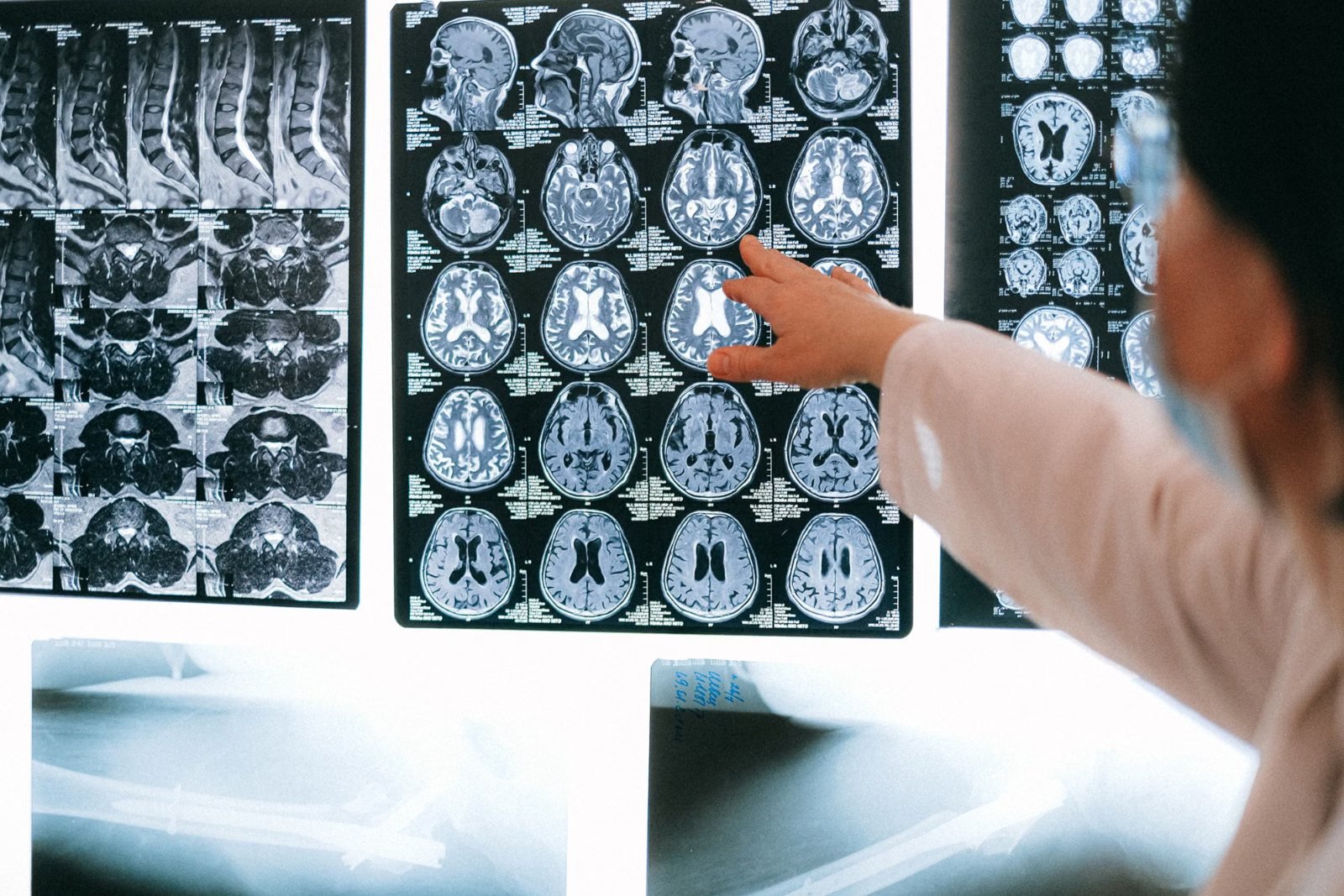
A brain MRI shows the structure of the brain and the tissues around it. Our guide to what a brain MRI shows goes into more detail.
If you have back pain with pain, tingling, weakness or numbness in both legs, a loss of feeling around your genitals or anus, or changes in bladder or bowel control, the NHS says to call 999 or go to A&E. If you feel hot, cold, shivery or generally unwell with back pain, it says to ask for an urgent GP appointment or get help from 111. Do not wait for a scan.
Joints, muscles and soft tissue
Joints are one of the most common reasons for an MRI. Leeds Teaching Hospitals says MRI scans are often used to examine joints, particularly for the common sports injuries affecting the knee, and that MRI can identify tendons, ligaments, muscle, cartilage and bone marrow.
Because it shows soft tissue so clearly, Cancer Research UK also lists soft tissue sarcomas and primary bone tumours among the cancers MRI is used for.
Abdomen, pelvis, prostate and heart
Cancer Research UK says an MRI scan can be used to look at most areas of the body. In the pelvis, it lists tumours in the pelvic organs, including prostate, bladder, womb and ovarian tumours, among the cancers MRI is used for.
For the heart, the British Heart Foundation explains that a cardiac MRI shows the heart and blood vessels. It can help doctors diagnose conditions such as congenital heart disease, cardiomyopathy, heart tumours, damage caused by a heart attack and heart valve disease, and it can show the blood supply to the heart muscle. The BHF says the scan lasts 15 to 90 minutes and that you will not feel any pain.
What MRI is less good at: bone detail and lungs
MRI's strength in soft tissue comes with limits elsewhere. A 2020 review in Frontiers in Endocrinology explains that bone is typically seen as a signal void, meaning it appears dark, on the conventional sequences used in clinical MRI. MRI still shows bone marrow and is used for some bone tumours, so this is about the hard outer layer of bone rather than every bone problem.
The lungs are harder still. A 2015 review of chest MRI in Radiologia Brasileira explains that the low proton density of lung tissue gives a weak signal, that the boundaries between tissue and air in the lungs cause image artefacts, and that movement from breathing and the heartbeat is one of the major challenges for image quality. Our comparison of MRI vs CT explains how the two scans differ.
Can an MRI detect cancer?
MRI scans and cancer are closely linked. Cancer Research UK says MRI is used to find a tumour, to find out how big it is and whether it has spread (known as staging a cancer), to measure blood flow and to check how well treatment is working. It adds that in some cancers MRI can be better than CT at showing how deeply a tumour has grown into body tissues.
So an MRI can show a growth or an abnormal area, and it plays an important part in how many cancers are diagnosed, staged and followed up. If you have a symptom that worries you, start with your GP, who can decide which tests are appropriate.
Why a normal scan does not rule everything out
No test is perfect. Writing about cancer screening, Cancer Research UK describes false negatives, where a test misses cancer or a possible sign of cancer, as well as false positives, where a test suggests a possible cancer that is not there, and overdiagnosis, where a test finds a cancer that would never have caused any problems. It notes that some private companies offer full-body scans.
Its advice is that whatever your age, if you notice anything unusual for you, you should tell your doctor as soon as possible, even if you have had a screening test recently. An MRI also only looks at the part of the body that was scanned, so a clear scan of one area does not tell you about another.
Getting your results and arranging a scan
Every MRI is reported by an appropriately qualified clinician. At Leeds Teaching Hospitals, for example, the results are sent to the person who requested the scan. If you go privately, the clinic will tell you how long its report takes and how you will receive it.
MRI does not use ionising radiation, so IR(ME)R does not apply. Many clinics accept self-referral after their own safety screening, but each clinic sets its own policy. Prices vary by clinic, region, body area, whether contrast is used and what is included, and FindScan shows each clinic's own listed price. See our private MRI scan page, or compare clinics near you and send an enquiry.
Common questions
What do MRI scans show?
MRI scans take detailed pictures of the inside of the body and are especially good at showing soft tissue. They are used for the brain and spinal cord, joints, muscles, tendons and ligaments, the pelvic organs and the heart, among other areas.
Can an MRI detect cancer?
Cancer Research UK says MRI is used to find tumours, measure how big they are and see whether they have spread. If you have a symptom that worries you, speak to your GP.
Does an MRI show bones?
MRI shows bone marrow and is used for some bone tumours. The hard outer layer of bone gives very little signal on standard MRI sequences and appears dark.
Can an MRI scan see the lungs?
Lung tissue is difficult to image with MRI. A review of chest MRI explains that lung tissue gives a weak signal, the air in the lungs causes artefacts, and breathing and heartbeat movement affect image quality.
Does an MRI scan use radiation?
No. MRI uses magnetism and radio waves and does not use ionising radiation.
References
- MRI scan. NHS. Accessed 7 October 2026.
- MRI scan. Cancer Research UK. Accessed 7 October 2026.
- Magnetic Resonance Imaging (MRI). Leeds Teaching Hospitals NHS Trust. Accessed 7 October 2026.
- Cardiac MRI scan. British Heart Foundation. Accessed 7 October 2026.
- An update in qualitative imaging of bone using ultrashort echo time magnetic resonance. DOI 10.3389/fendo.2020.555756. Frontiers in Endocrinology (Jerban et al., 2020). Accessed 7 October 2026.
- MRI of the chest: review of imaging strategies. DOI 10.1590/0100-3984.2015.48.6e1. Radiologia Brasileira (Souza, 2015). Accessed 7 October 2026.
- Cancer screening: common questions answered. Cancer Research UK. Accessed 7 October 2026.
- Back pain. NHS. Accessed 7 October 2026.
This article is general information, not medical advice, and it does not replace an assessment by a clinician. If you have symptoms that worry you, speak to your GP or call 111. In an emergency, call 999.