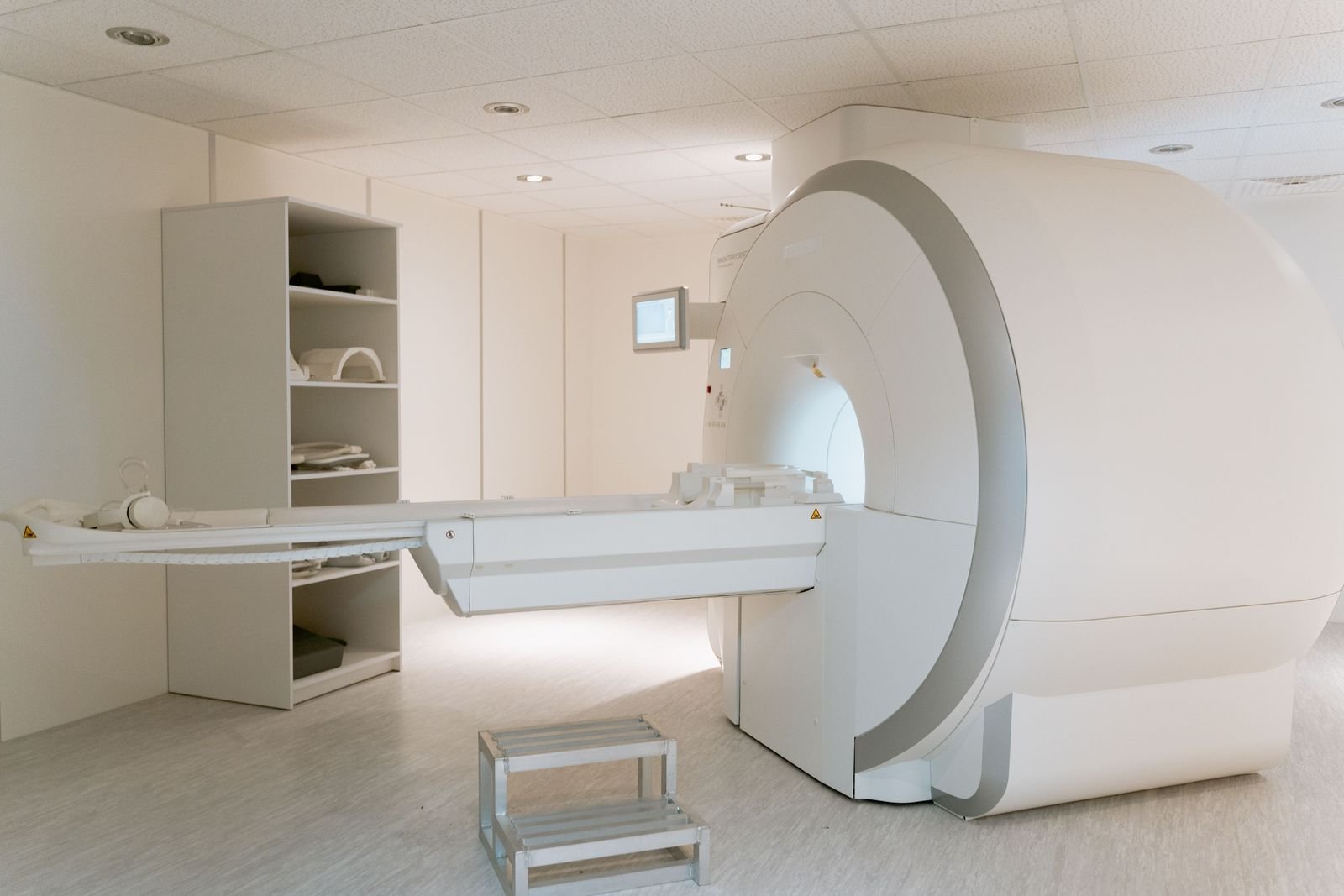
Can You Drive After an MRI Scan? Driving After MRI With Contrast, Sedation or Buscopan
Most people can drive home after an MRI scan. The main exception is sedation for anxiety or claustrophobia, and a muscle-relaxing injection used for some tummy and pelvis scans can blur your sight for a short time. Here is what NHS hospital leaflets say.
Written by the FindScan Editorial Team and reviewed by our Medical Advisor, Dr Mohamed Najjar
Reviewed
Can you drive after an MRI? For most people, yes. A routine MRI scan on its own does not stop you driving home. Things change if you are given something to help you through the scan, so this guide answers the questions people search most often: can you drive after an MRI scan with nothing extra, what about driving after MRI with contrast, and what is the advice on driving after sedation for MRI.
We quote what NHS hospital leaflets actually say, because advice differs a little between departments. Your own appointment letter, and what the radiographer tells you on the day, always come first.
Can you drive after an MRI scan without sedation?
Yes, usually. Gloucestershire Hospitals' leaflet for adults having an MRI scan says plainly that you can drive home afterwards and resume your normal activities. The Royal Berkshire's MRI leaflet says no recovery period is needed after the scan unless your appointment letter or staff tell you otherwise, and the NHS says you will be able to eat and drink as normal afterwards.
The NHS says a scan usually takes between 15 minutes and 1 hour, but can take longer, so allow for that when you plan parking and the journey home. If you are nervous, it helps to know what happens in the scanner beforehand; our guide to what to expect during an MRI scan walks through it step by step.
Driving after MRI with contrast
Some MRI scans use an injection of contrast medium, often called dye, to show more detail in the pictures. The NHS says that if you have had contrast, you may be asked to wait up to 30 minutes before you leave.
The dye itself is not a reason to stop driving. The Rotherham NHS Foundation Trust's leaflet for patients after an MRI with contrast says that MRI contrast media does not have any known effect on your ability to drive vehicles or operate machinery. It says you may notice a warm or cold feeling that should wear off. It also lists delayed reactions to look out for, such as wheeziness, difficulty breathing, chest tightness or pain, or a skin rash, and says to seek advice from your GP or urgent care if they happen.
If you feel unwell, dizzy or faint after any injection, do not drive until you feel normal again. Our guide to MRI with contrast explains why contrast is used and the safety checks before it is given.
Driving after sedation for MRI
Some people who are anxious or claustrophobic are offered a medicine to help them relax, usually a tablet. This is where the answer changes. The NHS says that if you have had a medicine to help you relax, you should not drive for 24 hours, and someone will need to collect you from the hospital and take you home by car or taxi.
NHS trust leaflets say the same, and some go further:
- Lancashire Teaching Hospitals, whose leaflet names the sedative lorazepam, says you should not drive until you are sure you no longer feel any effects of the medication, which could be longer than 24 hours. It asks you to arrange a responsible adult to escort you home and supervise you overnight, and not to drink alcohol, use machinery or electrical equipment (even a kettle), sign contracts or be the sole carer for young children. It adds that it is an offence to drive while under the influence of this medicine.
- The Royal Berkshire says you must not drive yourself home, and must be escorted home by a friend or relative if you have been prescribed sedation.
- University Hospitals Plymouth says you would be asked not to drive after you have taken the sedative.
That last point matters for the journey there too. If your instructions say to take the tablet before you travel, you should not drive to the appointment either. Arrange a lift both ways, or travel by taxi with someone.
Who provides the sedative depends on the service. The Royal Berkshire says its MRI department cannot provide sedation and that your GP may be able to prescribe it, while Plymouth says it might be prescribed by the doctor who referred you. If you are going private, ask the clinic how it handles this before the day. Our guide to claustrophobia and MRI covers other ways to cope, and an open or upright MRI scanner may help some people manage without sedation.
Buscopan injections for tummy and pelvis scans
Some MRI scans of the abdomen and pelvis use a short-acting injection to relax the bowel. Hull University Teaching Hospitals' leaflet says Buscopan (hyoscine butylbromide) is used in some MRI scans to stop muscle spasms from blurring the pictures. It lists blurred vision and dizziness among the common side effects, which it says affect fewer than 1 in 10 people, and advises you to wait until your sight returns to normal or you stop feeling dizzy before driving. It says this should resolve within a couple of hours.
Other trusts give a fixed wait. Manchester University NHS Foundation Trust's small bowel MR leaflet says the muscle relaxant may make your eyesight blurred for a short time and that you should not drive for around 30 minutes after your scan. Gloucestershire says Buscopan can give you a dry mouth and a faster heart rate for about 20 minutes. If your scan might involve this injection, ask the department how long it would like you to wait.
Hull also lists a rare but important complication: a painful red eye with loss of vision, which it says Buscopan can cause in people with undiagnosed glaucoma, and it says to seek immediate medical treatment if this happens. Tell staff before the scan if you have glaucoma, because Hull lists it as a reason not to have the injection.
What the law says about medicines and driving
The GOV.UK page on drugs and driving says it is illegal in England, Scotland and Wales to drive with legal drugs in your body if they impair your driving. That law does not cover Northern Ireland, but GOV.UK says you could still be arrested there if you are unfit to drive. The page names diazepam and lorazepam among the medicines to talk to your doctor about before driving, and says that if you are not sure whether you should drive, talk to your doctor, pharmacist or healthcare professional.
GOV.UK says a conviction can bring a minimum 1 year driving ban, an unlimited fine, up to 6 months in prison and a criminal record. The simple rule: if anything given for your scan could affect you, do not drive until you are sure it has worn off, and follow the department's own time limit.
Planning your journey to and from an MRI
- Read your appointment letter for any mention of sedation, contrast or injections.
- If you plan to have sedation, arrange a responsible adult to take you home, and someone to stay with you overnight if your leaflet asks for that.
- For a tummy or pelvis scan, ask whether a Buscopan injection is likely and how long to wait before driving.
- Allow extra time in case you are asked to wait after a contrast injection.
- If you feel drowsy or dizzy, or your sight is blurred, do not drive. Wait, or get a lift.
Ask the same questions if you are going private, because each clinic sets its own process for sedation and aftercare.
Key points
- After a routine MRI with no sedation, most people can drive home and carry on as normal.
- MRI contrast dye has no known effect on driving, though you may be asked to wait up to 30 minutes.
- After sedation for MRI, the NHS says do not drive for 24 hours; some trusts say it could be longer, and you need someone to take you home.
- Buscopan can blur your vision for a short time, so wait until your sight is back to normal, or as long as your department advises.
- It is illegal to drive if medicines impair your driving.
Comparing clinics on FindScan
If you are looking for a private scan, you can compare MRI clinics near you on FindScan, see each clinic's own listed price and send an enquiry; the clinic then contacts you to arrange your scan. MRI does not use ionising radiation, so some clinics accept self-referral, depending on the clinic's own policy and safety screening. Ask about sedation, contrast and aftercare when the clinic contacts you.
FindScan is a directory of independent, regulated imaging clinics, not a healthcare provider, and nothing here is medical advice. Speak to your GP or the clinician who referred you about symptoms, medicines or results. If you need help urgently, call NHS 111, or 999 in an emergency.
Common questions
Can you drive after an MRI scan?
Usually, yes. If you have a routine MRI with no sedation, NHS hospital leaflets say you can drive home and carry on with normal activities. The exceptions are if you took a sedative to help you relax, which means no driving for at least 24 hours, or if an injection such as Buscopan has blurred your vision. Check your appointment letter for your hospital's advice.
Is driving after MRI with contrast allowed?
Yes, in most cases. The Rotherham NHS Foundation Trust says MRI contrast media does not have any known effect on your ability to drive or operate machinery. The NHS says you may be asked to wait up to 30 minutes after the injection before leaving. If you feel unwell, dizzy or faint, do not drive until you feel normal again.
What is the advice on driving after sedation for MRI?
Do not drive. The NHS says you should not drive for 24 hours after a medicine to help you relax, and someone needs to take you home by car or taxi. Some trust leaflets say it could be longer than 24 hours and ask you to have a responsible adult stay with you overnight. Do not drive to the appointment if you take the tablet before you travel.
Can I drive after a Buscopan injection for an MRI?
Not straight away if it affects your eyes. Buscopan can blur your vision or make you dizzy for a short time. Hull University Teaching Hospitals says to wait until your sight is back to normal before driving, which should resolve within a couple of hours, and one Manchester leaflet says not to drive for around 30 minutes. Follow your own department's advice.
Do I need someone to drive me home after an MRI?
Only if you have sedation, or if you feel unwell afterwards. For a routine MRI without sedation, NHS leaflets say you can usually drive yourself home. If you are prescribed a sedative, you must arrange a lift home, and some hospitals ask for a responsible adult to stay with you overnight as well.
References
- MRI scan: how it's performed. NHS. Accessed 29 October 2026.
- Adults having an MRI scan (GHPI0318). Gloucestershire Hospitals NHS Foundation Trust. Accessed 29 October 2026.
- Having an MRI scan (adult), RAD_0043, March 2023. Royal Berkshire NHS Foundation Trust. Accessed 29 October 2026.
- After your Magnetic Resonance Imaging (MRI) with contrast media. The Rotherham NHS Foundation Trust. Accessed 29 October 2026.
- Advice regarding your sedation procedure for MRI. Lancashire Teaching Hospitals NHS Foundation Trust. Accessed 29 October 2026.
- Aftercare for people with claustrophobia. University Hospitals Plymouth NHS Trust. Accessed 29 October 2026.
- Injection of Buscopan in MRI scans. Hull University Teaching Hospitals NHS Trust. Accessed 29 October 2026.
- Small Bowel Magnetic Resonance (MR), information for patients. Manchester University NHS Foundation Trust. Accessed 29 October 2026.
- Drugs and driving: the law. GOV.UK. Accessed 29 October 2026.
This article is general information, not medical advice, and it does not replace an assessment by a clinician. If you have symptoms that worry you, speak to your GP or call 111. In an emergency, call 999.