NHS lung cancer screening: what the national rollout means for you
The NHS is inviting people aged 55 to 74 who smoke or used to smoke for a lung health check and, if needed, a low-dose CT scan. Here is what to expect, as of October 2026.
Written by the FindScan Editorial Team and reviewed by our Medical Advisor, Dr Mohamed Najjar
Reviewed
Lung cancer screening is one of the biggest changes to NHS cancer care in years. Invitations are going out across England, and mobile scanning units are appearing in places such as supermarkets and high streets. If you have been invited, or think you might be, this guide explains what the programme is, who it is for, what the chest CT scan involves and what it can and cannot tell you. The facts below are correct as of October 2026, and the programme is still being rolled out, so local details may change.
What is NHS lung cancer screening?
The NHS Lung Cancer Screening Programme invites people at higher risk of lung cancer for a health check and, if needed, a scan of their lungs. It grew out of the Targeted Lung Health Check pilot, which began in 2019. In June 2022 the UK National Screening Committee, which advises governments on screening, said that targeted screening for lung cancer is recommended for people aged 55 to 74 at high risk, using low-dose computed tomography (CT).
In June 2023 the government announced a national rollout of lung cancer screening in England. In the early phase, 76% of the cancers found were caught at an earlier stage, compared with 29% in 2019 outside the programme. The aim is to find lung cancer before it causes symptoms, when treatment is more likely to work.
Why it matters
Early lung cancer often causes no signs at all, so people usually feel well. According to NHS England figures published in May 2026:
- more than 10,000 lung cancers had been found through the programme;
- more than three quarters of them were caught at stage one or two;
- people diagnosed at the earliest stages are nearly 13 times more likely to survive for five years than those diagnosed late;
- seven in 10 lung cancer cases are caused by smoking.
Who is invited?
The NHS says you may be offered lung cancer screening if you:
- are aged 55 to 74;
- smoke now or have smoked in the past;
- are registered with a GP surgery;
- live in an area where checks are being offered.
Your GP record is used to find people who may be eligible. This is why it helps if your smoking history is recorded correctly, even if you stopped many years ago. You may be contacted by your GP or by a local NHS service.
Coverage is still growing. Cancer Research UK reports that the programme had reached over half of the eligible population in England. The National Cancer Plan for England, published in April 2026, commits to completing the rollout by 2030, so that every eligible person has had their first invitation. If you live in Wales, Scotland or Northern Ireland, plans are at different stages: Wales expects first invitations in 2028 and Scotland is planning a national programme.
What happens at a lung health check
The first step is a conversation, not a scan. Your appointment may be in person, by phone or online. A health professional asks about your breathing, lifestyle, and family and medical history, and may measure your height and weight. If you smoke, you will be offered help to stop.
After the check, one of three things usually happens:
- No further action, if you are not at higher risk.
- A referral to your GP, if a breathing or lung problem is found.
- A CT scan, if you are at higher risk. This may be on the same day or at a later appointment.
The low-dose CT scan
The scan uses low-dose CT, as recommended by the UK National Screening Committee. It may take place in a mobile unit in the community or at your local hospital. NHS England says mobile scanning trucks visit places such as supermarkets, sports stadiums and high streets.
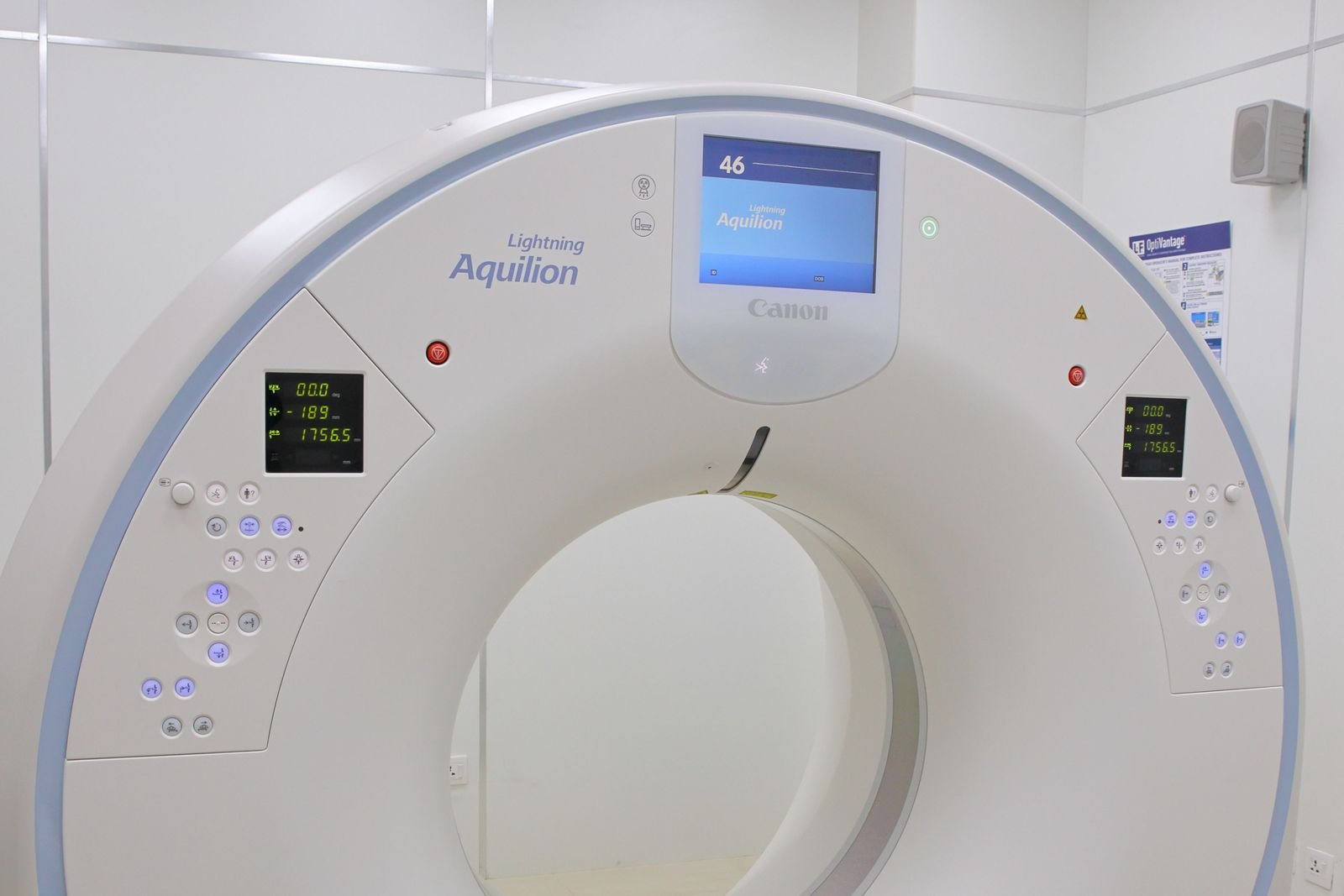
The NHS says the appointment lasts about 30 minutes. The scan itself takes only a few minutes and does not hurt. You lie on a table that moves through a large ring while the scanner takes pictures of your lungs. If you would like to know more about CT in general, our guide to MRI vs CT scans explains how the two differ.
Results and what happens next
The NHS says you should get a letter with your results within 4 weeks of the scan. If the scan shows anything that needs a closer look, you may be referred for more scans or to a specialist.
Being asked back does not necessarily mean you have cancer. As Cancer Research UK explains below, screening can pick up things in people who do not have lung cancer, and a follow-up scan is often the way to check. People with a clear scan are invited again every two years until they reach the upper age limit, according to the government's rollout announcement.
The benefits and the limits
Screening can save lives by finding cancer early. But like every screening test, it has limits, and it is worth knowing them before you decide. Cancer Research UK sets out the possible downsides:
- Missed cancers. Screening does not always find a cancer that is there.
- False alarms. A scan may show something in a person who does not have lung cancer. This can cause worry, and the follow-up tests can sometimes have complications.
- Overdiagnosis. Some cancers found by screening might never have caused harm, so some people have treatment they would not have needed.
- Radiation. Each scan uses a very small dose of radiation, but the lungs are sensitive to radiation, which is one reason scans are not done more often than needed.
Taking part is your choice. A clear result is reassuring, but it does not guarantee that you do not have lung cancer or that you will not develop it in future.
If you have symptoms, do not wait
Screening is for people who feel well. The NHS is clear: do not wait for a lung health check if you have symptoms such as:
- a cough that lasts more than 3 weeks, or a long-standing cough that changes;
- chest infections that keep coming back;
- coughing up blood;
- unexplained weight loss or tiredness.
See your GP instead. Our guide to what a chest X-ray can show explains one of the first tests a GP may arrange.
What if you are not invited?
If you think you should have been invited but have not been, the NHS suggests contacting your local lung screening service to see if you can be referred. It also suggests asking your GP surgery to update your smoking record so you are invited in future. Remember that the rollout is still under way, so your area may simply not have started yet.
Can you have a private lung CT scan instead?
Some people ask whether they can pay for a private chest CT. The rules are strict, for good reason. Under the Ionising Radiation (Medical Exposure) Regulations 2017, every exposure to radiation must be justified before it happens, and this applies to the private sector as well as the NHS. The guidance specifically covers people without symptoms, including scans for an individual health assessment.
In practice this means a private CT always needs a referrer, and a trained practitioner must decide that the scan is justified for you. Many private clinics arrange this through their own doctor, and they may decline if the scan is not appropriate. If you are eligible for the NHS programme, it is usually the best place to start, because it includes a risk assessment, quality-checked scans and a clear follow-up pathway. A private scan is more often used when a doctor has a specific clinical question. Our guide to the limits of health scans covers this in more detail.
Where the rollout goes from here
NHS England expects that more than 6 million people in England will be invited for a lung health check by 2030, and that up to 50,000 cancers will be diagnosed through the programme. If you are aged 55 to 74 and have ever smoked, it is worth keeping an eye out for your letter or text.
This article is general information, not medical advice. Please speak to your GP or the referring clinician about any symptoms or results. If your symptoms are urgent, call NHS 111, or 999 in an emergency.
Finding a private scan
If a doctor has recommended a scan, you can compare regulated clinics offering a chest CT scan or chest X-ray on FindScan. Each clinic lists its own price and will confirm the final price with you. CT and X-ray always need a referral, which many clinics can arrange through their own doctor. Send an enquiry and the clinic will contact you.
Common questions
I have never smoked. Can I have NHS lung cancer screening?
The NHS programme is for people aged 55 to 74 who smoke now or have smoked in the past, so people who have never smoked are not usually invited. Lung cancer can still affect people who have never smoked. If you have symptoms such as a cough lasting more than 3 weeks, coughing up blood or unexplained weight loss, see your GP, whatever your smoking history.
Is the screening scan the same as a normal CT scan?
It is a CT scan of the chest, but it uses a low dose of radiation, as recommended by the UK National Screening Committee. The NHS says the appointment lasts about 30 minutes, while the scan itself takes only a few minutes and does not hurt. It may take place in a mobile unit in the community or at your local hospital.
How long do lung screening results take?
The NHS says you should receive a letter with your results within 4 weeks of the CT scan. If something needs a closer look, you may be invited for another scan or referred to a specialist. Being asked back does not necessarily mean you have cancer, because screening can flag things in people who do not have lung cancer.
I think I am eligible but have not been invited. What should I do?
The rollout across England is not finished and is due to be complete by 2030, so your area may not have started yet. The NHS suggests contacting your local lung screening service to ask whether you can be referred, and asking your GP surgery to make sure your smoking history is recorded correctly so you are invited in future.
Can I pay for a private low-dose CT scan of my lungs?
Any CT scan, NHS or private, must have a referrer and must be justified under the Ionising Radiation (Medical Exposure) Regulations 2017, including for people without symptoms. Many private clinics arrange this through their own doctor, and they may decline if the scan is not appropriate. If you are eligible for the NHS programme, that is usually the best place to start.
References
- Lung cancer: UK NSC recommendation. GOV.UK (UK National Screening Committee). Accessed 12 October 2026.
- New lung cancer screening roll out to detect cancer sooner. GOV.UK (DHSC press release, June 2023). Accessed 12 October 2026.
- Thousands of lung cancers in North East and Yorkshire caught early through NHS screening programme. NHS England (May 2026). Accessed 12 October 2026.
- Lung cancer screening. NHS (nhs.uk). Accessed 12 October 2026.
- The National Cancer Plan for England: delivering world class cancer care. GOV.UK (DHSC, April 2026). Accessed 12 October 2026.
- Lung cancer screening (health professionals). Cancer Research UK. Accessed 12 October 2026.
- Screening for lung cancer. Cancer Research UK. Accessed 12 October 2026.
- Guidance to the Ionising Radiation (Medical Exposure) Regulations 2017. GOV.UK (DHSC). Accessed 12 October 2026.
This article is general information, not medical advice, and it does not replace an assessment by a clinician. If you have symptoms that worry you, speak to your GP or call 111. In an emergency, call 999.