How much does a private mammogram cost in the UK? What affects the price
There is no single price for a private mammogram in the UK, because clinics include different things. Here is what drives the cost, how NHS breast screening works, and why a referral is always needed.
Written by the FindScan Editorial Team and reviewed by our Medical Advisor, Dr Mohamed Najjar
Reviewed
If you are thinking about a private mammogram, one of the first questions is usually how much it will cost. There is no single answer, because clinics include different things in their package. This guide explains what drives the price, how the NHS Breast Screening Programme works, and why a referral is always needed. You can compare clinics and their listed prices on our private mammogram page.
The short answer on cost
The cost of a private mammogram in the UK varies from clinic to clinic. Each clinic on FindScan lists its own price, and the clinic confirms the final price with you before your appointment. The price you see depends on what is included, so it helps to compare like with like.
The sections below explain the main things that make one package different from another.
What a mammogram is
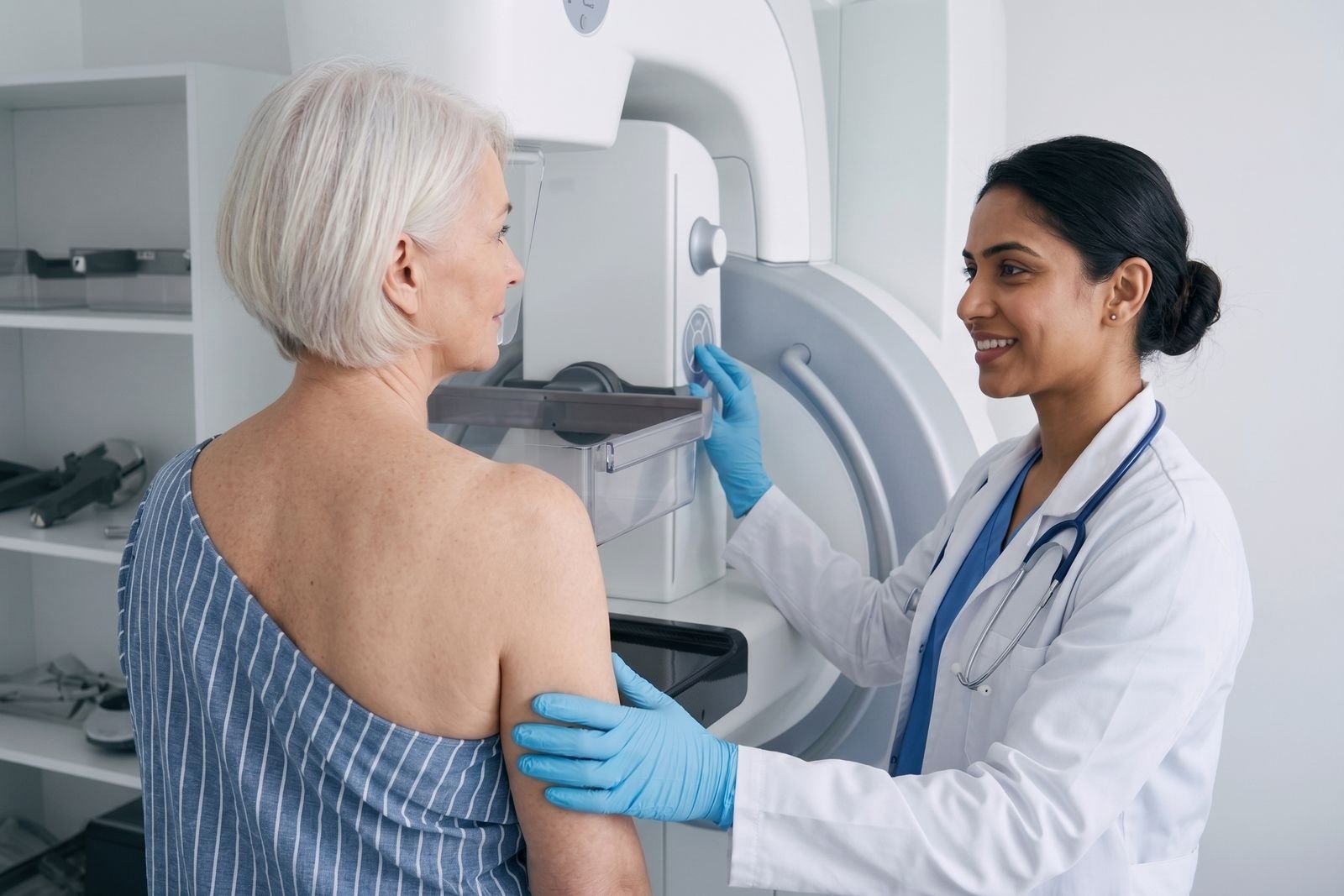
A mammogram is an X-ray of the breast. In the NHS screening programme, you'll have 2 mammograms taken for each breast. Each X-ray takes only a few seconds, and the appointment usually takes no longer than 30 minutes.
Age affects which test is used. The breast unit at The Hillingdon Hospitals NHS Foundation Trust explains that a mammogram is the standard method of imaging for patients above the age of 40. It adds that ultrasound has the advantage of being usable in younger patients, and can be used alongside mammograms in people over 40.
What drives the cost of a private mammogram
2D mammogram or 3D tomosynthesis
A standard digital mammogram gives a flat, 2D picture of the breast. Some clinics also offer tomosynthesis, sometimes called a 3D mammogram. Cancer Research UK describes tomosynthesis as using digital X-rays and a computer to put together 3D pictures of the breast. It explains that this reduces the problem of overlapping tissue and can help the doctor see the structures of the breast more clearly.
Not every clinic has tomosynthesis equipment, and those that do may price it differently from a standard mammogram. Check the clinic's listing, or ask when you enquire. The most suitable test depends on your age and the reason for the scan, and the doctor who refers you can advise on this.
Whether an ultrasound is included
Some packages include a breast ultrasound as well as the mammogram, while others offer one test only. In NHS breast clinics, the tests offered can include a breast examination, a mammogram, an ultrasound and a biopsy (NHS breast clinic tests), depending on what is needed. A private package that combines more than one test is likely to be priced differently from a mammogram alone. You can read more about ultrasound on our private ultrasound scan page.
Consultant review or examination
Some clinics include an appointment with a breast specialist, who may examine you and talk through the findings. Others provide the images and a written report only. Ask whether a consultation is part of the price, and whether you will have the chance to discuss the results with a clinician.
How the images are reported
The report is the written result produced by a trained reader after looking at your images. In the NHS Breast Screening Programme, double reading of mammograms by 2 readers is mandatory. If the two readers disagree, a third, consultant level reader can make the final decision.
Private clinics set their own reporting arrangements. It is worth asking who reports the images, whether one or two readers look at them, and how long the report takes. Our guide on radiographers and radiologists explains the roles, and how long scan results take covers typical waits.
Referral and doctor time
Because a mammogram uses X-rays, it must be referred and justified (more on this below). Many private clinics arrange the referral through their own doctor. Some include this in the price, while others charge for it separately.
Follow-up tests
Sometimes a mammogram shows something that needs a closer look. In NHS screening, for every 100 people who have breast screening, 4 will need further tests, and this does not necessarily mean cancer. Follow-up may include further imaging or a biopsy. Ask the clinic what happens if more tests are needed and whether these would cost extra.
Copies of images and other extras
Some clinics include a copy of your images, while others charge for it. Our guide on getting your scan images and report explains what to ask for.
The NHS Breast Screening Programme
Before paying privately, it is worth knowing what the NHS offers. The NHS says breast screening is offered to women aged 50 up to your 71st birthday, and you will then be invited every 3 years. The GOV.UK screening leaflet adds that the first invitation comes between the ages of 50 and 53.
If you are 71 or over, you will not be invited automatically, but you can ask for screening every 3 years by contacting your local service. If you are trans or non-binary, how you are invited depends on the sex you are registered with at your GP surgery.
Screening has benefits and limits. The NHS offers it because it can save lives from breast cancer. The GOV.UK leaflet also explains that screening does not always find a cancer that is there, that it may find a cancer that would never have caused harm, and that mammograms involve a small amount of radiation. If you have a strong family history of breast cancer, speak to your GP about whether you need a different kind of assessment.
Why a referrer is always needed
Mammograms use ionising radiation, so they are covered by the Ionising Radiation (Medical Exposure) Regulations 2017, known as IR(ME)R. Under regulation 11 of IR(ME)R, no exposure may be carried out unless it has been justified as showing a sufficient net benefit and has been authorised.
GOV.UK guidance on IR(ME)R in breast screening says a referrer must be a registered healthcare professional who has been entitled by the employer. In the NHS programme, your invitation letter is signed by a registered healthcare professional, which is how the referral works there.
In private care, the clinic will need a referral before your mammogram. Many private clinics can arrange this through their own doctor, who will check that the test is appropriate for you.
If you have symptoms, see your GP first
A private mammogram is not the right first step if you have noticed a change in your breast. The NHS breast screening guidance advises that you see a GP if you are worried about symptoms of breast cancer, even if you have recently had breast screening. It also says not to wait for your next screening appointment.
Your GP can refer you to an NHS breast clinic if they think your symptoms need investigating. There, you may have an examination, imaging and, if needed, a biopsy. The NHS says some results may be available that day, while others, such as a biopsy, can take 1 to 2 weeks. The clinic should tell you when and how you will get your results.
Questions to ask before you enquire
- Is the mammogram 2D, 3D tomosynthesis, or both?
- Is an ultrasound or a consultation included?
- Who will report the images, and when will I get the report?
- How is the referral arranged, and is it included in the price?
- What happens, and what does it cost, if I need further tests?
- Will I receive a copy of my images?
This article is general information, not medical advice. Please speak to your GP or the clinician who referred you about any symptoms or results, and if your symptoms are urgent, call NHS 111 or 999.
Finding a private scan
You can compare clinics offering mammograms on FindScan, where each clinic lists its own price, and send an enquiry to the clinic you choose. The clinic will contact you to confirm what is included and the final price. A mammogram uses ionising radiation, so it must be justified and needs a referrer under IR(ME)R; many private clinics can arrange this through their own doctor. You can also browse scans by city to find clinics near you.
Common questions
How much does a private mammogram cost in the UK?
It depends on the clinic and on what is included. A package might be a 2D mammogram only, or it might add 3D tomosynthesis, a breast ultrasound, a consultation with a specialist, or a copy of your images. Each clinic on FindScan lists its own price, and the clinic confirms the final price with you before your appointment.
Is a 3D mammogram the same as a standard mammogram?
Not quite. A standard mammogram gives a 2D picture of the breast. Tomosynthesis, often called a 3D mammogram, uses digital X-rays and a computer to build up 3D pictures. Cancer Research UK says this reduces the problem of overlapping tissue. Not every clinic offers it, and it may be priced differently, so check the listing or ask the clinic.
Do I need a referral for a private mammogram?
Yes. A mammogram uses ionising radiation, so under IR(ME)R 2017 it must be justified and needs a referrer. GOV.UK guidance says a referrer must be a registered healthcare professional. Many private clinics can arrange a referral through their own doctor. When you send an enquiry through FindScan, the clinic will contact you and explain how this works.
Who is invited for NHS breast screening?
The NHS offers breast screening to women aged 50 up to their 71st birthday, with the first invitation between 50 and 53 and then every 3 years. If you are 71 or over you can ask for screening every 3 years by contacting your local service. Trans and non-binary people are invited based on the sex registered at their GP surgery.
I have found a breast lump. Should I get a private mammogram first?
Please see your GP first. The NHS advises seeing a GP if you are worried about symptoms of breast cancer, even if you have recently had screening, and not waiting for your next screening appointment. Your GP can refer you to a breast clinic, where you may have an examination, imaging and, if needed, a biopsy.
References
- Breast screening (mammogram): When you'll be invited and who should go. NHS. Accessed 12 October 2026.
- NHS breast screening: helping you decide. GOV.UK. Accessed 12 October 2026.
- Guidance for the implementation of the IR(ME)R regulations 2017 (breast screening). GOV.UK. Accessed 12 October 2026.
- The Ionising Radiation (Medical Exposure) Regulations 2017, regulation 11. legislation.gov.uk. Accessed 12 October 2026.
- A trial comparing standard mammograms with a new type of digital mammogram to screen for breast cancer (TOMMY trial). Cancer Research UK. Accessed 12 October 2026.
- Breast Unit: Understanding my scans. The Hillingdon Hospitals NHS Foundation Trust. Accessed 12 October 2026.
- Tests and next steps for breast cancer in women. NHS. Accessed 12 October 2026.
- Breast screening: guidance for image reading. GOV.UK. Accessed 12 October 2026.
This article is general information, not medical advice, and it does not replace an assessment by a clinician. If you have symptoms that worry you, speak to your GP or call 111. In an emergency, call 999.