DEXA bone density scans explained
What a DEXA scan measures, what a T-score means and what it costs privately.
 DEXA
Broken a Bone After 50? When a DEXA Scan Is Advised
A bone that breaks in a simple fall can be the first sign of osteoporosis. What the NHS and NICE's 2026 guideline say about fracture risk and DEXA scans.
 DEXA
Can a DEXA Scan Show Cancer?
A DEXA scan measures bone density, not cancer. What it shows, which scans look for cancer in bone, and why people with cancer are sometimes offered one.
 DEXA
DEXA Scan Cost in the UK: NHS and Private Routes
DEXA scan cost in the UK explained: when a bone density scan is free on the NHS, what drives private prices, referral rules and what to ask a clinic.
 DEXA
Can a DEXA Scan Show a Spine Fracture? The VFA Explained
NICE now says a quick spine check, a vertebral fracture assessment, should be considered with a DEXA scan for many people. What it is and who it is for.
 DEXA
Osteoporosis Symptoms and Signs, and Where a DEXA Scan Fits
Osteoporosis often has no symptoms until a bone breaks. The signs to watch for, the main risk factors, who is offered a DEXA scan and how UK referral works.
 DEXA
DEXA scan and body fat: how body composition DEXA differs from a bone density scan
How a body composition DEXA scan differs from a bone density scan, what the report shows, and what UK radiation rules say about scans for body fat.
 DEXA
DEXA scan results explained: T-scores, Z-scores and what happens next
DEXA scan results explained in plain English: what T-scores and Z-scores mean, the WHO bands, and how FRAX and risk factors shape next steps.
 DEXA
How to Get a DEXA Bone Density Scan Privately in the UK
A DEXA scan needs a referral by law, because it uses ionising radiation. Who can refer you, why private availability is patchy, and what to ask before you book.
 DEXA
DEXA Bone Density Scan: Cost, Process and What Your T-Score Means
What a DEXA scan measures, how small the radiation dose really is, and the difference between a T-score and a Z-score - explained without jargon.
What a DEXA scan is for
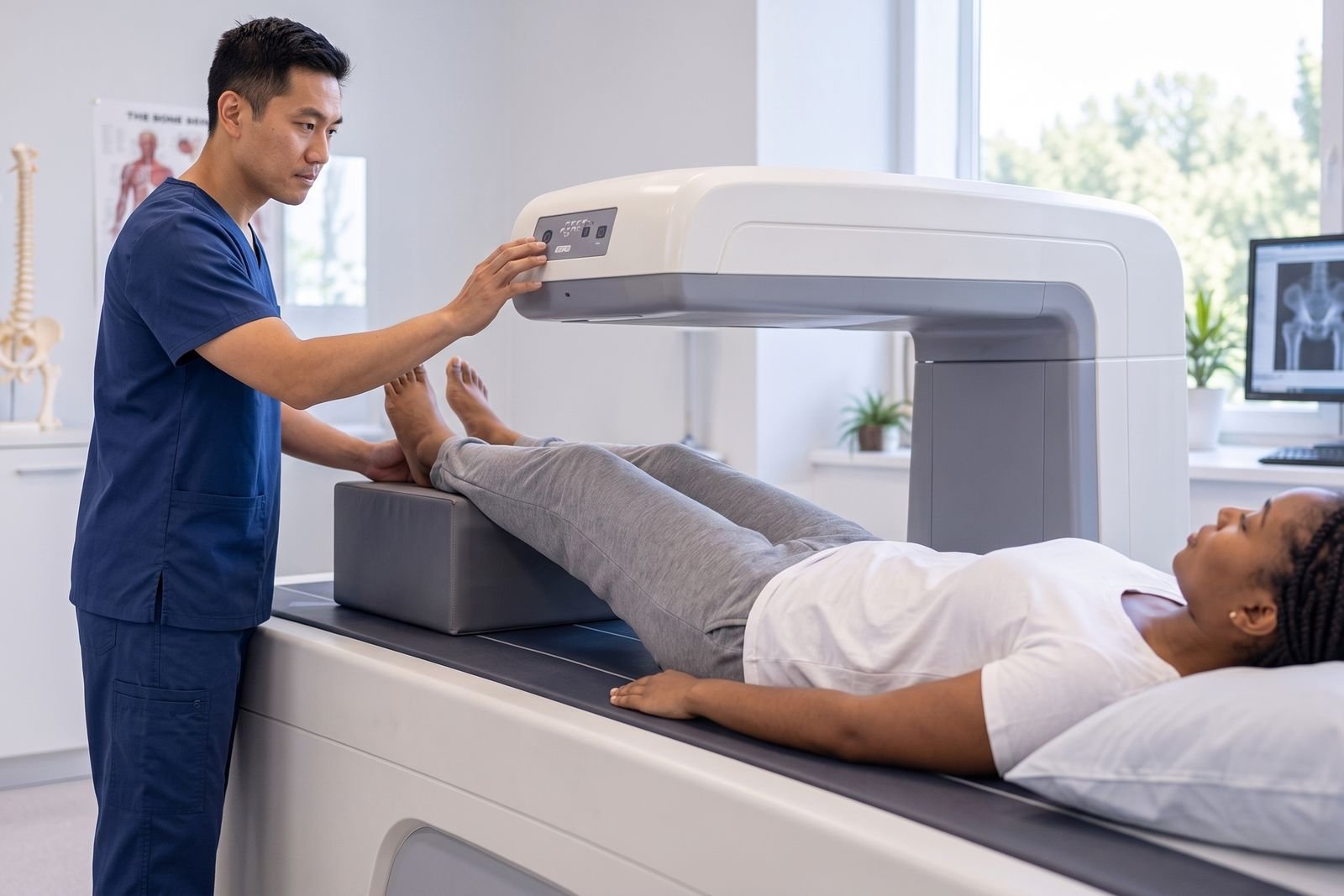
A DEXA scan, short for dual-energy X-ray absorptiometry, measures bone mineral density, usually at the hip and lumbar spine. It is the standard test for diagnosing osteoporosis and osteopenia, for assessing fracture risk, and for monitoring how bone density changes over time or in response to treatment. The scan takes around 10 to 20 minutes, you lie on an open table rather than inside a tunnel, and the radiation dose is very low, a fraction of a standard chest X-ray.
Understanding your DEXA result
Results are given as a T-score, which compares your bone density with that of a healthy young adult, and a Z-score, which compares it with people of your own age and sex. A T-score of -1.0 or above is considered normal, between -1.0 and -2.5 indicates osteopenia, and -2.5 or below meets the definition of osteoporosis. The score is only part of the picture, and a clinician will usually read it alongside your age, history and other risk factors. Our guides explain what a DEXA scan involves and how to get a DEXA scan privately or through the NHS.
Comparing DEXA clinics on FindScan
DEXA uses ionising radiation, so clinics will ask for a referral or arrange one through their own clinician. Clinics listed on FindScan publish the price they charge and we show it as the clinic sets it. You can search clinics by location, compare those near you and send an enquiry to the one you choose. The DEXA bone density scan page covers the scan in more detail.