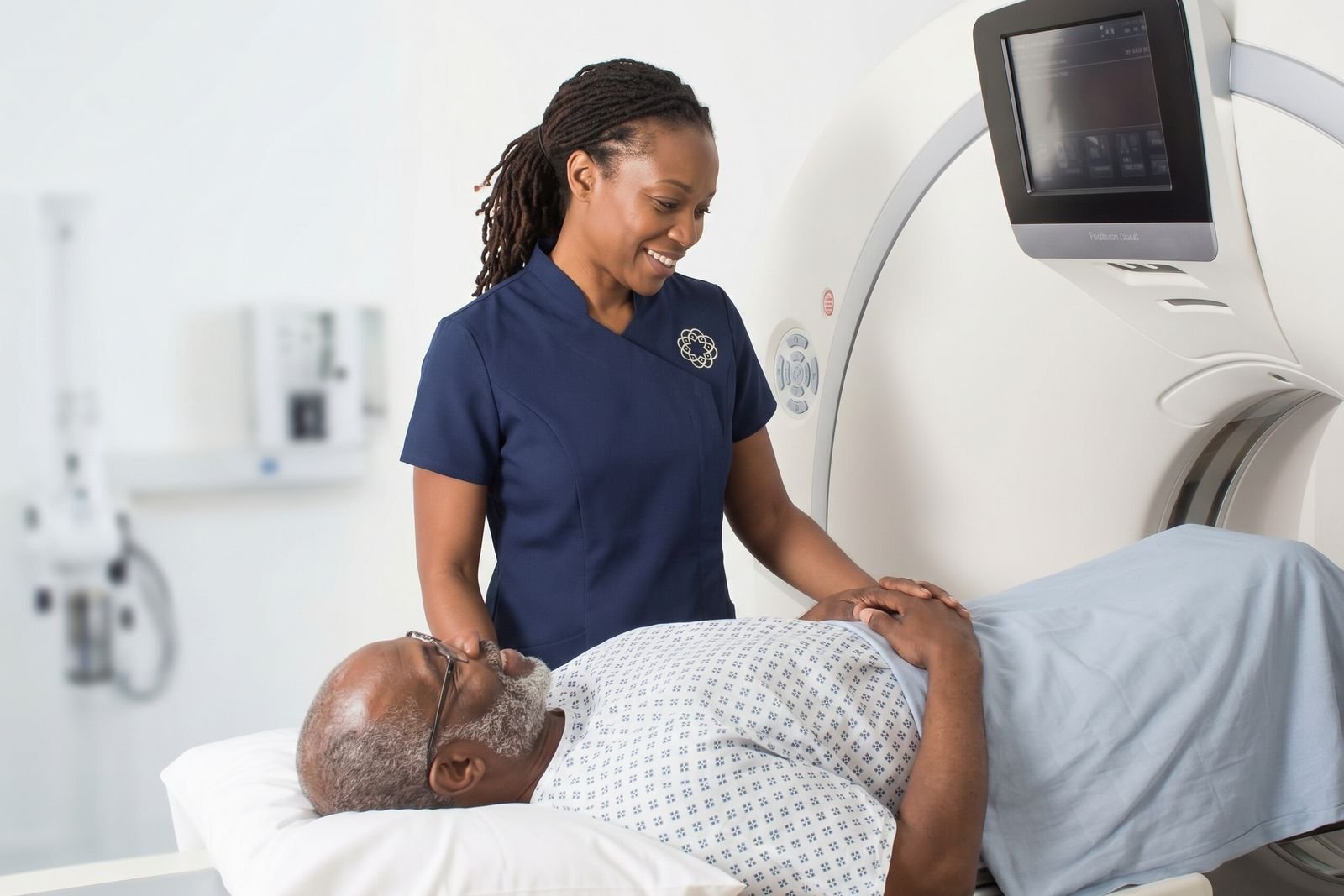
Community diagnostic centres: what they are and how to use them
Community diagnostic centres are NHS sites away from hospitals where you can have scans, checks and tests. Here is what they offer, how referral works and how they compare with private scans, as of October 2026.
Written by the FindScan Editorial Team and reviewed by our Medical Advisor, Dr Mohamed Najjar
Reviewed
If your GP has sent you for a scan recently, your appointment letter may not have been for a hospital at all. More and more NHS tests in England now take place in community diagnostic centres, often called CDCs, in places such as shopping centres and retail parks. This guide explains what a CDC is, which tests they offer, how to get an appointment and how they compare with a private MRI scan or other private test. The details are correct as of October 2026.
What is a community diagnostic centre?
The government describes community diagnostic centres as places where you can get tests, checks and scans faster and closer to home. They are separate from hospitals, and you might find one on a high street or in a shopping centre.
CDCs are part of NHS diagnostic services in England. According to NHS England's CDC guidance, they add extra, digitally connected testing capacity in the community. The aim is to offer a coordinated set of tests, ideally in as few visits as possible, so that people make fewer trips to hospital and get a diagnosis sooner.
Where the idea came from
CDCs grew out of an independent review of NHS diagnostic services led by Professor Sir Mike Richards in 2020. The review recommended community diagnostic hubs, described as one stop shops, set up away from hospitals in places such as empty high street units or retail parks. It also called for routine tests to be kept separate from emergency tests to reduce delays, and for CT scanning capacity to double over five years.
The review also highlighted a staffing gap, estimating that the NHS needed about 2,000 more radiologists and 4,000 more radiographers. That matters because new scanners only shorten waits if there are trained people to run them and report the images. If you are not sure who does what, our guide to radiographers and radiologists explains the difference.
What tests do CDCs offer?
Every CDC is different, but NHS England sets a minimum core set of tests that standard CDCs should provide. For imaging, the core list is:
CDCs also offer blood tests and heart and lung checks such as an ECG, an echocardiogram and spirometry (a breathing test). Larger centres also offer endoscopy. Some CDCs offer optional extras such as mammography, DEXA bone density scans and hearing tests.
So the CDC near you may not offer every test. Your referral letter or booking team will tell you which site can do the test you need.
How many CDCs are there, and what is changing?
In April 2026 the government said there were 170 community diagnostic centres in England, and that 108 of them were open 12 hours a day, 7 days a week. That means many people can now have a scan in the evening or at the weekend.
The same announcement set out plans for:
- 4 new CDCs, in Bideford, Boston, Gorton (Manchester) and Luton, due to open during 2026 and 2027;
- 17 expanded CDCs, with new rooms and scanning equipment such as MRI, CT and ultrasound;
- 15 enhanced CDCs, adding services such as hearing, eye and breathing tests.
Announcing the plans, Professor Stella Vig of NHS England said the expansion means more patients can have checks like MRI, CT and ultrasound scans "in a convenient location at a time that suits them". Upgrades are expected to start benefiting patients during 2026, although building work and new equipment take time, so local timings will vary.
The government also said the NHS in England carried out a record 29 million diagnostic tests in 2025. Looking ahead, the National Cancer Plan for England commits the NHS to providing an extra 9.5 million diagnostic tests a year by March 2029.
How do you get an appointment at a CDC?
In most cases you need a referral. The government says you will need to be referred by your GP or hospital care team. NHS England's guidance explains that CDCs can take referrals from GPs, community services and hospitals, and from services such as NHS 111 and urgent treatment centres. Some local areas allow self-referral for certain agreed groups of patients, but this is not the usual route.
You may be able to choose where you go. For example, Manchester University NHS Foundation Trust tells patients that they can pick the most convenient location when they are referred, and that a CDC does not replace their other options, such as a hospital. Arrangements vary between areas, so ask your GP or the booking team what is available near you.
When you are referred, it can help to ask a few simple questions:
- Which sites can do my test, and is there a CDC near me?
- Are evening or weekend appointments available?
- Do I need to do anything to prepare?
- How and when will I get my results, and who will explain them?
- Is there help with transport if I need it?
Before your appointment, check your letter for any instructions, such as not eating beforehand or wearing clothes without metal. Our guides on how to prepare for your scan and eating and drinking before a scan explain the common ones.
CDCs and NHS waiting times for scans
CDCs are one of the ways the NHS is trying to shorten waits for tests. NHS England measures these waits through a monthly collection known as DM01, which covers 15 key diagnostic tests and procedures. It counts how long people are still waiting at the end of each month. The standard the NHS works towards is that less than 1% of patients should wait 6 weeks or more for a diagnostic test.
New figures come out every month. The most recent release, for August 2026, was published on GOV.UK on 9 October 2026. Waits differ a lot between areas and between tests, so the national picture may not match your own experience. If you want to understand how NHS and private routes compare in general, see our guide to NHS MRI waiting times vs private.
CDC or private scan?
For most people, an NHS referral to a CDC or hospital is the right route. It is free at the point of use, and your results go straight back to the clinician who asked for the test, who can then plan your care.
Some people still choose a private scan, for example because they have been told the local wait is long, they want a particular appointment time, or they would like a scan that is not available on the NHS for their situation. If you are thinking about this, it helps to know the rules:
- CT, X-ray, DEXA and mammography use ionising radiation. Under the Ionising Radiation (Medical Exposure) Regulations 2017, every exposure must be justified before it happens, and this applies to private clinics as well as the NHS. These scans always need a referrer. Many private clinics can arrange a referral through their own doctor.
- MRI and ultrasound do not use ionising radiation. Some private clinics accept self-referral for these scans, while others ask for a referral. Our guide to private MRI without a GP referral explains more.
If you do have a private scan, ask for a copy of the report and share it with your GP, so that it becomes part of your NHS care. Our guide to getting your scan images and report shows how. Whichever route you choose, a scan answers a specific question. A normal result is reassuring about that question, but it does not mean every possible problem has been ruled out.
This article is general information, not medical advice. Please speak to your GP or the referring clinician about any symptoms or results. If your symptoms are urgent, call NHS 111, or 999 in an emergency.
Finding a private scan
If you decide a private scan is right for you, you can compare regulated clinics on FindScan, from MRI to ultrasound, or browse scans by city. Each clinic lists its own price and confirms the final price with you. MRI and ultrasound may be self-referral at some clinics, while CT and X-ray always need a referral, which many clinics arrange through their own doctor. Send an enquiry and the clinic will contact you.
Common questions
Can I book an appointment at a community diagnostic centre myself?
Usually not. The government says you will need to be referred by your GP or hospital care team. NHS England's guidance says some local areas allow self-referral for certain agreed groups of patients, but this is not the usual route. If you think you need a test, start by speaking to your GP.
Is a community diagnostic centre part of the NHS?
Yes. CDCs are part of NHS diagnostic services in England. They are separate buildings from hospitals and are often found on high streets, in shopping centres or in retail parks. The tests are arranged through an NHS referral, and your results go back to the clinician who referred you.
What scans can I have at a CDC?
NHS England says standard CDCs should offer CT, MRI, ultrasound and plain X-ray, along with blood tests and heart and lung checks such as an ECG, echocardiogram and spirometry. Larger centres also offer endoscopy, and some offer mammography, DEXA bone scans or hearing tests. Not every CDC offers every test, so check your letter.
Can I choose which CDC I go to?
Often you can. Some NHS trusts, such as Manchester University NHS Foundation Trust, let you choose the most convenient location when you are referred. A CDC is an extra option and does not replace hospital appointments. Arrangements vary from area to area, so ask your GP or the booking team what is available near you.
Are community diagnostic centres open at evenings and weekends?
Many are. In April 2026 the government said 108 of the 170 CDCs in England were open 12 hours a day, 7 days a week. Opening hours vary between sites, so check your appointment letter or your local NHS trust's website for the times at your nearest centre.
References
- What are Community Diagnostic Centres?. GOV.UK. Accessed 12 October 2026.
- NHS patients to get quicker tests and scans closer to home. GOV.UK (DHSC press release, April 2026). Accessed 12 October 2026.
- Community diagnostic centres. NHS England. Accessed 12 October 2026.
- NHS to introduce 'one stop shops' in the community for life saving checks. NHS England (October 2020). Accessed 12 October 2026.
- Diagnostics Waiting Times and Activity (DM01). NHS England Digital. Accessed 12 October 2026.
- Diagnostic waiting times and activity for August 2026. GOV.UK (NHS England accredited official statistics). Accessed 12 October 2026.
- Community Diagnostic Centres (CDC). Manchester University NHS Foundation Trust. Accessed 12 October 2026.
- The National Cancer Plan for England: delivering world class cancer care. GOV.UK (DHSC, April 2026). Accessed 12 October 2026.
- Guidance to the Ionising Radiation (Medical Exposure) Regulations 2017. GOV.UK (DHSC). Accessed 12 October 2026.
This article is general information, not medical advice, and it does not replace an assessment by a clinician. If you have symptoms that worry you, speak to your GP or call 111. In an emergency, call 999.