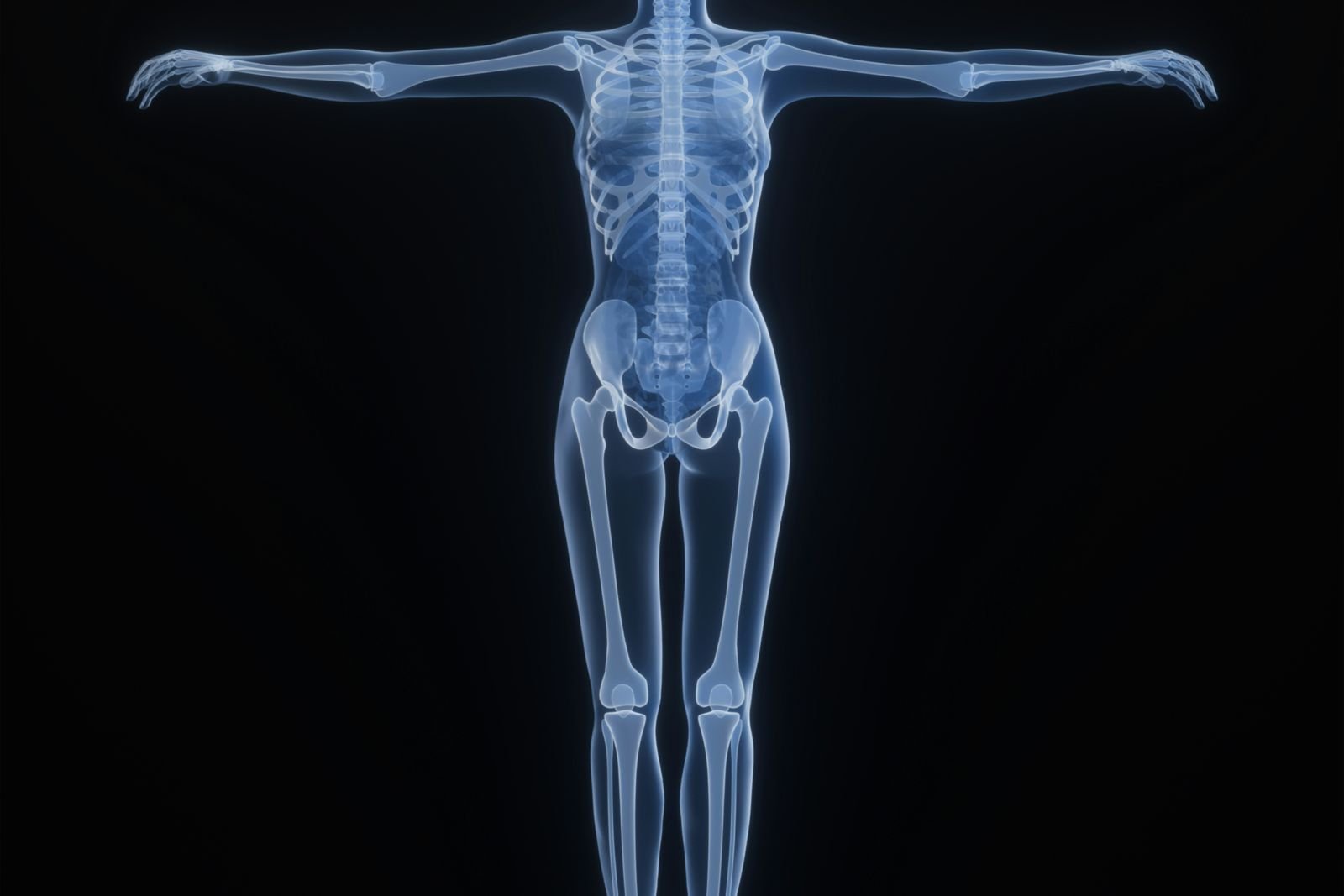
Normal X-ray but Still in Pain? Fractures an X-ray Can Miss
An X-ray is the right first test for most injuries, but a clear result does not always close the question. Here is where NICE says MRI comes in, and when to go back and ask.
Written by the FindScan Editorial Team and reviewed by our Medical Advisor, Dr Mohamed Najjar
Reviewed
You fell, the X-ray at the urgent treatment centre was clear and you were sent home with a sprain. Two weeks later the wrist, hip or foot still hurts and you are wondering whether something was missed. It is a reasonable question, and the answer is that a normal X-ray does not always rule a fracture out.
The NHS describes an X-ray as a test that takes pictures of the inside of your body using a small amount of radiation, used among other things to check your bones for a fracture after an accident, and for most injuries it is the right place to start. This guide explains why a break can hide on a first X-ray, the two situations where NICE specifically recommends MRI, how stress fractures fit in, and what to do if the pain is not settling.
Why an X-ray can look normal
An X-ray is a flat picture built from how much radiation different tissues absorb. Dense bone shows up clearly, which is why a displaced break is usually obvious. A fine crack where the bone has not moved can be much harder to see, especially in a small bone or where other bone overlaps it on the image. That is not a fault in the test; it is the limit of a flat picture of a three-dimensional structure. The NHS says it can be hard to tell if a wrist is broken, dislocated or badly sprained, which is why an X-ray is usually the first step.
MRI works differently. It uses a strong magnetic field and radio waves rather than X-rays, and the NHS says it takes detailed pictures of the inside of your body and can be used to check your bones and organs. Because it pictures the bone marrow and the soft tissue around a bone as well as the bone itself, it can show changes that a flat X-ray cannot. Our guide to X-ray versus CT versus MRI explains how the three tests differ.
The scaphoid: the classic example
The scaphoid is a small bone on the thumb side of the wrist, and a fall onto an outstretched hand is the usual way to break it. It is the example clinicians reach for when they talk about fractures that hide, and NICE's guideline on non-complex fractures (NG38) makes an unusual recommendation for it: consider MRI for first-line imaging in people with suspected scaphoid fractures following a thorough clinical examination.
That NICE singles out one small bone for MRI tells you how often a standard X-ray leaves the question open. If you were told your wrist X-ray was clear but you still have pain at the base of the thumb, that is worth a return visit rather than waiting it out. Our hand and wrist MRI page explains the scan.
A hip injury after a fall
The hip is the other place where guidance is explicit. NICE's hip fracture guideline (CG124) says to offer MRI if a hip fracture is suspected despite negative X-rays of the hip of an adequate standard, and to consider CT if MRI is not available within 24 hours or is contraindicated. This happens in hospital, as part of emergency care, not at a private clinic.
The NHS is clear about the first step: call 999 or go to A&E if you have severe hip pain after a fall or injury, and do not drive yourself. The NHS says you will usually have an X-ray to check whether the hip is broken. If you still cannot put weight on the leg after a clear X-ray, tell the team, because that is the situation the NICE recommendation was written for.
Stress fractures and overuse
Not every fracture comes from a single fall. A stress fracture is a crack that develops gradually from repeated loading, and runners who have stepped up their mileage, or people who have started a new sport, are the people who usually ask about it. The same limit applies: a crack that has not displaced can be hard to see on an X-ray taken early on, and whether MRI is the right next test is a judgement for the clinician who examines you. Our guide to shin splints and stress fractures covers the running injury in detail.
If a bone aches in one specific spot, hurts more with activity and eases with rest, stop the activity that provokes it and get it assessed rather than arranging a scan on your own. A clinician can decide whether an X-ray, a repeat X-ray a couple of weeks later, or an MRI answers the question best.
When to go back, and where
The NHS advice for a sprain that is not behaving like a sprain is straightforward. Get help from NHS 111 if the pain is very bad or getting worse, if swelling or bruising is large or getting worse, if you cannot put any weight on the injured part or walk more than a few steps, if it feels very stiff or is difficult to move, or if it is not feeling any better after treating it yourself. The NHS says you could also go to an urgent treatment centre, where an X-ray can sometimes be done.
- Call 999 or go to A&E if you heard a crack when you were injured, the injured part has changed shape or is pointing at an odd angle, it is numb or tingling, or the skin around it has changed colour or is cold to the touch. The NHS says not to drive yourself.
- If none of those apply but the pain is simply not settling, go back to the service that saw you, say so plainly, and ask whether a repeat X-ray or an MRI is appropriate.
Where a private MRI fits
A suspected fracture is a question for urgent care first. Where a private scan can help is later: you have been assessed, a clinician has suggested an MRI to settle a lingering question, and the NHS wait is longer than you want to live with. MRI can be arranged without a GP referral at many clinics, although a clinician's note makes it far easier for the clinic to scan the right area. A private X-ray needs a referral, because UK law requires every exposure to ionising radiation to be justified by a registered referrer.
You can compare MRI clinics near you and send an enquiry; the clinic contacts you to confirm whether it needs a referral and the next steps. Our guide to what to expect at an MRI covers the scan itself. FindScan is a directory of independent, regulated imaging clinics: you compare clinics and send an enquiry, and the clinic contacts you. We are not a healthcare provider, and nothing here replaces an assessment by a clinician.
Common questions
Can a fracture be missed on an X-ray?
Yes. A fine crack where the bone has not moved can be hard to see on a first X-ray, especially in a small bone such as the scaphoid or where other bone overlaps it. That is why NICE recommends MRI in specific situations, including suspected scaphoid fractures and suspected hip fractures with a normal X-ray.
Does an MRI show fractures?
MRI shows the bone marrow and the soft tissue around a bone as well as the bone itself, which is why NICE's non-complex fracture guideline says to consider MRI first-line for suspected scaphoid fractures, and its hip fracture guideline says to offer MRI when a hip fracture is suspected despite a normal X-ray.
How long should I wait before going back if a sprain is not improving?
The NHS does not give a fixed number of days. It says to get help from NHS 111 if the pain is very bad or getting worse, you cannot put weight on it, or it is not feeling any better after treating it yourself, and to call 999 or go to A&E if there are signs of a break such as a changed shape, numbness or skin colour change.
Can I have a private MRI to check for a fracture?
A suspected fracture should be assessed through urgent care first. If a clinician has then suggested an MRI and you would rather not wait for an NHS slot, MRI can be arranged without a GP referral at many clinics; a clinician's note helps the clinic scan the right area.
Why would a hospital do a CT instead of an MRI for a suspected hip fracture?
NICE's hip fracture guideline says to offer MRI when a hip fracture is suspected despite a normal X-ray, and to consider CT if MRI is not available within 24 hours or is contraindicated, for example because of certain implants.
References
- Fractures (non-complex): assessment and management (NG38), recommendations. NICE. Accessed 27 October 2026.
- Hip fracture: management (CG124), recommendations. NICE. Accessed 27 October 2026.
- X-ray. NHS. Accessed 27 October 2026.
- MRI scan. NHS. Accessed 27 October 2026.
- Broken hip. NHS. Accessed 27 October 2026.
- Broken arm or wrist. NHS. Accessed 27 October 2026.
- Sprains and strains. NHS. Accessed 27 October 2026.
- The Ionising Radiation (Medical Exposure) Regulations 2017, SI 2017/1322. legislation.gov.uk. Accessed 27 October 2026.
This article is general information, not medical advice, and it does not replace an assessment by a clinician. If you have symptoms that worry you, speak to your GP or call 111. In an emergency, call 999.