Hip Pain: X-ray, MRI or Ultrasound? Which Scan Helps and When
A stiff, aching hip on a cold autumn morning sends plenty of people looking for a scan. The NHS and NICE both start somewhere else. Here is the order of events, and where each scan fits.
Written by the FindScan Editorial Team and reviewed by our Medical Advisor, Dr Mohamed Najjar
Reviewed
Hip pain is one of the most common reasons people ask whether they need a scan, and one of the conditions where the answer is most often not yet. The NHS hip pain page does not mention X-rays at all; it describes self-care, a GP visit once certain thresholds are passed, and a specialist who may do a scan as part of further assessment.
This guide follows that order: the self-care the NHS recommends and the thresholds for seeing a GP, why NICE says osteoarthritis is diagnosed without imaging, where an X-ray, an MRI or an ultrasound earns its place, and the symptoms that need urgent care rather than a scan.
Start with self-care and the 2-week rule
The NHS says most hip pain can be looked after at home: avoid putting too much strain on the hip but keep moving if you can; apply an ice pack wrapped in a towel for up to 20 minutes every 2 to 3 hours; use painkillers such as paracetamol or ibuprofen gel; wear comfortable shoes with shock-absorbing soles; try gentle hip stretches; and avoid carrying heavy items and sitting in low chairs.
The NHS says to see a GP if the pain stops you doing your normal activities or affects your sleep, if it is getting worse or keeps coming back, if it has not improved after treating it at home for 2 weeks, or if your hip is stiff for more than 30 minutes after waking. The NHS lists the treatments a GP may discuss as stronger painkillers, simple exercises, physiotherapy, occupational therapy, steroid injections, and referral to a specialist who may do a scan and discuss treatments such as surgery.
The causes the NHS lists
The NHS lists the usual causes of hip pain as a hip fracture, a sprain, strain or tendonitis, osteoarthritis, rheumatoid arthritis, a joint infection called septic arthritis, and bursitis. They do not all need the same test. A fracture after a fall is an emergency assessed in hospital, and a hot, swollen hip with a high temperature is an urgent GP or NHS 111 matter. Osteoarthritis, which the NHS describes as the most common type of arthritis in the UK, is the one most people are thinking of when they ask about a scan.
Osteoarthritis is diagnosed without a scan
The NHS says a GP may suspect osteoarthritis if you are 45 or older, your joint pain gets worse the more you use the joint, and you either have no stiffness in the morning or stiffness that lasts less than 30 minutes. It says further tests such as X-rays are not usually necessary, but may be used to rule out other causes such as rheumatoid arthritis or a fractured bone.
NICE puts the same point as a quality standard: adults aged 45 or over with activity-related joint pain and any morning joint stiffness lasting no longer than 30 minutes are diagnosed with osteoarthritis clinically, without imaging. NICE says there is often a poor link between changes visible on an X-ray, MRI or ultrasound scan and the symptoms of osteoarthritis. NICE's osteoarthritis guideline (NG226) adds: do not routinely use imaging to diagnose osteoarthritis unless there are atypical features or features that suggest an alternative or additional diagnosis. Our guide to what an X-ray shows in arthritis goes into the detail.
When an X-ray helps
The NHS describes an X-ray as a test that takes pictures of the inside of your body using a small amount of radiation, used among other things to check bones for a fracture after an accident. For the hip it is the test used to rule out a fracture or look for a different diagnosis when the symptoms do not fit osteoarthritis, and it is the usual picture a surgeon wants before discussing a hip replacement.
An X-ray needs a referral wherever you have it, because UK law requires every exposure to ionising radiation to be justified by a registered referrer. Our hip X-ray page explains how that works at private clinics.
When MRI or ultrasound helps
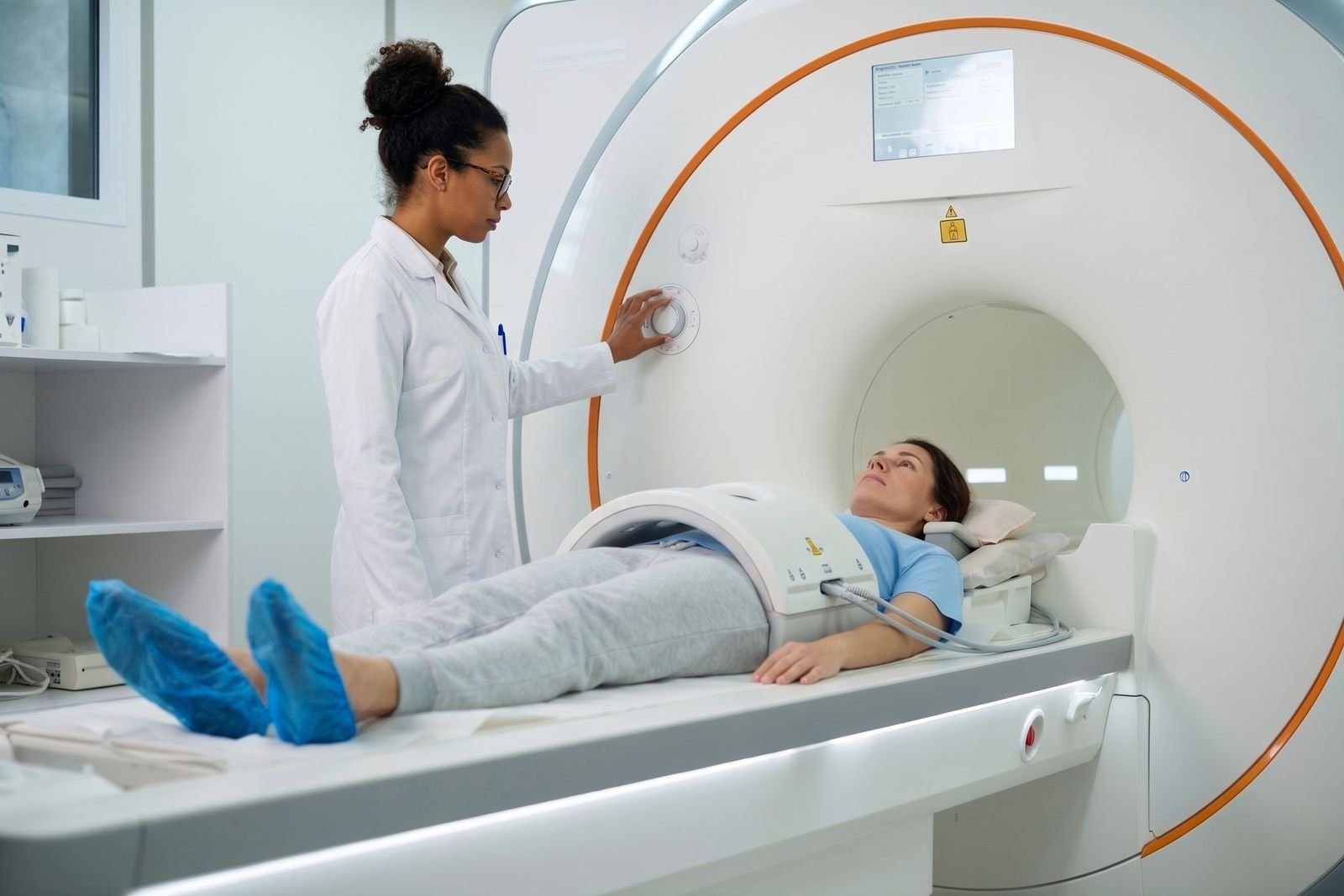
The NHS describes an MRI scan as one that takes detailed pictures of the inside of your body, used to find the cause of symptoms, check bones and organs and plan treatment, and says it usually takes between 15 minutes and 1 hour. For the hip it is the scan a specialist may request when the question is about the soft tissue around the joint, the cartilage lining the socket, or a bone problem an X-ray has not explained. Our guide to MRI of the leg and thigh describes the scan, and the hip MRI page explains how to compare clinics that offer it.
Ultrasound has a narrower role. The NHS says a clinician may request one to look into symptoms such as pain or a lump, and that it can guide a procedure such as a steroid joint injection, which the NHS lists among the treatments for hip pain. Hip pain can also come from the lower back; if your pain runs down the leg, our guide to MRI for lower back pain may be the better starting point.
Symptoms that need urgent care, not a private scan
The NHS says to ask for an urgent GP appointment or get help from NHS 111 if you have severe hip pain that started suddenly without a fall or injury, if your hip is swollen and hot, if the skin around the hip has changed colour, or if you have hip pain and feel generally unwell with a high temperature or feel hot, cold or shivery.
The NHS says to call 999 or go to A&E if you have severe hip pain after a fall or injury, if you cannot walk or put weight on your leg, or if you have tingling or loss of feeling in the hip or leg after an injury, and not to drive yourself there. A suspected fracture is assessed in hospital, and nothing in this guide applies to it.
Where a private scan fits
If you have passed the NHS thresholds, seen a GP or physiotherapist, and a clinician has suggested an MRI or ultrasound that the NHS wait would delay, a private scan can bring that answer forward. MRI and ultrasound can be arranged without a GP referral at many clinics; a note from the clinician who examined you helps the clinic scan the right structures and send the report to the right person. A private X-ray needs a referral.
You can compare MRI clinics near you and send an enquiry; the clinic contacts you to confirm whether it needs a referral and the next steps. FindScan is a directory of independent, regulated imaging clinics: you compare clinics and send an enquiry, and the clinic contacts you. We are not a healthcare provider, and nothing here replaces an assessment by a clinician.
Common questions
Do I need a scan for hip pain?
Usually not at first. The NHS hip pain page describes self-care and says to see a GP if the pain has not improved after 2 weeks, affects your sleep or normal activities, keeps coming back, or your hip is stiff for more than 30 minutes after waking. It mentions a scan only at the stage where a specialist is assessing you further.
Can osteoarthritis of the hip be diagnosed without an X-ray?
Yes. NICE's quality standard says adults aged 45 or over with activity-related joint pain and morning stiffness lasting no longer than 30 minutes are diagnosed with osteoarthritis clinically, without imaging, and the NHS says further tests are not usually necessary. NICE adds that scan findings often match symptoms poorly.
Can I have a private hip MRI without a GP referral?
MRI can be arranged without a GP referral at many private clinics, because it uses no ionising radiation; a private X-ray does need a referral. A note from the GP or physiotherapist who examined you helps the clinic scan the right area, and the clinic confirms its own requirements when you enquire.
When is hip pain an emergency?
The NHS says to call 999 or go to A&E for severe hip pain after a fall or injury, if you cannot walk or put weight on the leg, or if you have tingling or loss of feeling after an injury. Sudden severe pain without an injury, a hot swollen hip, or hip pain with a high temperature needs an urgent GP appointment or NHS 111.
References
- Hip pain. NHS. Accessed 27 October 2026.
- Osteoarthritis. NHS. Accessed 27 October 2026.
- Osteoarthritis in over 16s (QS87), quality statement 1: diagnosis. NICE. Accessed 27 October 2026.
- Osteoarthritis in over 16s: diagnosis and management (NG226), recommendations. NICE. Accessed 27 October 2026.
- X-ray. NHS. Accessed 27 October 2026.
- MRI scan. NHS. Accessed 27 October 2026.
- Ultrasound scan. NHS. Accessed 27 October 2026.
- The Ionising Radiation (Medical Exposure) Regulations 2017, SI 2017/1322. legislation.gov.uk. Accessed 27 October 2026.
This article is general information, not medical advice, and it does not replace an assessment by a clinician. If you have symptoms that worry you, speak to your GP or call 111. In an emergency, call 999.