Can You Have an MRI, X-ray, CT or Ultrasound When Pregnant or Breastfeeding?
Baby Week UK runs from 14 to 20 November, and one of the most searched scan questions in the UK is whether a scan is safe in pregnancy. The short answer is that ultrasound and MRI are used throughout pregnancy, X-rays and CT scans are not ruled out but are weighed more carefully, and breastfeeding does not have to stop after contrast dye. This guide explains what NHS departments do, in their own words, and what to tell the department or clinic before your appointment.
Written by the FindScan Editorial Team and reviewed by our Medical Advisor, Dr Mohamed Najjar
Reviewed · How we write and review our guides
Being pregnant, or thinking you might be, does not mean you cannot have a scan. It means the department will ask, and for X-rays and CT scans it will think harder about whether the scan is needed now, how to do it and whether it can wait. Ultrasound and MRI do not use radiation and are used at every stage of pregnancy.
The NHS pages for all four scans ask you to say so: the MRI safety form asks whether you are pregnant or may be pregnant and whether you are breastfeeding, and the CT and X-ray pages say to tell staff if you are pregnant or might be pregnant. This guide explains what happens next.
The question you will be asked, and why
For any scan that uses X-rays, the question is a legal one. The Ionising Radiation (Medical Exposure) Regulations 2017 say that before an exposure is justified, in the case of an individual of childbearing potential, the person responsible must have enquired whether that individual is pregnant or breastfeeding, if relevant.
Hospitals turn that into a routine. University Hospitals of Leicester applies its rules to patients aged 16 to 55, and children aged 10 to 16 registered as female, having an X-ray of the tummy or hip area: low-dose tests go ahead if your period is not overdue, higher-dose tests if your period was within the previous 10 days. If you could be pregnant, the doctor looking after you decides whether the X-ray should be delayed. So if there is any chance, say so when the appointment is made and again on the day.
Ultrasound: no radiation, and used throughout pregnancy
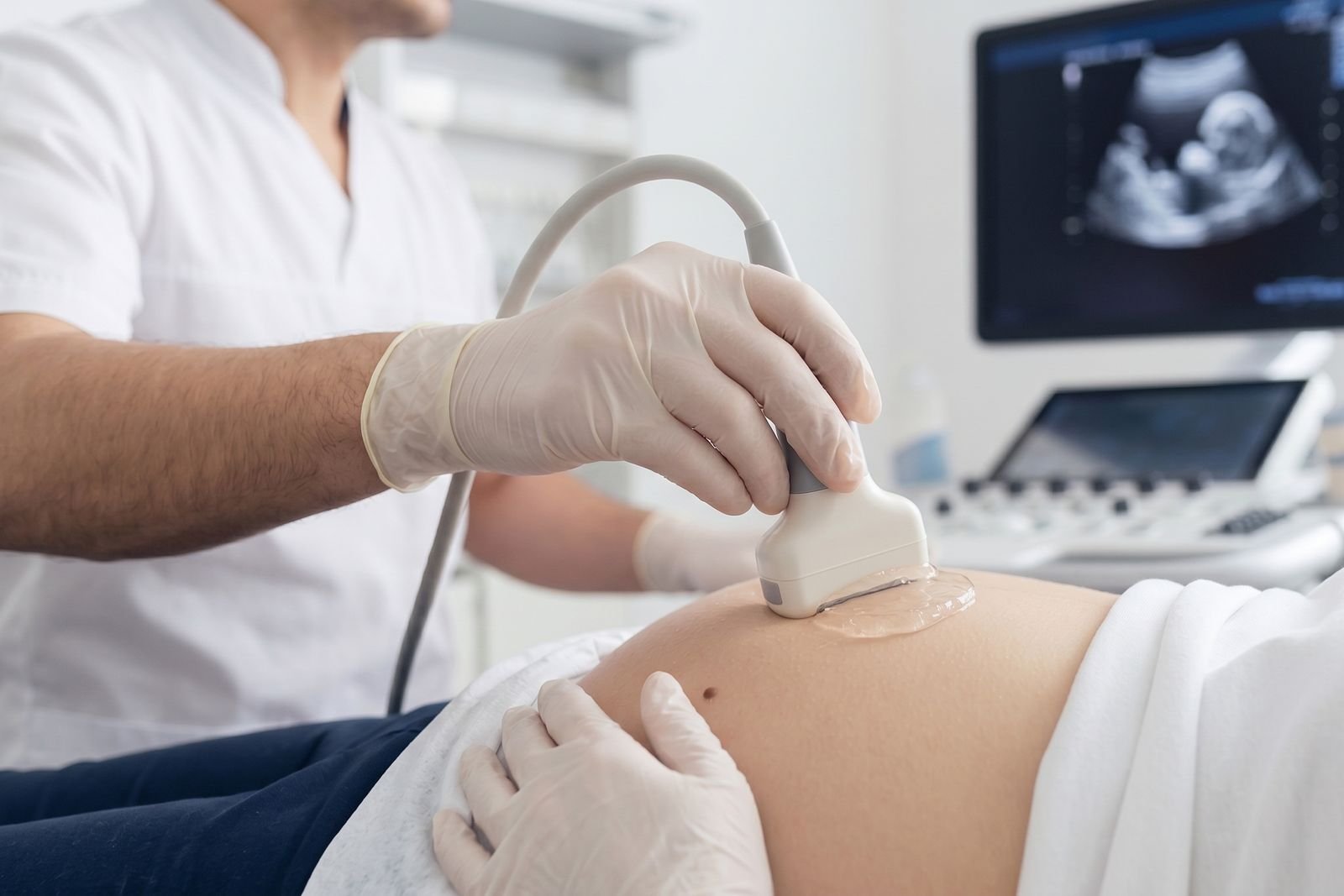
Ultrasound is the scan pregnancy care is built on. The NHS says hospitals in England offer at least two ultrasound scans during pregnancy, at 11 to 14 weeks and between 18 and 21 weeks, and that there are no known risks to the baby or the mother from having an ultrasound scan. The NHS ultrasound page adds that the sound waves are safe and that ultrasound does not use any radiation. The same safety applies to ultrasound of any other part of the body during pregnancy.
MRI: safe at every stage, with care over contrast
MRI uses a magnet and radio waves rather than radiation. St George's University Hospitals' leaflet says no evidence has been found to suggest there is a risk, which means MRI scans are one of the safest medical procedures available during all stages of your pregnancy. Pregnant patients are scanned in a setting called Normal Operating Mode, which it says makes sure that you and the baby do not get too warm and that the noises are not too loud for the baby.
The one part departments are cautious about is contrast dye. NHS Lothian's patient information says there is very little information on MRI contrast agents in pregnant women, that their safety in pregnancy remains uncertain, and that gadolinium is only given to pregnant patients when it is absolutely necessary, meaning the benefit to you outweighs the potential risks to the baby. It quotes the Royal College of Radiologists' view that no effect on the developing foetus is anticipated. Many pregnancy MRI scans are done without contrast, and the radiologist decides. The usual metal checks still apply; see MRI safety and metal implants and MRI with contrast.
X-ray and CT: a small risk, weighed against the reason for the scan
X-rays and CT use ionising radiation, and the concern is the baby. North Cumbria Integrated Care's leaflet says exposure of an unborn baby to ionising radiation may cause a slight increase in their cancer risk, and that if your team know you are pregnant they will consider the risk to the baby along with the benefit of the test.
Gloucestershire Hospitals puts numbers on it. Its leaflet says the first detectable risk of cancer occurs when the baby receives about 20 times the normal environmental radiation it is exposed to throughout pregnancy, and that at that level the baby has about a 1 in 500 chance of developing childhood cancer. Reaching it would take roughly 50 or more chest, arm or leg X-rays, about 50 head CT scans, 5 to 30 pelvis X-rays, 3 to 6 chest CT scans or 1 to 3 abdominal CT scans. Birth defects, it adds, only occur with much higher doses in early pregnancy.
Two points follow. Where the beam goes matters: North Cumbria says modern X-ray equipment only irradiates the part of your body that is required to be imaged, so a chest, hand or foot X-ray does not point at the womb, and lead shielding is not placed over the abdomen because lead near the beam can increase the dose. And the decision is a balance: Gloucestershire says X-ray and CT examinations are only performed if the risk of not having the information outweighs the very small radiation risk. If a scan can safely wait until after the birth, it usually will; if a doctor believes you need it now, the small risk is set against a real benefit to you and the baby. Our guide to X-ray radiation safety has the full dose figures.
Breastfeeding after a scan with contrast dye
This question most often gets an outdated answer. The Society of Radiographers and the Royal College of Radiologists said in a joint statement on 25 January 2022 that breastfeeding does not need to be interrupted after contrast. For the gadolinium used in MRI, it quotes RCR guidance that no special precaution or cessation of breastfeeding is required, with the choice of pausing for 24 hours left to the mother in consultation with the clinician. For the iodinated contrast used in CT, it cites guidance that stopping breastfeeding, or expressing and discarding milk, is not required. If you are given different advice, ask the radiographer about it.
Having a scan privately while pregnant
Private clinics follow the same rules. A CT or X-ray needs a referral from a registered healthcare professional whether you are pregnant or not, and the same pregnancy enquiry applies. MRI and ultrasound can often be self-referred, but a clinic will still ask about pregnancy and may want to speak to the clinician who suggested the scan. Tell the clinic when you enquire, so the radiologist can decide on protocol and contrast before the day.
If you are pregnant and have severe tummy pain, bleeding or feel seriously unwell, contact your maternity unit or midwife, use NHS 111, and call 999 in an emergency.
Comparing clinics on FindScan
If a clinician has suggested a non-pregnancy scan, FindScan lists independent, regulated imaging clinics across the UK. Enter a postcode, compare clinics near you and send an enquiry. The clinic contacts you to arrange your scan.
FindScan is a directory of independent, regulated imaging clinics. We are not a healthcare provider, and nothing here replaces advice from your midwife, GP or the department doing your scan.
Common questions
Can you have an MRI scan when pregnant?
Can you have an X-ray when pregnant?
Is a chest X-ray safe in pregnancy?
Do I have to stop breastfeeding after contrast dye?
Can I have a private scan while pregnant?
References
- MRI scan. NHS. Accessed 15 November 2026.
- X-ray. NHS. Accessed 15 November 2026.
- CT scan. NHS. Accessed 15 November 2026.
- Ultrasound scan. NHS. Accessed 15 November 2026.
- Ultrasound scans in pregnancy. NHS. Accessed 15 November 2026.
- The Ionising Radiation (Medical Exposure) Regulations 2017, regulation 11. legislation.gov.uk. Accessed 15 November 2026.
- Checking if you are pregnant before having an X-ray (November 2024). University Hospitals of Leicester NHS Trust. Accessed 15 November 2026.
- Risks of having X-rays and CT scans during pregnancy. Gloucestershire Hospitals NHS Foundation Trust. Accessed 15 November 2026.
- X-rays during pregnancy (reviewed February 2026). North Cumbria Integrated Care NHS Foundation Trust. Accessed 15 November 2026.
- Magnetic Resonance Imaging (MRI) scans in pregnancy (November 2023). St George's University Hospitals NHS Foundation Trust. Accessed 15 November 2026.
- Having an MRI scan with gadolinium-based contrast when pregnant (August 2024). NHS Lothian. Accessed 15 November 2026.
- Joint statement on the safety of breastfeeding after contrast agent (25 January 2022). Society of Radiographers and Royal College of Radiologists. Accessed 15 November 2026.
- Patient dose information: guidance (updated 28 September 2026). UK Health Security Agency. Accessed 15 November 2026.
This article is general information, not medical advice, and it does not replace an assessment by a clinician. If you have symptoms that worry you, speak to your GP or call 111. In an emergency, call 999.