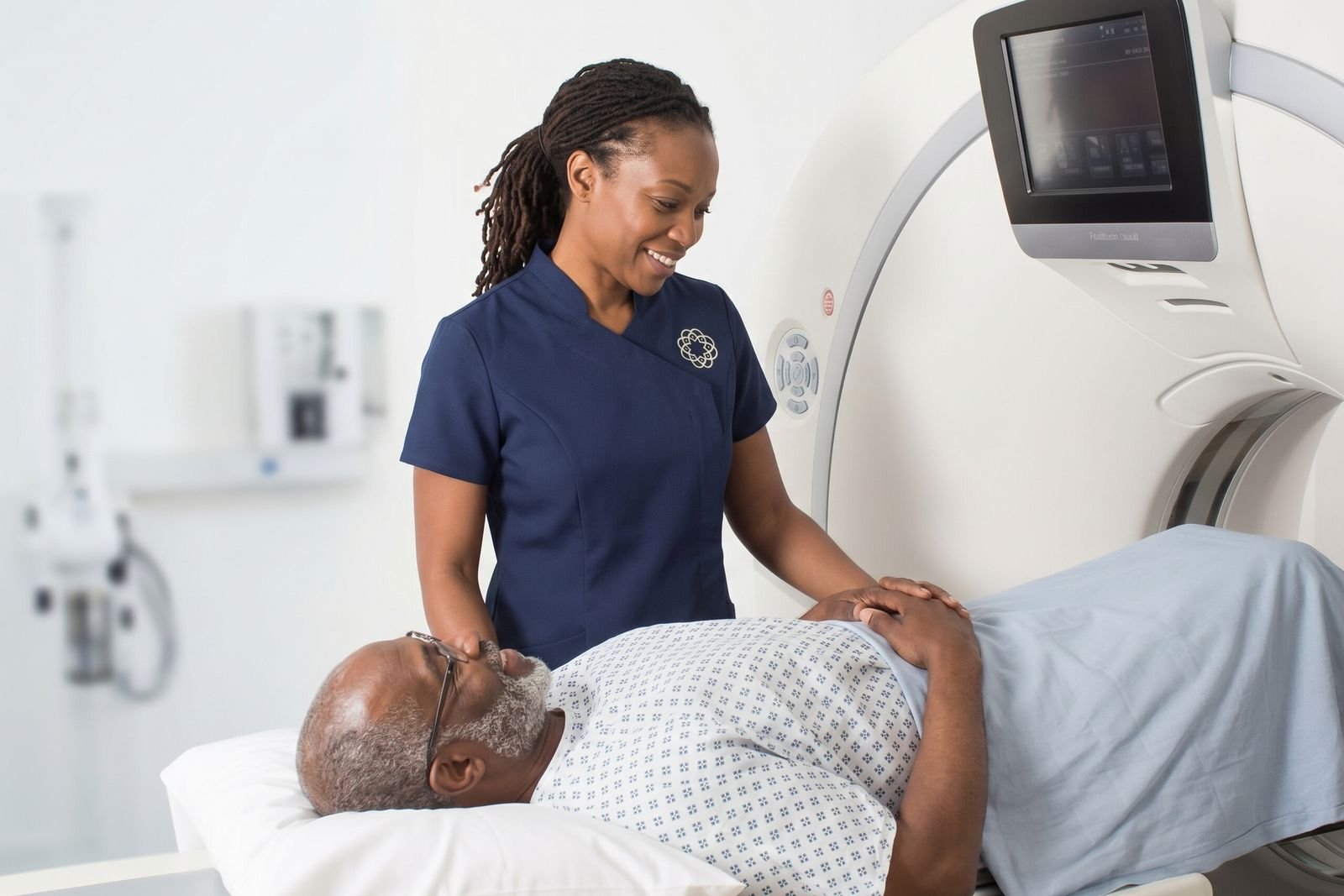
Scanxiety: Coping With Anxiety Before a Scan and While You Wait for Results
A scan is where mind and body meet. The appointment itself may take twenty minutes; the worry can fill the fortnight before it and the fortnight after. People who have been through cancer care have a word for it, scanxiety, but anyone waiting for an MRI, CT or ultrasound can feel it. This guide explains what the anxiety is, what the NHS and Macmillan say helps, what you can ask the department to make the day easier, and when the worry itself needs help.
Written by the FindScan Editorial Team and reviewed by our Medical Advisor, Dr Mohamed Najjar
Reviewed · How we write and review our guides
Scanxiety is not a diagnosis. It is the name people living with cancer gave to the dread that builds before a scan and the limbo that follows it, and it has stuck because almost everyone recognises it. You may feel it before your first MRI for a bad back, before a CT your GP has ordered, or every three months before a follow-up scan that decides what happens next.
The NHS anxiety page lists what that can feel like: a faster or more noticeable heartbeat, feeling light-headed, chest pains, loss of appetite, not being able to sleep, difficulty concentrating, and fear of the worst happening. None of that means something is wrong with you. It means you are waiting for information that matters, and there are things that help.
Why a scan is harder on the mind than most tests
A scan is a picture of the inside of your body, taken by one person and read by another, with a gap in between that you cannot see into. Macmillan's guide to going for tests says it can take a few days to a few weeks for results to be ready and that many people feel anxious while they are waiting. The NHS MRI page says it usually takes between 1 and 2 weeks to get MRI results, and that if you have not heard anything after a few weeks you should contact the doctor who referred you.
The uncertainty is the problem, not the scan. Macmillan says there is no right or wrong way to deal with these feelings. Our guide to how long scan results take explains why the wait varies between scans and services.
Before the scan: what you can ask for
Departments expect anxious patients and have ways to help, but most have to be asked for in advance. The NHS MRI page says that if you are feeling anxious about having an MRI scan or have a fear of small spaces you should talk to a healthcare professional at the hospital before your appointment, and that you may be able to have a medicine to help you relax; if you do, you will need someone to take you home and should not drive for 24 hours. It also says you can ask whether someone can support you during the scan, and that the radiographer, who controls the scanner from another room, will be able to hear and speak to you throughout.
Practical questions take some of the fear out of the day: how long the scan will take, whether you will have an injection, whether you can keep your eyes closed or listen to music, and what happens if you need to stop. Our guides to what to expect at an MRI scan and MRI options if you are claustrophobic go through the room, the noise and the alternatives such as wider or open scanners.
On the day: steady breathing and a plan for the hour after
The NHS breathing exercise for stress is short enough to use on the scanner table: let your breath flow as deep down into your belly as is comfortable without forcing it, breathe in through your nose and out through your mouth, count steadily from 1 to 5 in and out if that helps, and keep going for at least 5 minutes. Practise it at home first.
Plan something ordinary for straight after the appointment. Macmillan says continuing with everyday activities, such as going to work, can be a welcome distraction from worrying, and the NHS anxiety page lists regular exercise such as walking, swimming and yoga among the things that help you relax.
The wait for results: what helps and what does not
Ask, before you leave, how and when you will get the result. Macmillan says your healthcare team can tell you when results are due and how you will receive them, and may give you a contact in the team, sometimes called your key worker, for questions while you wait. Knowing that the report goes to your referrer, and that you will be contacted sooner if anything needs urgent attention, removes the feeling that silence means bad news. Our guide to getting your scan images and report explains your right to a copy.
Be careful with searching. Macmillan says looking up information can help you feel more in control but is not always helpful, that some of it can be confusing, upsetting or not relevant to you, and suggests waiting for your results and talking to your healthcare team first. The NHS anxiety page adds not to focus on the things you cannot change, and to try not to use alcohol, cigarettes, gambling or drugs to relieve anxiety. Talking helps more than reading: the NHS suggests talking about your feelings to a friend, family member, health professional or counsellor, and Macmillan's support line is free on 0808 808 00 00.
When the anxiety needs help of its own
Some worry is a normal response to an uncertain situation. The NHS says to see a GP if you are struggling to cope with anxiety, fear or panic, if the things you are trying yourself are not helping, or if you would prefer a referral to an NHS talking therapies service; the NHS talking therapies page says you can refer yourself without speaking to a GP for problems such as anxiety, as long as you are registered with a GP surgery. If a scan is one of many over months or years, that is exactly the kind of recurring pressure a talking therapy can help with.
If you or someone you know is in a mental health crisis, the NHS says to call 111 and select the mental health option, which can connect you to a trained mental health professional, and to call 999 or go to A&E if someone's life is at risk or you cannot keep yourself or someone else safe; a mental health emergency should be taken as seriously as a physical one. Samaritans are available any time, day or night, on 116 123.
If a long wait is part of the worry
Sometimes the anxiety is not about the scan at all but about the months before it happens. If your GP, consultant or physiotherapist has asked for a scan and the NHS wait is long, a private scan can bring the answer forward, with the report going back to the clinician who requested it. MRI, ultrasound and echocardiogram can often be arranged without a GP referral after the clinic's own checks; CT, X-ray, DEXA and mammography always need a referral from a registered healthcare professional. A private scan does not move you up an NHS list, so talk it through with your clinician first.
FindScan lists independent, regulated imaging clinics across the UK. Enter a postcode, compare clinics near you and send an enquiry. The clinic contacts you to arrange your scan. FindScan is a directory of independent, regulated imaging clinics. We are not a healthcare provider, and nothing here replaces advice from your GP, your consultant or NHS 111.
Common questions
What is scanxiety?
Can I take something to calm me before an MRI scan?
Can someone come into the scan room with me?
How long will I wait for my scan results?
When should I get help for the anxiety itself?
References
- Anxiety, fear and panic. NHS. Accessed 15 November 2026.
- Breathing exercises for stress. NHS. Accessed 15 November 2026.
- Where to get urgent help for mental health. NHS. Accessed 15 November 2026.
- MRI scan. NHS. Accessed 15 November 2026.
- Cancer tests and waiting for results. Macmillan Cancer Support. Accessed 15 November 2026.
- Talking therapies. NHS. Accessed 15 November 2026.
- Self-Care Week 2026: 16 to 22 November, Mind and Body. Self Care Forum. Accessed 15 November 2026.
This article is general information, not medical advice, and it does not replace an assessment by a clinician. If you have symptoms that worry you, speak to your GP or call 111. In an emergency, call 999.