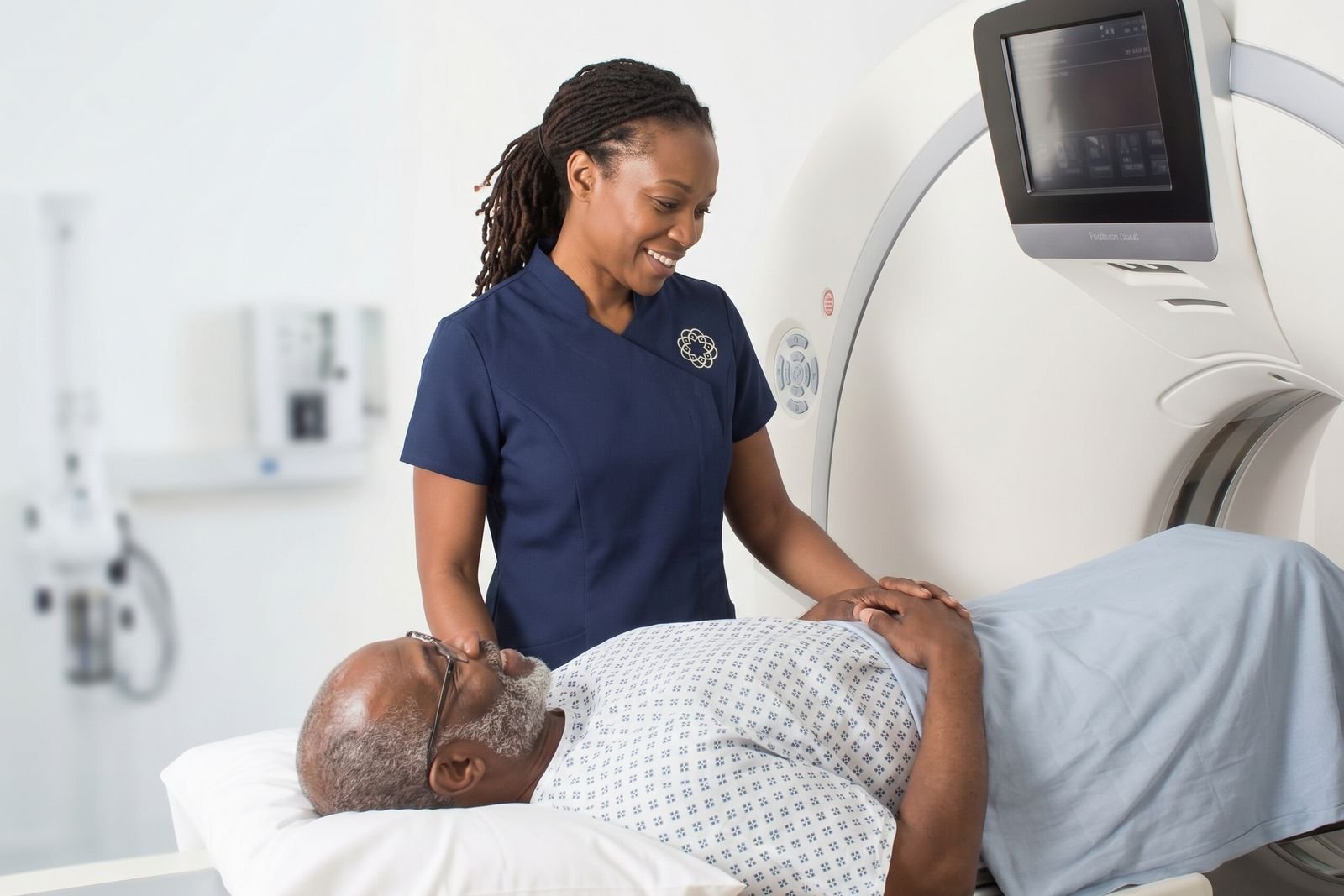
What to Wear for an MRI Scan: Clothes, Bras, Jewellery and What to Leave at Home
Wondering what to wear for an MRI scan? Comfortable clothes with no metal are the best start, and many departments will give you a gown. This guide covers bras, sportswear, jewellery, make-up, medication patches and what to bring, based on NHS hospital advice.
Written by the FindScan Editorial Team and reviewed by our Medical Advisor, Dr Mohamed Najjar
Reviewed
Knowing what to wear for an MRI makes the day simpler. The short answer is comfortable clothes with no metal in them, and be ready to change into a gown if the department asks. Because of the strong magnetic field, NHS hospitals say metal items cannot be taken into the scan room, and some fabrics, cosmetics and skin patches need care too.
This guide brings together advice from NHS hospital leaflets and MHRA safety guidance on clothes, bras, sportswear, jewellery, piercings, make-up, tattoos and medication patches, plus what to bring and where your things go. Every department sets its own rules, so the instructions in your appointment letter and the clinic's safety questionnaire always come first.
What to wear for an MRI scan: can you wear clothes in an MRI?
Can you wear clothes in an MRI? Sometimes. The Royal Devon MRI leaflet says you may attend in your own clothes as long as they are metal free, with no clips, zips or belt buckles, although for some scans you may be asked to change into a gown. NHS Forth Valley says whether you need a gown depends on which part of your body is being scanned. The NHS says you may need to change into a hospital gown if your clothes have any metal parts, like zips.
Other departments ask almost everyone to change. Hull University Teaching Hospitals says many examinations will require you to get changed and that gowns are provided. Either way, the easiest choice is loose, comfortable clothing you can take off and put back on quickly. Good options include:
- joggers or trousers with an elastic or tie waist and no metal poppers, zips or studs;
- a plain T-shirt or jumper with no zips or metal buttons;
- shoes you can slip off easily;
- a belt with no metal buckle, or no belt at all.
Can I wear a bra in an MRI? Underwear and sportswear
The NHS lists a bra among the things you may be asked not to wear because it has metal in it, along with jewellery, hair clips and hearing aids. NHS Forth Valley says that if you do not need a gown, you should wear clothes without underwire bras, metal fasteners, zips, buttons, belts or buckles. Departments differ on bras, so if you are not sure, wear one with no wire or metal parts that you can easily take off, and ask the radiographer what they prefer.
Sportswear needs a second look. The York and Scarborough MRI leaflet asks patients not to wear sports clothing or underwear with silver or anti-sweat technology, because it contains metallic fibres that can cause heating and may result in a burn. The MHRA safety guidelines also list direct skin contact with metallic objects such as clothing fragments as a cause of contact burns. Check the labels on leggings, gym tops, sports bras and socks, and if a garment mentions silver or anti-sweat technology, or you are not sure, leave it at home or change into a gown.
Jewellery, piercings, hair clips, watches and cards
Plan to arrive with as little metal on you as possible. NHS hospitals typically ask you to remove or leave outside the scan room:
- Jewellery. York and Scarborough says you can keep your wedding ring on but must remove all other jewellery.
- Piercings. The same leaflet asks for earrings, body piercings and dermal piercings to be removed, and says that if you cannot remove them the team may not be able to scan you. Norfolk and Norwich University Hospitals says staff are not permitted to remove piercings, so take them out at home if you can.
- Hair clips, grips and some hair products. York and Scarborough also lists magnetic eyelashes and hair extensions containing metal, and NHS Forth Valley says some wigs contain traces of metal.
- Watches, phones, keys, coins and bank cards. The MHRA guidance says these must be removed before entering the scan room.
- Hearing aids. The Rotherham NHS Foundation Trust says credit cards, mobile phones and hearing aids should not go into the scan room because they can be damaged and stop working.
If you have a piercing or jewellery you cannot remove, tell the clinic before your appointment rather than on the day. The same applies to metal inside your body, which is covered in our guide to MRI safety, metal and implants.
Make-up and tattoos
Several NHS leaflets ask you to skip eye make-up. Royal Devon recommends not wearing heavy eye make-up because it can affect the quality of some scans, Rotherham says eye make-up should not be worn because it can interfere with the scan, and Hull asks you not to wear eye make-up if your head is being scanned. Ask the clinic if you are unsure, especially for a head or face scan.
If you have tattoos, tell the team about them before the scan. East and North Hertfordshire NHS Trust says there is a slight risk that tattoos may heat up and potentially cause a skin burn, and asks patients to tell the radiographer where their tattoos are and to report any warmth around them during the scan. Our guide to MRI with tattoos and make-up goes into more detail.
Medication patches and glucose sensors
Some skin patches need to come off before the scan. York and Scarborough asks patients to remove all medicated skin patches, including pain relief, nicotine, HRT and glucose monitoring, and to bring new patches to replace them afterwards. Rotherham says you will need to remove any drug patches and should bring a replacement, because the MRI department does not supply them. NHS Forth Valley lists medicine patches, glucose monitors and some insulin pumps among the items to remove.
Follow the clinic's own advice on patches, and do not stop or move a medicine without guidance. If a patch is for pain relief, hormones or another important medicine, ask the clinic, your pharmacist or the prescriber about timing before the day. Hull says to take your medication as normal unless you have been told not to.
What to bring, and where your things go
A few items make the safety check quicker and the day easier:
- Your completed safety questionnaire, if the clinic sent you one. The NHS says the form asks whether you have any metal parts in your body, such as surgical clips or a pacemaker.
- Any implant card. Norfolk and Norwich asks patients to bring an implant card if they have one.
- A list of the medicines you take. This is a practical tip rather than a rule, but it can help you answer the safety questions accurately.
- A spare medication patch or sensor, if you have been asked to remove one.
- Reading glasses, which Royal Devon suggests bringing if you need them.
Leave valuables at home where you can. Royal Devon and Rotherham both say lockers are provided, and Rotherham says patients remain responsible for their belongings. For more on the day itself, see our guides on what to expect at an MRI scan and how to prepare for your scan.
A quick checklist for the day
- Wear loose, comfortable clothes with no zips, metal buttons, poppers or buckles, and expect to be offered a gown.
- Choose a bra with no wire or metal, and skip sportswear or underwear with silver or anti-sweat technology.
- Take out jewellery and piercings at home, apart from a wedding ring if the clinic allows it.
- Skip eye make-up, and tell the team about any tattoos.
- Check what to do about medication patches, and bring a spare.
- Bring your safety questionnaire and any implant card.
Comparing clinics on FindScan
You can compare private MRI clinics near you on FindScan, see each clinic's own listed price and send an enquiry to the clinic you choose. The clinic contacts you to arrange your scan and will send its own safety questionnaire and clothing advice. MRI may be self-referral at some clinics, depending on the clinic's own policy and safety screening.
FindScan is a directory of independent, regulated imaging clinics, not a healthcare provider, and nothing here replaces advice from your GP or the clinician who asked for your scan. Speak to them about symptoms or results. If symptoms are urgent, call NHS 111, or 999 in an emergency.
Common questions
What to wear for an MRI?
Wear loose, comfortable clothes with no metal, such as joggers with an elastic waist and a plain T-shirt, with no zips, metal buttons, poppers or buckles. Many NHS departments ask you to change into a gown anyway, especially if your clothes have metal parts. Avoid sportswear or underwear with silver or anti-sweat technology, and follow your clinic's own instructions.
Can I wear a bra in an MRI?
Not usually if it has an underwire or metal parts. The NHS lists a bra among the metal-containing items you may be asked not to wear, and NHS Forth Valley says to avoid underwire bras if you are not wearing a gown. Departments differ, so wear a bra with no wire or metal that is easy to remove, and ask the radiographer.
Can you wear clothes in an MRI?
Sometimes. Some NHS hospitals let you keep your own clothes on if they are completely metal free, with no clips, zips or belt buckles. Others ask most patients to change into a gown, and whether you need one can depend on the part of your body being scanned. Your appointment letter or the clinic will tell you what to expect.
Can I wear leggings or gym clothes to an MRI?
Check the label first. York and Scarborough Teaching Hospitals asks patients not to wear sports clothing or underwear with silver or anti-sweat technology, because the metallic fibres can heat up and may cause a burn. Clothing with no metal and no special fibres is the simpler choice, or you can change into a gown if you are unsure.
Do I need to take off medication patches for an MRI?
Often, yes. Some NHS hospitals ask you to remove medicated skin patches, such as pain relief, nicotine or HRT patches, and glucose monitoring sensors, and to bring a replacement because the department will not supply one. Follow the clinic's advice, and ask your pharmacist or prescriber about timing if the patch is for an important medicine.
What should I bring to my MRI appointment?
Bring your completed safety questionnaire if the clinic sent one, any implant card, a spare medication patch or sensor if you have been asked to remove one, and reading glasses if you need them. A list of your medicines can help you answer the safety questions. Leave valuables at home where possible, although many departments provide lockers.
References
- MRI scan (page last reviewed 11 September 2025). NHS. Accessed 29 October 2026.
- MRI Scanning, patient information leaflet PIL 447 v7 (July 2024). York and Scarborough Teaching Hospitals NHS Foundation Trust. Accessed 29 October 2026.
- MRI scan. NHS Forth Valley. Accessed 29 October 2026.
- Having an MRI scan (version 10, revised November 2022). The Rotherham NHS Foundation Trust. Accessed 29 October 2026.
- Having an MRI scan, leaflet 344 v11. Royal Devon University Healthcare NHS Foundation Trust. Accessed 29 October 2026.
- Magnetic resonance imaging (MRI) for adults, v7 (approved June 2023). Norfolk and Norwich University Hospitals NHS Foundation Trust. Accessed 29 October 2026.
- Your MRI Scan (HEY1131/2024, updated 31 December 2024). Hull University Teaching Hospitals NHS Trust. Accessed 29 October 2026.
- Patient information: Magnetic Resonance Imaging (MRI), version 2 (November 2019). East and North Hertfordshire NHS Trust. Accessed 29 October 2026.
- Safety guidelines for magnetic resonance imaging equipment in clinical use, fifth edition (updated 30 September 2026). GOV.UK (MHRA). Accessed 29 October 2026.
This article is general information, not medical advice, and it does not replace an assessment by a clinician. If you have symptoms that worry you, speak to your GP or call 111. In an emergency, call 999.