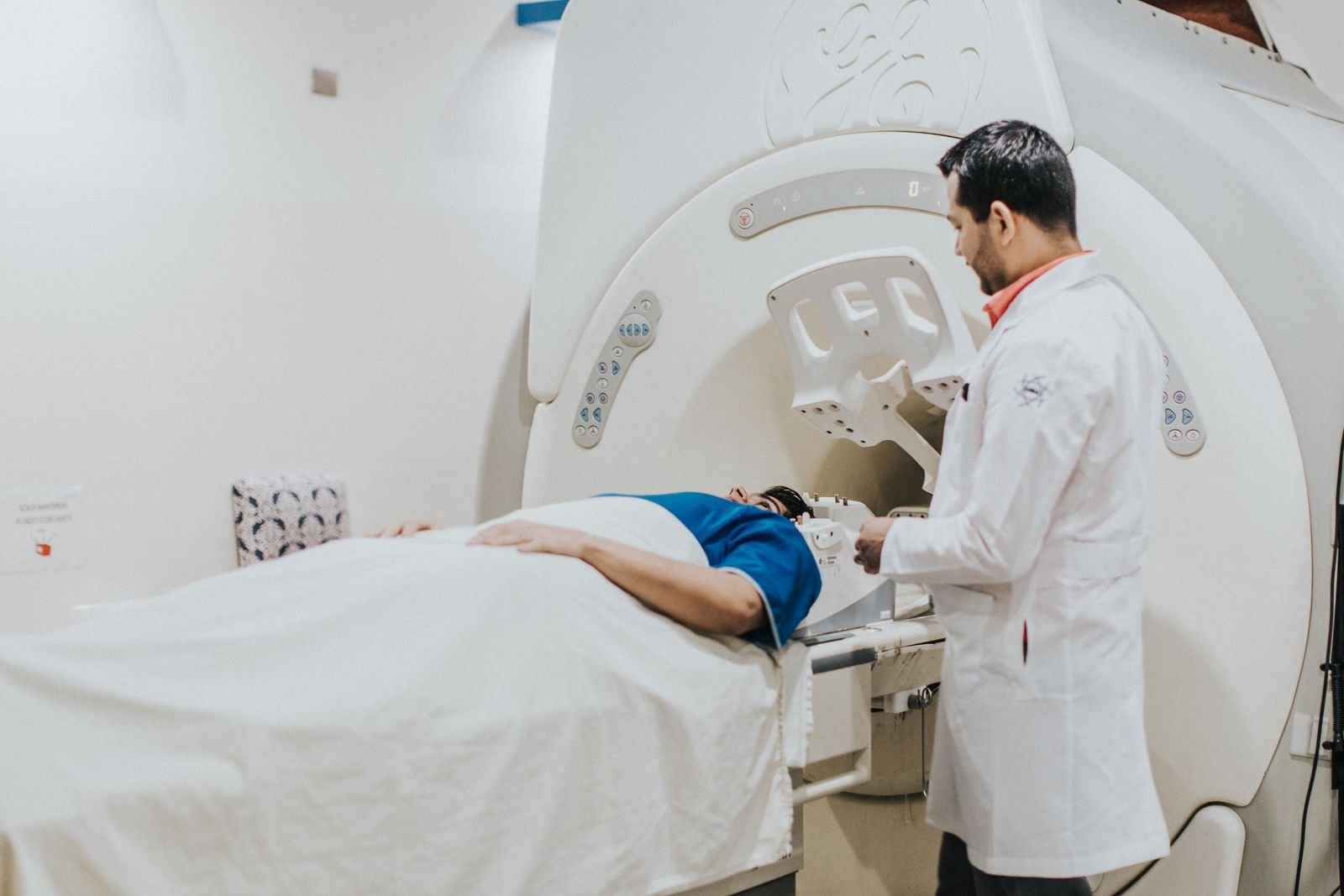
Orbit MRI (Orbital MRI or MRI of Eyes): What It Looks At, Why It Is Requested and How to Prepare
An orbit MRI is a scan of the eye sockets, usually requested by an eye doctor or a neurologist to look at the optic nerve, the eye muscles and the tissue around the eye. This guide explains what it shows, the common reasons for it, the safety checks for metal in the eye, and what to do about eye make-up.
Written by the FindScan Editorial Team and reviewed by our Medical Advisor, Dr Mohamed Najjar
Reviewed
An orbit MRI, also searched for as "MRI orbit", "orbital MRI" or "MRI of eyes", takes detailed pictures of the eye sockets (the orbits) using a strong magnet and radio waves rather than X-rays. The NHS describes an MRI scan as a test that takes detailed pictures of the inside of your body. For the eyes, it lets a specialist see the optic nerve, the muscles that move the eye and the soft tissue and fat around the eyeball.
Most people who need one have been sent by an eye doctor (ophthalmologist) or a neurologist with a specific question. This guide explains what the scan looks at, why it is requested, the safety questions about metal in the eye and eye make-up, and what happens with the results. If you already have a referral, you can compare private MRI clinics on FindScan.
What an orbit MRI looks at
Each orbit is the bony socket that holds the eyeball, the small muscles that move it, the optic nerve, and cushioning fat and connective tissue. The optic nerve carries visual information from the eye to the brain, as the Hull University Teaching Hospitals leaflet on optic neuritis explains.
Because the optic nerves run back towards the brain, an orbit MRI is sometimes done together with a brain MRI. Which areas are scanned, and whether contrast is used, is decided by the specialist and the radiologist from the question being asked. Our guide to what a brain MRI shows covers the brain side.
Sudden vision loss: get urgent help first
If your sight changes suddenly, a private scan is not the right first step. The NHS vision loss page says to go to A&E or call 999 if you suddenly cannot see from 1 or both eyes, or suddenly have severe eye pain. It says not to drive yourself, but to ask someone to drive you or call 999 for an ambulance.
The NHS says to ask for an urgent GP appointment or get help from NHS 111 if you have changes in your vision such as blurred or double vision or flashing lights, a dark shadow moving across your vision, pain in 1 or both eyes, or a red and painful eye.
Why an eye doctor or neurologist asks for an MRI orbit scan
Optic neuritis. This is inflammation of the optic nerve. Hull University Teaching Hospitals says the most common symptom is sudden vision loss in one eye, often with pain on moving the eye and washed-out colour vision, and that optic neuritis may be the first sign of multiple sclerosis (MS). The MS Trust says tests could include blood tests, an MRI scan and visual evoked potential tests to see whether MS can be diagnosed, and that not everyone with optic neuritis goes on to develop MS. Our guide to MRI for multiple sclerosis explains more.
Thyroid eye disease. Sherwood Forest Hospitals says thyroid eye disease, also called Graves' orbitopathy, mainly affects people with an overactive thyroid and causes swelling of the eye muscles, tendons and the soft and fatty tissue around the eye, and that the doctor may request an MRI of your eyes to look at this swelling. Royal Berkshire Hospital calls it the most common disease of the eye socket and says optic nerve problems that reduce vision are uncommon.
Unexplained changes in vision. The NHS says that if an optician or GP suspects a condition, you will usually be referred to an ophthalmologist for further tests. The eye specialist examines you first and decides whether imaging would help and which scan is needed.
Metal fragments in the eye: the safety question
MRI uses a very strong magnet, so every clinic asks about metal in your body before the scan. Metal in the eye is a particular concern, which is why NHS MRI departments ask about it specifically. The East and North Hertfordshire NHS Trust MRI leaflet asks you to tell the department about any history of metal fragments in your eye, and says it may be necessary to have an ordinary X-ray before your scan. The Princess Alexandra Hospital safety questionnaire asks about metal fragments in the eyes or body from a shrapnel injury, working with metal or bullets, and whether they were removed.
University Hospitals Plymouth says that if you think you have ever had an accident involving metal fragments in your eyes, for example from welding or grinding, you must phone the department so you can come in to possibly have your eyes X-rayed, which can be done on another day before the scan.
So if you have worked with metal, for example welding, grinding or metalwork, or have had any eye injury involving metal, tell the clinic when you enquire. The clinic may ask for an X-ray of the eye sockets before the MRI. Our guide to MRI safety and metal implants covers other devices and implants.
Preparing for an MRI of eyes: make-up, cosmetic tattoos and clothing
The NHS says not to wear make-up for an MRI, or anything that has metal in it, such as jewellery, hair clips or hearing aids. Plymouth says specifically not to wear mascara if you are having a scan of your head or eyes. It is easiest to arrive with no eye make-up at all.
Tell the clinic about any tattoos, including cosmetic tattoos such as eyeliner or eyebrow tattoos. The Princess Alexandra Hospital questionnaire asks about tattoos, including cosmetic ones, in the last six weeks. East and North Hertfordshire says there is a slight risk that tattoos may heat up and potentially cause a skin burn, so tell the radiographer where they are and say straight away if the area feels warm. Our guide to MRI with tattoos and make-up has more detail.
Contrast, how long an orbital MRI takes and results
Some orbit scans use a contrast dye injected into a vein in your arm. The NHS says contrast helps show more detail and that side effects are usually mild. Plymouth says the dye contains gadolinium, which is very safe but can very rarely cause allergic reactions, and that staff check it is safe for you and ask for your consent first. Tell the clinic about kidney problems or any previous reaction to contrast. See our guide to MRI with contrast.
The NHS says an MRI usually takes between 15 minutes and 1 hour but can take longer. Plymouth says a typical scan takes 20 to 30 minutes, though some take longer. A combined brain and orbit scan, or one with contrast, may take longer than a scan of the orbits alone.
A radiologist reads the images and the report goes to the doctor who referred you. The NHS says MRI results usually take 1 to 2 weeks. A report that finds nothing abnormal answers the question that was asked; it does not rule out every eye or nerve condition, so go through it with your specialist. Our guide to how long scan results take explains more.
Questions to ask the clinic before an orbit MRI
- Can you scan the areas my specialist has asked for, such as the orbits alone or the orbits with the brain?
- Is contrast likely to be needed, and do you need a recent kidney blood test first?
- I have worked with metal or had an eye injury: do I need an X-ray of my eye sockets first, and can you arrange it?
- Who will report the scan, and will the report and images be sent to my eye doctor or neurologist?
Comparing clinics on FindScan
On FindScan you can compare MRI clinics near you, see each clinic's own listed price and send an enquiry; the clinic then contacts you to arrange your scan. MRI may be self-referral at some clinics, depending on the clinic's own policy and safety screening, but an orbit MRI is most useful when an eye doctor or neurologist has examined you and set the question, so have your referral letter ready. Our guide to private MRI without a GP referral explains the options.
FindScan is a directory of independent, regulated imaging clinics, not a healthcare provider, and nothing here is medical advice. Speak to your GP, optician or the clinician who referred you about symptoms or results. If you need help urgently, call NHS 111, or 999 in an emergency.
Common questions
What does an orbit MRI show?
An orbit MRI shows the eye sockets, including the optic nerve, the muscles that move the eye and the fat and soft tissue around the eyeball. Eye doctors and neurologists use it, for example, to look for inflammation of the optic nerve or swelling of the eye muscles in thyroid eye disease. It is sometimes done together with a brain MRI.
Why would I need an MRI orbit scan?
Usually because an eye doctor or neurologist wants to look at the optic nerve or the tissue around the eye. Common reasons include optic neuritis, which NHS trust leaflets say can cause sudden vision loss in one eye and pain on moving the eye, and thyroid eye disease, where the eye muscles and fatty tissue swell. The specialist decides whether a scan will help.
Do I need an X-ray before an orbital MRI?
Only if there is a chance of metal in your eyes. NHS trusts ask about any history of metal fragments in the eye, and University Hospitals Plymouth says anyone who may have had an accident involving metal fragments, for example from welding or grinding, may need their eyes X-rayed before the MRI. Tell the clinic if you have worked with metal.
Can I wear eye make-up for an MRI of eyes?
No. The NHS says not to wear make-up for an MRI, and University Hospitals Plymouth says not to wear mascara if you are having a scan of your head or eyes. Arrive with no eye make-up, and tell the clinic about any cosmetic tattoos such as eyeliner, as tattoos can occasionally heat up during a scan.
How long does an orbit MRI take?
The NHS says MRI scans usually take between 15 minutes and 1 hour but can take longer, and University Hospitals Plymouth says a typical scan takes 20 to 30 minutes. A scan that includes the brain, or uses contrast, may take longer. Allow extra time for the safety questionnaire and changing.
Should I get an MRI of my eyes if I suddenly lose vision?
No, get urgent help instead. The NHS says to go to A&E or call 999 if you suddenly cannot see from 1 or both eyes or suddenly have severe eye pain, and not to drive yourself. For other changes in vision, ask for an urgent GP appointment or contact NHS 111. Any scan is decided by the doctors who assess you.
References
- MRI scan. NHS. Accessed 29 October 2026.
- Vision loss. NHS. Accessed 29 October 2026.
- MRI information for patients. University Hospitals Plymouth NHS Trust. Accessed 29 October 2026.
- Magnetic Resonance Imaging (MRI): patient information (Rad 11, version 2). East and North Hertfordshire NHS Trust. Accessed 29 October 2026.
- MRI department: patient safety questionnaire (PIL-MSQ). The Princess Alexandra Hospital NHS Trust. Accessed 29 October 2026.
- Optic neuritis (patient leaflet, updated 30 November 2023). Hull University Teaching Hospitals NHS Trust. Accessed 29 October 2026.
- Optic neuritis (updated 7 April 2025). MS Trust. Accessed 29 October 2026.
- Information for patients: thyroid eye disease (TED). Sherwood Forest Hospitals NHS Foundation Trust. Accessed 29 October 2026.
- Thyroid eye disease (ophthalmology patient leaflet, June 2023). Royal Berkshire NHS Foundation Trust. Accessed 29 October 2026.
This article is general information, not medical advice, and it does not replace an assessment by a clinician. If you have symptoms that worry you, speak to your GP or call 111. In an emergency, call 999.