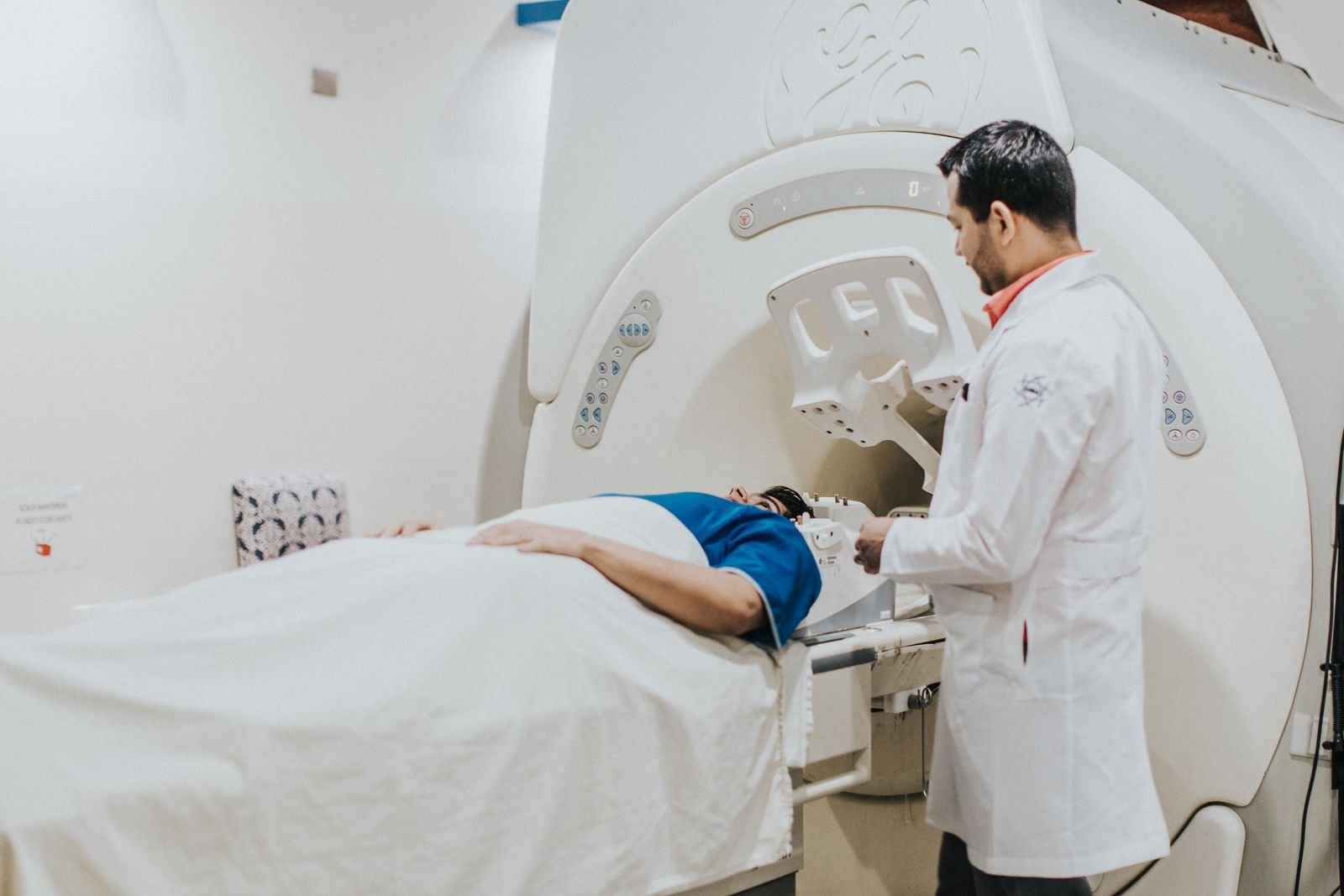
A brain MRI scan takes detailed pictures of the inside of your head without using ionising radiation. Doctors use it to look into specific symptoms or to follow up a known condition. It is a test that answers a clinical question, rather than a general check-up.
FindScan is a comparison service, not a healthcare provider. We do not carry out scans or give medical advice. We list private clinics that offer MRI, show each clinic's own listed price, and pass your enquiry to the clinic you choose.
What a brain MRI scan shows
The NHS describes an MRI scan as a test that takes detailed pictures of the inside of your body. It can be used to find out what is causing symptoms you have been having, to check bones and organs, and to see how well a treatment is working.
For the head, the scan looks at the brain tissue and the surrounding structures, such as the pituitary gland. MRI does not use ionising radiation, which is one way it differs from a head CT scan. Our guide to what a brain MRI shows goes into more detail.
Headaches: most do not point to anything serious
Headaches are one of the most common reasons people look for a brain scan. The NHS says most headaches go away on their own and are not a sign of something more serious. Common causes it lists include colds or flu, stress, alcohol, bad posture, eyesight problems, skipping meals, not drinking enough fluids and taking too many painkillers.
NICE guidance on headaches in over 12s (CG150) says people diagnosed with tension-type headache, migraine, cluster headache or medication overuse headache should not be referred for neuroimaging solely for reassurance. It says further investigations or referral should be considered if a person with a headache disorder develops certain warning features. A scan is a decision for a clinician who has assessed you.
The NHS advises seeing a GP if you have tried treating a headache yourself and it is not getting better or is getting worse, or if you regularly get headaches.
When to call 999 or get urgent help
Some symptoms need emergency care, not a private scan. The NHS says to call 999 or go to A&E if you or a child has a headache and:
- it started suddenly and is extremely painful
- has had a seizure (fit), or has numbness or weakness in the body or face
- is finding it difficult to speak, balance, walk or remember things, or is drowsy or confused
- has loss of vision
- has had a head injury within the last 3 months
- has a rash that does not fade when a glass is rolled over it, or a very high temperature, a stiff neck, or bright lights are bothering them
Stroke. The NHS says to call 999 now if you think you are having, or have had, a stroke, or if you have had signs of a stroke within the last 24 hours even if they have now stopped. It uses FAST to remember the main signs: face, arms, speech, and time to call 999. Do not drive yourself to A&E.
Urgent GP appointment or NHS 111. The NHS says to ask for an urgent GP appointment or get help from NHS 111 if a headache comes with vision or eye problems, is triggered or made worse by coughing, sneezing, bending down or exercising, comes with being sick, or comes with jaw pain when eating or a sore or tender scalp.
Dizziness and memory concerns: start with a GP
Dizziness. The NHS lists many everyday causes of dizziness, including an ear infection, migraine, dehydration, stress or anxiety, low blood sugar and inner ear problems. It advises seeing a GP if dizziness worries you, will not go away or keeps coming back, or comes with problems hearing or speaking, changes in your eyesight, or numbness or weakness in your face, arms or legs.
Memory problems. The NHS says to see a GP if memory problems are affecting your day-to-day life. Memory can be affected by stress, anxiety or depression and sleeping problems, as well as by conditions such as dementia. The NHS advises not trying to self-diagnose the cause, and says the GP may refer you to a memory specialist, with further tests such as scans sometimes needed.
In both cases a GP can examine you and arrange the right tests in the right order. See seeing a GP before a scan.
Do you need a referral for a private brain MRI?
MRI does not use ionising radiation, so the Ionising Radiation (Medical Exposure) Regulations 2017 (IR(ME)R), which apply to X-ray and CT, do not apply to it. Many private clinics accept self-referral for MRI, usually after their own safety screening, but each clinic sets its own policy. Some ask for a referral letter from a doctor, and some offer a review with their own doctor first, particularly for brain scans.
See our guide to private MRI without a GP referral.
Preparing for your scan and safety
The NHS advises not wearing anything that has metal in it, such as jewellery, a bra or hair clips, and removing coins or keys from your pockets. Before the scan you fill in a safety form that asks, for example, whether you are pregnant or breastfeeding, whether you have had surgery, whether you have kidney problems, and whether you have any metal in your body such as a pacemaker or surgical clips.
The NHS says serious complications from an MRI scan are rare. Some people cannot have an MRI, or need extra checks first, and the clinic's safety screening decides this. See MRI safety and metal implants and how to prepare for your scan.
During the scan, and your results
You lie flat on a bed that moves into the scanner. The radiographer controls the scanner from another room but can hear and speak to you. You need to lie still so the scanner can take clear images. MRI scanners make loud bangs and clicks as they take pictures, so you are given ear plugs or headphones.
The NHS says an MRI scan usually takes between 15 minutes and 1 hour, but can take longer. Some brain scans use an injection of contrast medium (dye) to help show more detail, and the clinic will tell you if yours needs it.
If you feel anxious in enclosed spaces, tell the clinic before your appointment; the NHS says you may be able to have a medicine to help you relax. See claustrophobia and MRI. You can eat and drink as normal afterwards.
Your images are reported by an appropriately qualified clinician, and the report is sent to you or your referrer, depending on how the clinic works. The clinic will tell you how long its report takes. Plan to discuss the report with a GP or specialist. See scan results.
What affects the price of a brain MRI
Each clinic sets its own price, and prices vary. The main factors are the area scanned and the sequences needed, whether contrast is used, the type of scanner (for example a higher field strength or an open or upright scanner), whether a consultation is included, and where the clinic is. FindScan shows each clinic's own listed price as the clinic sets it, without mark-up.
Check what is included, such as the report, before you send an enquiry. Our private MRI cost guide explains more.
How to compare brain MRI clinics on FindScan
Use FindScan search to see clinics near you that offer MRI. Compare locations, listed prices and clinic details, then send an enquiry to the clinic you choose. We pass your details to that clinic, and the clinic contacts you to discuss your request, its referral policy, safety screening and availability.
For scans of the neck, see neck MRI.
FindScan is a comparison service, not a healthcare provider, and nothing here is medical advice. Speak to a GP or another clinician about your symptoms.