Sprained Ankle: Do You Need an X-ray or an MRI Scan?
Wet leaves, dark evenings and the Sunday league season all work against ankles. Here is what the NHS says about treating a sprain at home, when an X-ray is called for, and the point at which an MRI starts to make sense.
Written by the FindScan Editorial Team and reviewed by our Medical Advisor, Dr Mohamed Najjar
Reviewed
You went over on your ankle on a wet pavement or a muddy pitch, it swelled up, and now you are wondering whether you need a scan. The honest answer for most people is no, at least not yet. The NHS says that after 2 weeks most sprains and strains will feel better, and that an X-ray is for the injuries where a broken bone is possible.
This guide walks through the order the NHS describes: looking after the injury at home in the first days, the signs that mean urgent care, why an X-ray is the first scan when one is needed, and the later stage when an MRI can answer a question that an X-ray cannot.
Sprain or break: what the words mean
The NHS defines a sprain as a torn or twisted ligament, the tissue that connects the joints, and a strain as an overstretched or torn muscle. It says sprains are most common in the wrists, ankles, thumbs and knees. A break is different again: it is a crack or fracture in the bone itself.
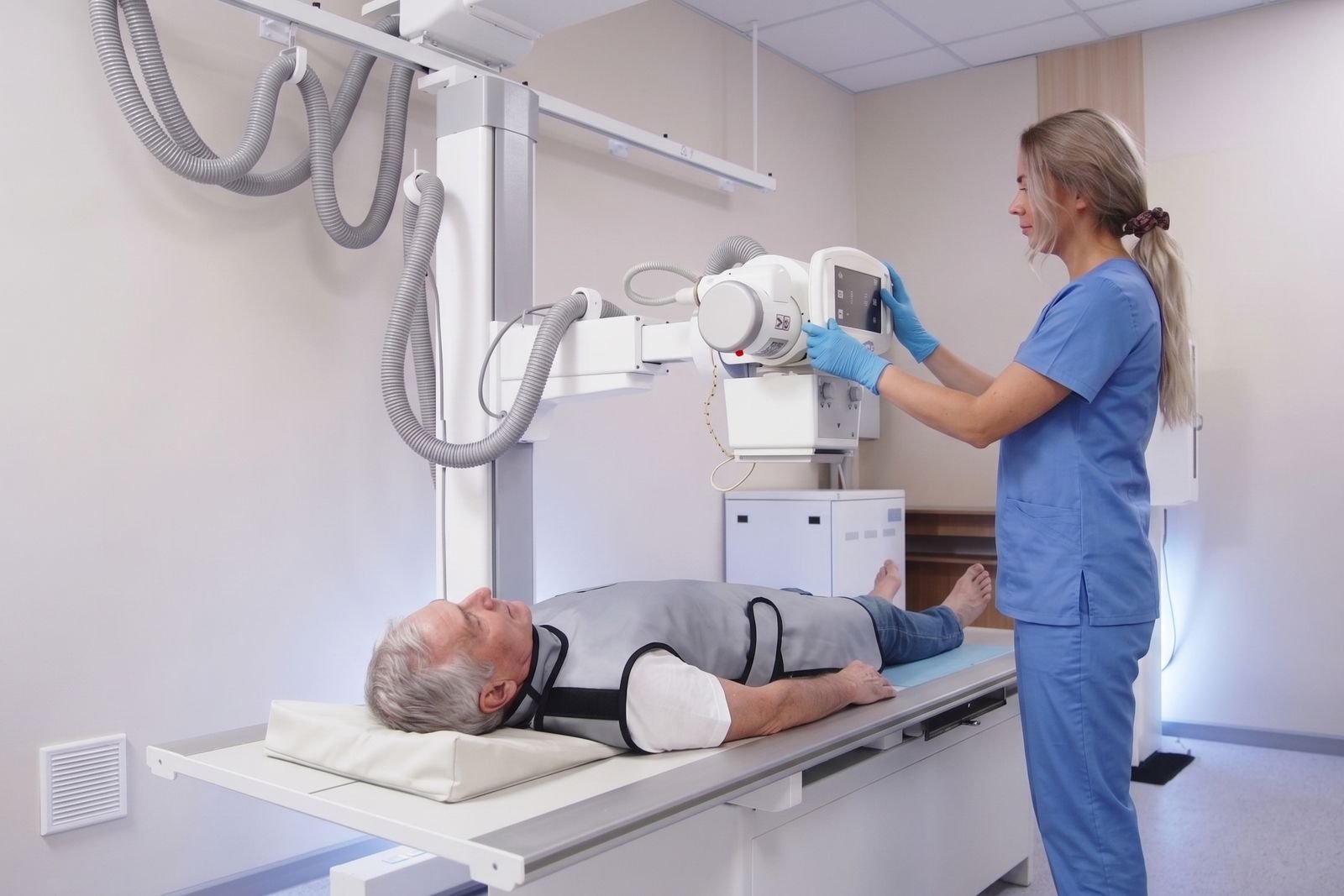
That distinction matters, because the tests see different things. The NHS describes an X-ray as a test that takes pictures of the inside of your body using a small amount of radiation, used among other things to check your bones for a fracture after an accident. Ligaments do not show up on it. The NHS describes an MRI scan as one that takes detailed pictures of the inside of your body and can be used to check bones and organs and find the cause of symptoms; it is the scan clinicians turn to when the question is about soft tissue rather than bone.
The first 2 to 3 days: PRICE, not pictures
For the first 2 to 3 days after a sprain or strain, the NHS says to follow the five steps known as PRICE therapy: protection, for example with a support or supportive shoes; rest, which means stopping exercise and keeping weight off the injury; ice, an ice pack or frozen vegetables wrapped in a tea towel for up to 20 minutes every 2 to 3 hours; compression with a bandage during the day; and elevation on a pillow whenever you can. The NHS also says to avoid heat, alcohol and massage in the first couple of days, because they can increase swelling.
The NHS says a pharmacist can advise on pain relief, and that once the pain allows you should keep moving the area so the joint does not stiffen.
When an X-ray is needed, and where it happens
The NHS says you may need an X-ray, which can sometimes be done at an urgent treatment centre, or you may be referred to hospital. The decision is made by the clinician who examines you, not by how swollen the ankle looks.
The NHS lists the signs that mean you should call 999 or go to A&E because you may have broken a bone: you heard a crack when you had your injury; the injured part has changed shape or is pointing at an odd angle; it is numb, tingling or has pins and needles; or the skin around it has changed colour, looking blue or grey, or feels cold. The NHS says not to drive to A&E yourself.
Short of that, the NHS says to get help from NHS 111 if the pain is severe or getting worse, if swelling or bruising is large or getting worse, if you cannot put any weight on it or walk more than a few steps, if it is very stiff or difficult to move, if it is not feeling any better after treating it yourself, or if you have a very high temperature or feel hot, cold or shivery. You can also go to an urgent treatment centre. None of this is a reason to arrange a private X-ray: an acute injury belongs in urgent care, and a private X-ray needs a referral in any case, because UK law requires every exposure to ionising radiation to be justified by a registered referrer. Our guide to X-rays without a referral explains.
When an MRI starts to make sense
The NHS says that after 2 weeks most sprains and strains will feel better, that you should avoid strenuous exercise such as running for up to 8 weeks because of the risk of further damage, and that severe sprains and strains can take months to get back to normal. It also says that if a sprain or strain is taking longer than usual to get better, physiotherapy may help, and that in many areas you can refer yourself to NHS musculoskeletal services.
An MRI enters the picture when the recovery is not following that pattern: the ankle keeps giving way, it is still painful and swollen well beyond the timescale above, or a physiotherapist or doctor suspects a ligament or tendon injury that needs a clearer view before deciding on treatment. Because MRI pictures the ligaments, tendons and cartilage around the joint as well as the bone, it can answer questions the X-ray left open. Whether it is the right test is a judgement for the clinician who has examined you. Our guide to MRI of the leg describes what the scan involves.
What about ultrasound?
The NHS says ultrasound is used to see images of the inside of your body, such as muscles and organs, and that a clinician may request one to look into symptoms such as pain or a lump. For some tendon problems around the ankle a clinician may choose ultrasound rather than MRI; our guide to Achilles tendon pain covers the commonest one. Like MRI, ultrasound uses no radiation and can be arranged without a GP referral at many clinics.
Where a private scan fits
The right order is the NHS one: look after the injury, use 111, an urgent treatment centre or A&E if the warning signs apply, and give it the 2 weeks the NHS describes. If the ankle is still not right after that and a clinician has suggested an MRI or ultrasound, a private scan can shorten the wait for that answer. MRI and ultrasound can be arranged without a GP referral at many clinics; a note from the physiotherapist or GP who examined you helps the clinic scan the right structures.
You can compare foot and ankle MRI clinics and send an enquiry; the clinic contacts you to confirm whether it needs a referral and the next steps. FindScan is a directory of independent, regulated imaging clinics: you compare clinics and send an enquiry, and the clinic contacts you. We are not a healthcare provider, and nothing here replaces an assessment by a clinician.
Common questions
Do I need an X-ray for a sprained ankle?
Usually not. The NHS says most sprains and strains feel better after 2 weeks of home treatment. It says you may need an X-ray, which can sometimes be done at an urgent treatment centre, and that signs such as hearing a crack, a change of shape, numbness or a colour change in the skin mean you should call 999 or go to A&E because you may have broken a bone.
Can an X-ray show a torn ligament?
No. The NHS describes an X-ray as a test that uses a small amount of radiation to check bones, for example for a fracture after an accident. A sprain is a torn or twisted ligament, which does not show on an X-ray; MRI and ultrasound are the scans used to picture soft tissue.
How long should I wait before asking about an MRI?
The NHS says most sprains feel better after 2 weeks, that running should be avoided for up to 8 weeks, and that physiotherapy may help if recovery is slower than usual. An MRI is usually considered when the ankle keeps giving way or stays painful beyond those timescales and a clinician wants to see the ligaments or tendons before deciding on treatment.
Can I have a private ankle MRI without a GP referral?
MRI can be arranged without a GP referral at many private clinics, because it uses no ionising radiation. A private X-ray does need a referral. A note from the physiotherapist or GP who examined you helps the clinic scan the right part of the ankle, and the clinic confirms its own requirements when you enquire.
References
- Sprains and strains. NHS. Accessed 27 October 2026.
- X-ray. NHS. Accessed 27 October 2026.
- MRI scan. NHS. Accessed 27 October 2026.
- Ultrasound scan. NHS. Accessed 27 October 2026.
- The Ionising Radiation (Medical Exposure) Regulations 2017, SI 2017/1322. legislation.gov.uk. Accessed 27 October 2026.
This article is general information, not medical advice, and it does not replace an assessment by a clinician. If you have symptoms that worry you, speak to your GP or call 111. In an emergency, call 999.