Transvaginal Ultrasound: What It Shows, How to Prepare and What to Expect
A transvaginal ultrasound is one of the most common pelvic scans, and one of the most searched-for before an appointment. This guide explains what the scan is, why it is used, how departments ask you to prepare, what happens in the room, how you get the result, and which symptoms should go to the NHS first.
Written by the FindScan Editorial Team and reviewed by our Medical Advisor, Dr Mohamed Najjar
Reviewed · How we write and review our guides
A transvaginal ultrasound, often shortened to TVS or called an internal or vaginal scan, looks at the womb, ovaries and the area around them from inside the vagina rather than through the tummy. Being closer to these organs gives a clearer picture than an ultrasound over the abdomen.
It uses sound waves, not radiation, and the scan itself usually takes a few minutes. It is still an intimate examination, so it helps to know what happens, what you can ask for, and that you can stop it at any point.
Two things come first. If you are pregnant and have sudden, intense tummy pain with dizziness or fainting, the NHS says to call 999 or go to A and E straight away. If you have any bleeding after the menopause, the NHS says to see a GP, even if it has only happened once.
What a transvaginal ultrasound is
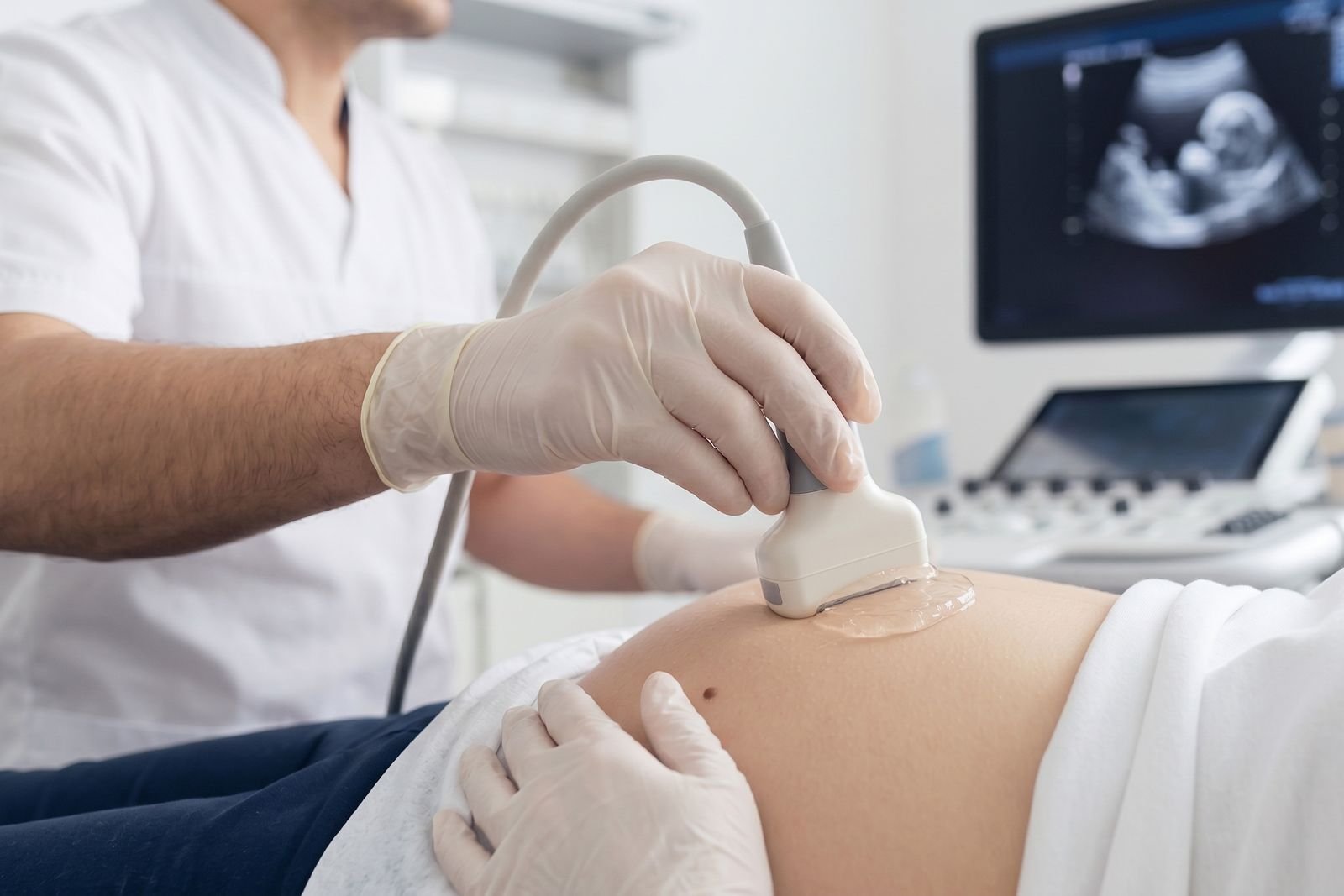
The NHS describes an internal ultrasound as one where a smooth, tube-shaped probe with a latex cover is put into the vagina, with lubricant used to make it more comfortable. The probe sends out sound waves and picks up the echoes, which build a moving picture on a screen.
Many departments scan over the lower tummy first and then do the internal scan; some do the internal scan on its own. Your appointment letter should say which, and that affects how you prepare.
What it is used for
Guy's and St Thomas' NHS Foundation Trust says a transvaginal scan examines pelvic organs such as the uterus and ovaries, and can help to find the cause of a problem or monitor an existing condition. Common reasons include heavy or painful periods, pelvic pain, a suspected ovarian cyst, checking the lining of the womb, fertility investigations and some early pregnancy scans.
The NHS says that if a GP thinks you may have an ovarian cyst, you will probably be referred for an ultrasound using a probe placed inside the vagina, and that a cyst may need a repeat scan in a few weeks. The NHS also lists a vaginal ultrasound among the tests a specialist may arrange after bleeding after the menopause. For endometriosis, a normal ultrasound does not always settle the question; our guide to MRI for endometriosis explains why.
It does not give a diagnosis on its own. The doctor who asked for the scan puts the findings together with your symptoms and examination.
How to prepare: follow your letter
Preparation differs between departments, which is why advice online conflicts. Guy's and St Thomas' says you do not need a full bladder for a transvaginal scan. Sherwood Forest Hospitals, which scans the tummy first, asks patients to drink one and a half pints an hour before so the bladder is full, and says it can be emptied during the examination before the internal part. Follow the instructions in your own letter.
Periods do not usually stop the scan. Guy's and St Thomas' says having a period does not affect the examination, and Sherwood Forest says it can still perform the scan during a period. Guy's and St Thomas' asks that a tampon is removed before the internal scan. Loose, comfortable clothing helps.
The NHS asks you to tell the department if you have a latex allergy, so a different probe cover can be used.
In the room: comfort, chaperones and consent
The NHS says you may be asked to lie on a bed with your knees apart, or on your side. Guy's and St Thomas' describes the scan as similar to having a smear test but says it should not be as uncomfortable, and that unless you are already in pain from your symptoms it does not cause pain. The NHS says an internal probe can be uncomfortable when it is put in or moved, and to tell the person doing the scan if you feel pain so they can help.
Guy's and St Thomas' says a chaperone is present for all intimate scans and that you can also bring a friend or family member. The NHS says to let the person doing the scan know if you would like someone else in the room. If you would prefer a female sonographer, ask when the appointment is made rather than on the day; Sherwood Forest notes its sonographers may be male or female.
You give permission before the scan starts, and the NHS says you are in control and can ask for it to stop at any time. Guy's and St Thomas' says you can decline the internal scan and have a scan over the tummy instead, which needs a full bladder. Sherwood Forest says it does not carry out the internal scan for people under 16 or who have not had sexual intercourse, so if either applies, tell the department in advance.
Timings vary. The NHS gives around 10 to 45 minutes for an ultrasound appointment. Guy's and St Thomas' says the internal scan itself usually takes a few minutes, and Sherwood Forest says about 15 minutes.
Getting the result
The NHS says you may get ultrasound results at the end of the appointment, or it may take a few weeks depending on why you had the scan. Guy's and St Thomas' says its scans are most often reported on the same day and the report goes to your doctor, who discusses it with you. If you have not heard within the time you were given, contact whoever requested the scan.
When the NHS route comes first
Some reasons for a transvaginal scan belong in the NHS pathway. Bleeding after the menopause is one: the NHS says a GP should refer you to hospital or a postmenopausal bleeding clinic, and that you should not have to wait more than 2 weeks to see a specialist.
Pain or bleeding in early pregnancy is another. Pregnancy scans are part of NHS maternity care, and the NHS says to call 999 or go to A and E if you have sharp, sudden and intense tummy pain together with feeling very dizzy or fainting, feeling sick or looking very pale. For sudden, severe pelvic pain when you are not pregnant, the NHS says to ask for an urgent GP appointment or get help from NHS 111.
Having the scan at a private clinic
Ultrasound uses no radiation, so private clinics can often scan you without a referral, unlike CT, X-ray, DEXA and mammography, which need one. Our guide to private ultrasound without a GP referral explains where a GP should see you first. Before you go, ask who performs and reports the scan, whether a chaperone is provided, and whether the report can go to your GP.
Common questions
Does a transvaginal ultrasound hurt?
It should not be painful. Guy's and St Thomas' says it is similar to a smear test but should not be as uncomfortable, and does not cause pain unless you are already in pain from your symptoms. The NHS says the probe can be uncomfortable when it is put in or moved, and to tell the person scanning if it hurts.
Can I have a transvaginal ultrasound on my period?
Usually, yes. Guy's and St Thomas' says having a period does not affect the examination, and Sherwood Forest Hospitals says it can still scan you during a period. You may be asked to remove a tampon first. If you are unsure, ring the department before the day.
Can I have a chaperone, or ask for a female sonographer?
Yes, you can ask. Guy's and St Thomas' says a chaperone is present for all intimate scans, and the NHS says to tell the person doing the scan if you would like someone else in the room. Ask for a female sonographer when the appointment is made, as not every department can arrange it on the day.
What if I have never had sex, or would rather not have an internal scan?
Tell the department before the appointment. Sherwood Forest Hospitals says it does not do the internal scan for people who have not had sexual intercourse, and Guy's and St Thomas' says you can decline it and have a scan over the tummy instead. A tummy scan gives less detail, so the doctor who asked for the scan may want to discuss it with you.
How does FindScan work?
FindScan is a directory of independent imaging clinics. We are not a healthcare provider. You search for clinics near you and send an enquiry, and the clinic then contacts you about your scan.
References
- Ultrasound scan. NHS. Accessed 19 November 2026.
- Transvaginal ultrasound scan. Guy's and St Thomas' NHS Foundation Trust. Accessed 19 November 2026.
- Transvaginal ultrasound examinations (patient information, revised January 2025). Sherwood Forest Hospitals NHS Foundation Trust. Accessed 19 November 2026.
- Postmenopausal bleeding. NHS. Accessed 19 November 2026.
- Ovarian cyst. NHS. Accessed 19 November 2026.
- Ectopic pregnancy. NHS. Accessed 19 November 2026.
This article is general information, not medical advice, and it does not replace an assessment by a clinician. If you have symptoms that worry you, speak to your GP or call 111. In an emergency, call 999.