MRI Gallbladder and MRCP Scan: What It Shows, When It Is Used for Gallstones and How to Prepare
For suspected gallstones, an ultrasound usually comes first. An MRCP, a type of MRI of the gallbladder and bile ducts, is the next step when doctors need to check the bile duct more closely. This guide explains what it shows, when it is used, how to prepare and when gallbladder symptoms need urgent help.
Written by the FindScan Editorial Team and reviewed by our Medical Advisor, Dr Mohamed Najjar
Reviewed
An MRCP scan is a special type of MRI that takes pictures of the liver, gallbladder, bile ducts and pancreatic duct. If you have been told you need an MRI gallbladder scan, or you are wondering whether MRI for gallstones is worth asking about, the scan in question is usually an MRCP. It is rarely the first test: for suspected gallstones, an ultrasound and blood tests usually come first.
This guide explains what an MRCP shows, when doctors use it, how to prepare (including fasting and, at some hospitals, a cup of pineapple juice), how long it takes, how results reach you and which symptoms need urgent help rather than a scan. If you are looking at private options, our abdomen MRI page lists clinics that scan the tummy area; ask the clinic to confirm it offers MRCP specifically. This is general information, not medical advice, and your hospital or clinic's own instructions always come first.
What an MRCP scan is: the MRI gallbladder and bile duct scan
MRCP stands for magnetic resonance cholangiopancreatography. University Hospital Southampton describes it as a special type of MRI scan that takes images of the liver, gallbladder, bile ducts and pancreatic duct. The bile ducts are the small tubes that carry bile from the liver and gallbladder into the gut.
The Princess Alexandra Hospital says the scan produces pictures of the liver, bile ducts, gallbladder and pancreas, and that this includes looking for gallstones, infection or inflammation. West Suffolk Hospital says the scan looks at the bile ducts and, where appropriate, the gallbladder and other nearby organs, and that MRI takes images without the use of X-rays.
Because the pancreas and its duct are included, an MRCP sometimes appears in pancreas investigations too. Our guide to pancreas scans: CT, MRI and ultrasound explains how those tests compare.
Ultrasound usually comes first for gallstones
The NHS says gallstones are small stones that form in the gallbladder, and that most people who have them do not get symptoms. Gallstones may be found by chance on a scan for something else. If you do have symptoms, the NHS says you may have an ultrasound scan or a blood test.
NICE guidance on gallstone disease recommends offering liver function tests and ultrasound to people with suspected gallstone disease. Ultrasound is quick and widely available, and it is the scan most people have first. Our guide to gallstones and ultrasound covers that test, and our guide to what a liver ultrasound shows explains what abnormal liver results can lead to. You can also compare abdominal ultrasound clinics on FindScan.
MRI, gallstones and the bile duct: when an MRCP is used
The NHS explains that gallstones can be found in the gallbladder or in the bile ducts, and that problems can happen if a stone blocks a bile duct. An ultrasound is good at showing the gallbladder, but the bile duct can be harder to assess.
That is where NICE places MRCP. It says doctors should consider MRCP if ultrasound has not detected common bile duct stones but the bile duct is widened (dilated) and/or liver function test results are abnormal. If MRCP still does not allow a diagnosis, NICE says to consider endoscopic ultrasound, a different test that uses a camera tube.
An MRCP is a scan only: nothing goes inside you, and it cannot remove a stone. If stones are found in the bile duct, the NHS says you may have a procedure called ERCP to clear the duct. ERCP uses a long, thin tube with a small camera, called an endoscope, and the opening of the bile duct is widened so the stones can pass through.
Fasting before an MRCP scan
Most MRCP scans need an empty stomach, but the exact time varies between hospitals. West Suffolk Hospital asks patients not to eat or drink for 4 hours before the scan, and to avoid chewing gum or smoking beforehand because this can stimulate the gallbladder. It asks people with diabetes to have a light snack as required.
The Princess Alexandra Hospital also asks for 4 hours without food or drink, or 2 hours if you have diabetes, and says to keep taking your usual medicines with a small amount of water. University Hospitals Plymouth asks patients not to eat or drink anything for 6 hours before the appointment. Follow your own appointment letter; our guide to eating and drinking before a scan explains why instructions differ.
As with any MRI, the NHS says you will be asked about metal in your body, such as surgical clips or a pacemaker, whether you have kidney problems, and whether you are or may be pregnant.
Pineapple juice, contrast and what happens in the scanner
Some hospitals give you a drink first. University Hospital Southampton says it provides one cup of pineapple juice to drink 15 minutes before the scan, because the juice contains manganese, which helps produce clearer images. Not every hospital does this, so do not bring your own unless asked.
A contrast injection is not always part of an MRCP. The Princess Alexandra Hospital says an MRI sometimes needs an injection of a special dye into a vein in the arm or hand, given at the request of a radiologist. The West Suffolk and Southampton MRCP leaflets do not describe an injection as a routine part of the scan.
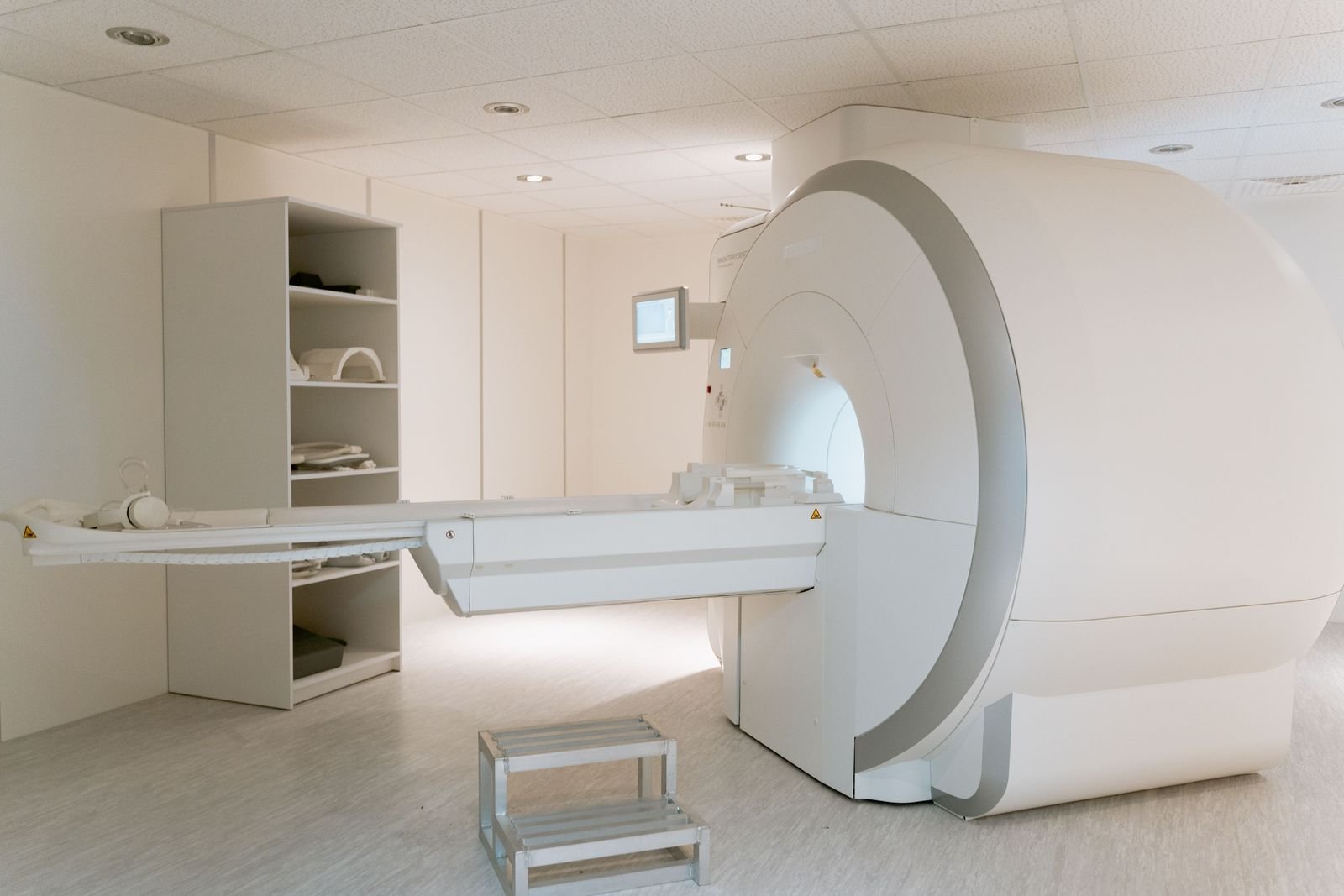
In the scanner you lie on a bed that moves into a short tunnel. Every leaflet we checked says you will be asked to hold your breath for short periods while pictures are taken, so the images are not blurred by breathing. The NHS says you will be given ear plugs or headphones because the scanner is noisy. If small spaces worry you, tell the team; our guide to claustrophobia and MRI may help.
Southampton says the scan takes about 20 minutes, but to expect to be in the hospital for up to two hours. West Suffolk says the scan should take between 20 and 30 minutes.
When gallbladder symptoms need urgent help
A scan is not the right first step if you are unwell now. The NHS says to ask for an urgent GP appointment or get help from NHS 111 if you have pain in your tummy that lasts longer than 30 minutes.
The NHS says to call 999 or go to A&E if you have sudden, severe pain in your tummy, pain that spreads from your tummy to your back and you are being sick, a very high temperature or you feel hot, cold or shivery, or your skin or the whites of your eyes look yellow. Yellowing (jaundice) may be less noticeable on brown or black skin. Do not drive yourself.
Results and referral
West Suffolk says the images are examined after your visit and a report is sent to your referring doctor. The Princess Alexandra Hospital says results usually take a couple of weeks, and the NHS says MRI results usually take 1 to 2 weeks. If you have not heard after a few weeks, the NHS says to contact the doctor who referred you.
A report that finds no stones answers the question that was asked, but it does not rule out every cause of symptoms, so keep talking to your doctor if they continue.
MRI may be self-referral at some private clinics, depending on the clinic's own policy and safety screening. An MRCP is most useful when a doctor has a question for it, often after an ultrasound and liver blood tests, and can act on the result, so many people go through their GP or specialist.
Comparing clinics on FindScan
If your doctor has suggested an MRCP, you can compare abdomen MRI clinics near you on FindScan, see each clinic's own listed price and send an enquiry to the one you choose. The clinic contacts you to confirm it offers MRCP, what preparation it needs and how to arrange your scan.
FindScan is a directory of independent, regulated imaging clinics, not a healthcare provider, and nothing here replaces advice from your GP or specialist. Speak to your GP or the clinician who referred you about symptoms or results. If your symptoms are urgent, call NHS 111, or 999 in an emergency.
Common questions
What is an MRCP scan?
An MRCP scan is a special type of MRI that takes pictures of the liver, gallbladder, bile ducts and pancreatic duct. NHS hospitals say it can look for gallstones, infection or inflammation. It is a scan only, so it cannot remove stones; if stones are found in the bile duct, a separate procedure called ERCP may be used to clear them.
Is an MRI gallbladder scan better than an ultrasound?
They are used at different stages. NICE recommends liver function tests and ultrasound for suspected gallstone disease, so ultrasound usually comes first. NICE says to consider MRCP if ultrasound has not found bile duct stones but the duct is widened or liver tests are abnormal. Your doctor will decide which test answers your question.
Is an MRI gallstones scan the same as an MRCP?
Usually, yes. When doctors use MRI to look for gallstones, especially stones in the bile duct, the scan is normally an MRCP. NICE suggests it when ultrasound has not detected common bile duct stones but the duct is widened or liver tests are abnormal. A result that shows no stones does not rule out every cause of symptoms, so keep talking to your doctor.
Do I need to fast before an MRCP scan?
Usually, yes. NHS hospitals ask for different times: West Suffolk and The Princess Alexandra Hospital ask for 4 hours without food or drink, and University Hospitals Plymouth asks for 6 hours. Some hospitals adjust this for people with diabetes. Always follow the instructions in your own appointment letter.
How long does an MRCP scan take?
University Hospital Southampton says the scan takes about 20 minutes, and West Suffolk Hospital says 20 to 30 minutes. Southampton advises allowing up to two hours in the hospital in total, for safety checks, getting changed and any drink beforehand. You will be asked to hold your breath for short periods during the scan.
Why do some hospitals give pineapple juice before an MRCP?
University Hospital Southampton gives one cup of pineapple juice 15 minutes before the scan because it contains manganese, which helps produce clearer images. Not every hospital uses it, so only drink it if your hospital or clinic asks you to, and check how it fits with your fasting instructions.
References
- Gallstones. NHS. Accessed 29 October 2026.
- Gallstone disease: diagnosis and management (CG188), recommendations. NICE. Accessed 29 October 2026.
- MRI scan. NHS. Accessed 29 October 2026.
- Magnetic resonance cholangiopancreatography (MRCP) scan, patient information factsheet (reviewed February 2024). University Hospital Southampton NHS Foundation Trust. Accessed 29 October 2026.
- Information about your MRCP (magnetic resonance cholangiopancreatography) scan. West Suffolk NHS Foundation Trust. Accessed 29 October 2026.
- Magnetic Resonance Cholangiopancreatography (MRCP), patient information leaflet PIL M4. The Princess Alexandra Hospital NHS Trust. Accessed 29 October 2026.
- Your MRCP MRI scan. University Hospitals Plymouth NHS Trust. Accessed 29 October 2026.
This article is general information, not medical advice, and it does not replace an assessment by a clinician. If you have symptoms that worry you, speak to your GP or call 111. In an emergency, call 999.